Poland's PM Donald Tusk warns Europe it faces decline without unity, urging collective defence and solidarity amid rising tensions with the US over Greenland and global security challenges.
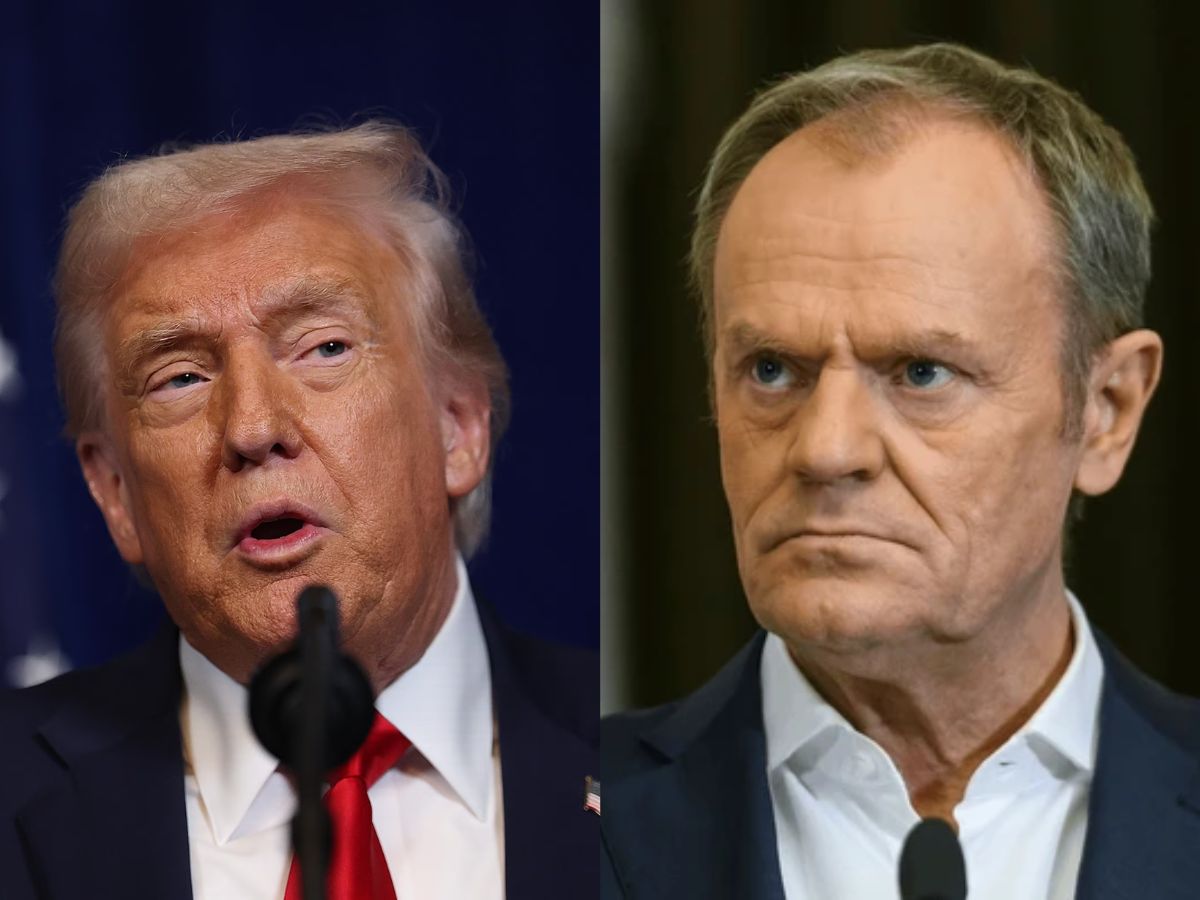
Poland's PM Donald Tusk warns Europe it faces decline without unity [Photo: X]
Poland's PM Donald Tusk issued a sharp warning to European leaders on January 5, 2026, saying the continent risks collapse if it fails to stay united. His message came as trans-Atlantic relations faced fresh strain from US President Donald Trump's remarks on Greenland and other geopolitical flashpoints. Tusk's call for unity reflects deepening concerns about Europe's role on the global stage and its ability to respond to emerging threats.
In a post on X, Donald Tusk warned that a divided Europe would be “finished” in a world of rising geopolitical tensions. He stressed the need for Europeans to trust in their own strength, work together, and strengthen collective defence.
“No one will take a weak and divided Europe: neither enemy nor ally… One for all, and all for one. Otherwise, we are finished.”
Tusk’s comments signal growing unease among European capitals over shifting global dynamics. He argued that Europe must increase defence cooperation and allow its nations to act with greater coordination to protect shared interests.
Tusk’s warning was not made in isolation. It followed a period of geopolitical discomfort for Europe, including public pressure from the United States and recent military developments abroad. Many European leaders are now questioning whether their current alliances and strategies are sufficient for today’s challenges.
Europe’s internal divisions, particularly over foreign policy and security, have been exposed by differing responses to US actions and emerging threats in regions such as the Arctic and the Middle East. Tusk and others believe the bloc must present a unified front to maintain influence and credibility.
Just days before Donald Tusk’s message, President Trump revived controversial comments about US interest in Greenland, a semi-autonomous Danish territory of strategic value. His remarks triggered strong condemnations from Denmark and Greenland’s leaders, who rejected any notion of US annexation.
“I would therefore strongly urge the US to stop threatening a historically close ally and another country and people who have made it very clear that they are not for sale,” said Danish Prime Minister Mette Frederiksen.
European countries, including France and the UK, also stood by Denmark’s sovereignty, emphasising that territorial changes must respect international law and the wishes of local populations.
Donald Trump’s broader foreign policy — including a military operation that ousted Venezuelan President Nicolás Maduro — has put Europe in a delicate position. Many EU leaders emphasised restraint, respecting international law, while others called for clearer and firmer responses to US actions.
This divergence highlights the lack of a unified foreign policy within the EU, something Tusk believes must change if Europe is to remain a serious global actor.
Donald Tusk’s message points to several key priorities:
Donald Tusk’s plea for unity is rooted in a belief that Europe’s strength lies in shared values and collective action. At a time of renewed global competition involving major powers like the US, Russia, and China, he believes that only a coordinated Europe can safeguard its security and prosperity.
Whether European leaders will heed this urgent call for unity remains to be seen, but Tusk’s warning has intensified discussions about the future direction of EU foreign and defence policy.
