Rahul Gandhi's attacks on industrial ties revive Congress's own capitalist history,
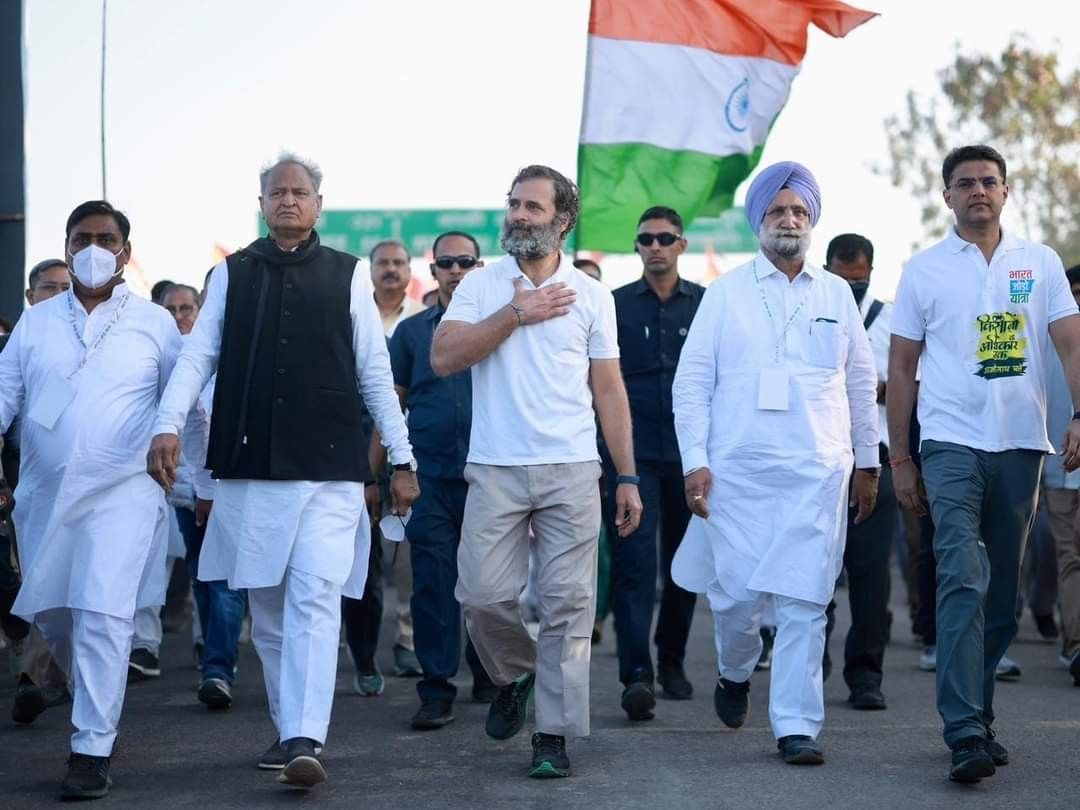
Rahul Gandhi during a Bihar rally targeting PM Modi over ties with industrialists, despite Congress’s own historic links to major business groups (Photo: File)
NEW DELHI: In the Bihar Assembly election campaign, Congress leader Rahul Gandhi has been reviving his familiar tune against Prime Minister Narendra Modi’s alleged proximity to big industrialists. He has been particularly targeting the Ambani and Adani groups, and indirectly referring to four or five other business houses, accusing the government of extending them the greatest benefits.
Perhaps he forgets that Congress’s own top leaders, prime ministers, and chief ministers maintained long-standing ties with capitalists. The record of the patronage, licenses, permits, contracts, and tenders granted to major business houses during Congress regimes could prove extremely costly for him if examined closely.
At times, it seems he is trying to draw public support using the rhetoric of the 1960s and 1970s, once used by leftist political parties and trade unions against the Tatas, Birlas, and other industrialists. Yet today, not only India but even communist countries like China and Russia host private and multinational corporations on a massive scale. India’s own economic liberalization began in 1991 under a Congress government led by Prime Minister P.V. Narasimha Rao, with Dr. Manmohan Singh as Finance Minister.
The Ambani and Adani groups have grown rapidly over the past thirty years. Rahul Gandhi, perhaps considering himself a youthful crusader, either does not understand India’s political-economic history or is not advised correctly. But not only in Bihar—people across the country are aware of business groups from Birla and Tata to Ambani and Adani. Millions of Indians even own shares in these and other industrial companies, investing their own money. Even if Rahul prefers to overlook this, some facts deserve attention.
Take the Birla Group, for instance. Krishna Kumar Birla consistently supported the Congress Party with donations and political assistance, even serving as a Congress-nominated Rajya Sabha member from 1984 to 2002. Later, his daughter Shobhana Bhartia was nominated to the Rajya Sabha by the Manmohan Singh government, serving from 2006 to 2012. The Birla Group’s companies flourished under successive governments, including those led by Congress.
Is Rahul unaware that Birla’s Hindustan Motors produced the Ambassador cars that were, for decades, the only government-approved official vehicles—until the BJP-led Atal Bihari Vajpayee government allowed broader competition? In subsequent decades, the Birlas expanded into sugar, fertilizers, jute, telecom, and new technology sectors.
Yet Rahul’s sharpest criticism is reserved for the Ambani family. He seems to ignore that the Reliance Group—from Dhirubhai Ambani to Mukesh and Anil Ambani—received its most substantial policy support during Congress regimes. During Rajiv Gandhi’s political crisis, when V.P. Singh rebelled, the Ambanis are known to have quietly supported Rajiv from behind the scenes. Ironically, Anil Ambani later became a Rajya Sabha MP from Uttar Pradesh in 2004 with votes from the Samajwadi Party and Congress, when Sonia Gandhi was Congress president and Rahul Gandhi himself was an MP.
From Rajiv Gandhi to Manmohan Singh, Congress governments were often accused of granting special concessions to Reliance in polyester, gas, and telecom ventures. The truth, however, is that under liberalization policies meant for national growth, many corporations—including Reliance—expanded rapidly. Under finance and industry ministers like Manmohan Singh, Pranab Mukherjee, N.D. Tiwari, P. Chidambaram, and petroleum minister Murli Deora, these groups made significant advances. Gujarat, long India’s most industrially progressive state, naturally offered opportunities to major business groups like Tata, Birla, Ambani, and Adani during Narendra Modi’s tenure as chief minister and later as prime minister.
Rahul Gandhi also seems to forget that during the 2019 Lok Sabha elections, when he was Congress president, Reliance chairman Mukesh Ambani publicly appealed for the victory of Congress candidate Milind Deora from Mumbai.
Besides Birla and Ambani, another prominent industrialist close to the Gandhi family was R.P. Goenka, whose business group also expanded rapidly. The Congress ensured his election to the Rajya Sabha from West Bengal, where he served from 2000 to 2006. Goenka was even associated with some of the Gandhi family’s trusts.
Just this week, at a rally in Muzaffarpur, Rahul Gandhi tried to project courage by claiming that Prime Minister Modi attended the Ambani family’s wedding celebrations while he himself did not, implying favoritism toward the group. But the color drained from the face of his ally Tejashwi Yadav, the RJD’s chief ministerial candidate, because he—and the entire Lalu Yadav family—had attended the same Ambani wedding festivities in grand style, warmly received by their hosts. Other senior Congress leaders were also present. In India, participation in family events has long been considered a matter of courtesy, not politics, and even rivals maintain personal relations.
Rahul’s criticism of Adani over port and airport contracts also overlooks key facts. The Kandla Port in Gujarat was awarded to the Adani Group in 1994, when the central government was led by P.V. Narasimha Rao and Gujarat had a Congress chief minister, Chhabildas Mehta—long before Narendra Modi entered office. Similarly, in Rajasthan, the Adani Group won a major solar energy project in 2018 under the Congress government of Ashok Gehlot. In Chhattisgarh too, coal and energy projects were granted during both Congress and BJP administrations. Ironically, Gehlot and Bhupesh Baghel—the same Congress leaders—are now overseeing candidate selection for the Bihar election.
These examples are just a glimpse. A deeper look would uncover many more such connections, near and far. As the saying goes, "Let the secret remain a secret—lest the truth be revealed."
