
NEW DELHI: In the wake of the BJP’s sweeping victory in the Bihar Assembly elections, the party has once again turned its attention to one of its most significant and long delayed organisational decisions choosing a new national president. With the current chief J.P. Nadda continuing in the role through multiple extensions, the BJP is preparing to move toward a leadership transition, even though a formal announcement is still awaited.
After a brief halt during the intense Bihar campaign, internal discussions on the president’s post have quickly regained momentum. A clear indication of this came on Thursday when organisational election in-charge K. Laxman Rajya Sabha MP and head of the BJP’s OBC Morcha was spotted holding detailed consultations with colleagues at the party headquarters. His meetings signalled that the groundwork for the presidential election is accelerating within the organisation.
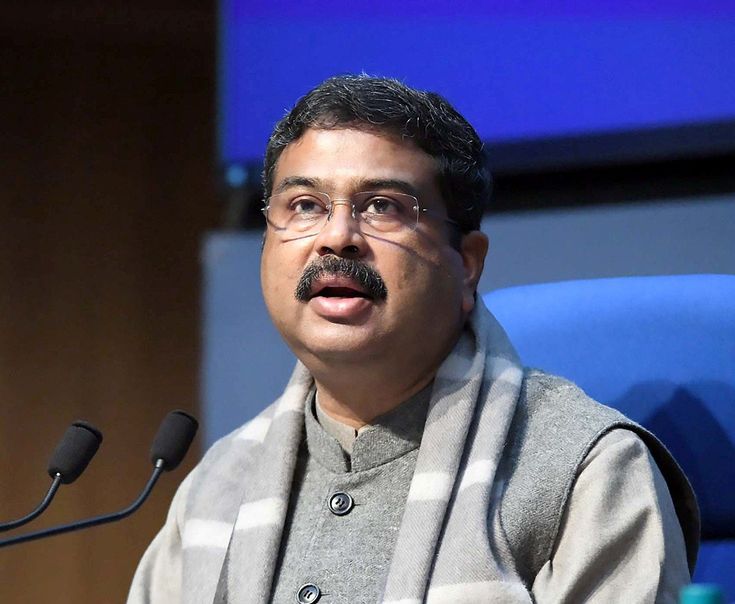
Sources reveal that Union Minister Dharmendra Pradhan has now considerably bolstered his position in the contest to replace Nadda. His rising prominence is largely tied to the BJP’s strong performance in Bihar, where he played a central role as the party’s election in-charge. While the BJP has not officially endorsed any candidate, senior party figures acknowledge that Pradhan’s strategic inputs and managerial oversight during the Bihar campaign have propelled him to the forefront of the race.
Party officials also believe the Bihar result could help ease the continuing friction between the BJP’s top leadership and the Rashtriya Swayamsevak Sangh (RSS) regarding the choice of the next party president. One source remarked that Pradhan’s organisational strengths together with his success in containing internal dissent within the Bihar unit and rejuvenating the grassroots cadre have given him a decisive edge. He is said to have spent considerable time in Bihar before the polls, convincing rebel leaders to step aside and ensuring that the campaign machinery functioned smoothly.
Further, insiders note that the recent electoral outcomes in Haryana, Maharashtra, and now Bihar have strengthened the alignment between Prime Minister Narendra Modi and Home Minister Amit Shah. Their partnership had been weakened after the Lok Sabha election setbacks, but the string of victories has reasserted their combined influence in internal party matters. “Modi may now find it easier to persuade the RSS to accept the candidate he prefers for the BJP’s top post,” source claimed.
Earlier this year, the name of Union Minister Bhupender Yadav was also being considered prominently, especially around July. But when the BJP presented Yadav and Pradhan as possible options, the RSS reportedly sought wider consultation before giving its approval. Pradhan’s growing importance within the BJP is also connected to his earlier recommendation that the party fight the Odisha Assembly elections independently, breaking away from the BJD a strategy that ultimately enabled the BJP to form the government in the state.
A senior party figure noted that there had once been speculation about the next BJP president being selected from southern India. However, with C.P. Radhakrishnan’s election as Vice President, the belief has gained traction that the new president will likely be from northern India. Meanwhile, Nadda’s three year term which originally concluded in January 2023 has been repeatedly prolonged due to continuous election cycles: first extended until June 2024 for the Lok Sabha polls, and later extended again because of pending organisational processes. Nadda, who assumed leadership of the party in January 2020, has overseen the organisation during multiple key elections. Yet, the ongoing extensions have resulted in growing dissatisfaction among the cadre, many of whom now expect the party to move toward a fresh mandate for the top job.
As per the BJP’s constitution, a national president can only be elected once organisational polls are completed in at least half of the party’s 37 state units, meaning elections must be held in a minimum of 19 states. By mid-2025, the BJP met this requirement by appointing new state chiefs in several crucial states, including Maharashtra, Uttarakhand, Telangana, Andhra Pradesh, Puducherry, and Mizoram. However, the continued delay in organisational decisions in Uttar Pradesh remains a stumbling block for completing the national-level election. With the Bihar results reshaping the internal power balance and boosting the confidence of the central leadership, the BJP is expected to expedite the remaining organisational procedures. And although Dharmendra Pradhan currently seems best positioned to take over, the final decision will depend on internal party evaluations, discussions with the RSS, and how the BJP leadership envisions its strategy for the 2026 electoral battles




