Punjab prepares massive tent city for Guru Tegh Bahadur’s 350th martyrdom celebrations
Punjab to unveil a grand Tent City at Anandpur Sahib for Guru Tegh Bahadur Ji’s 350th martyrdom, hosting the first-ever Vidhan Sabha session outside Chandigarh (Photo: File)
Chandigarh: Punjab is set to unveil a sprawling Tent City at the holy town of Anandpur Sahib from November 19 to 30, 2025, to accommodate over 11,000 visitors daily.
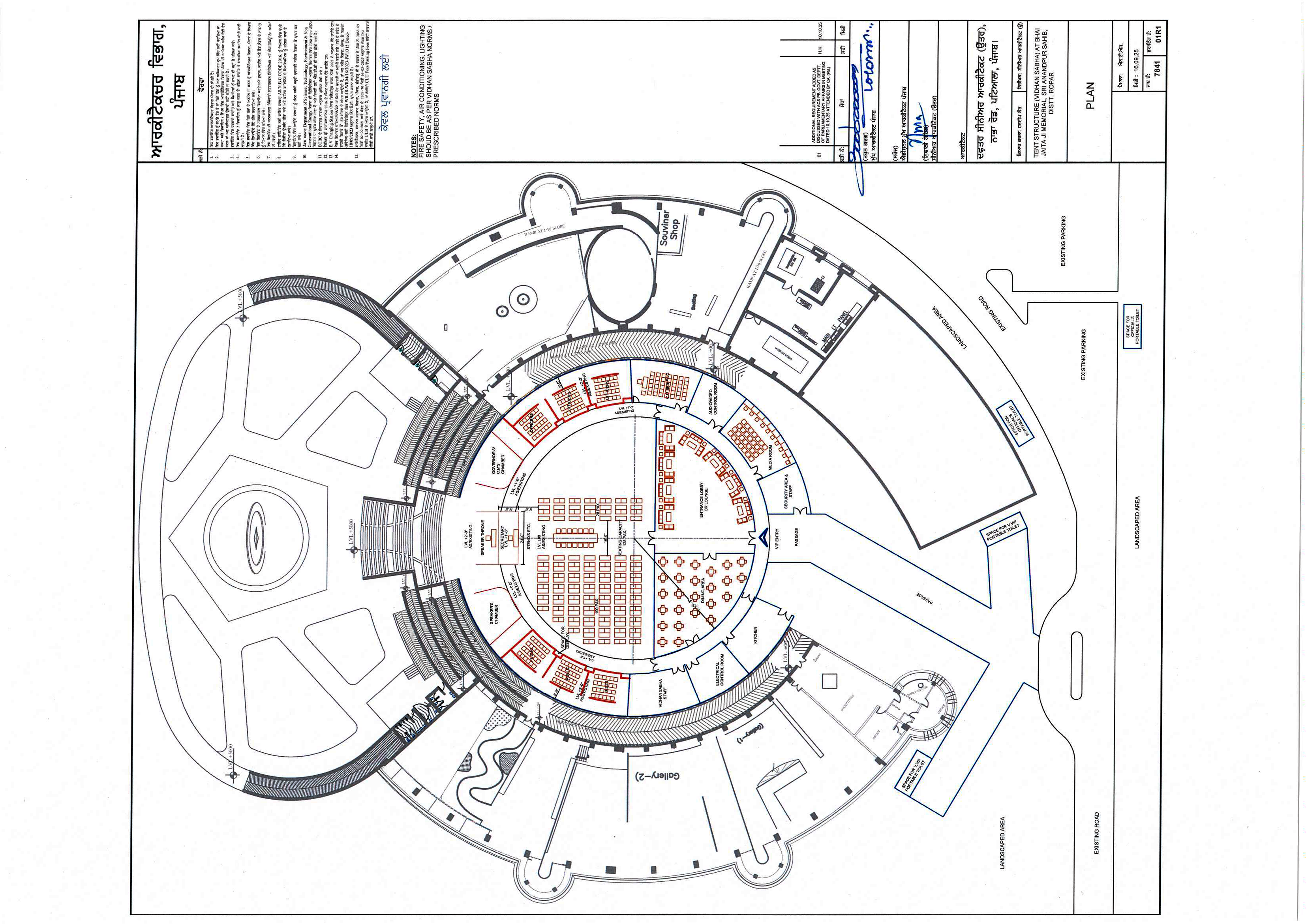
This specially constructed Tent City would be the centerpiece of the grand celebrations marking the 350th martyrdom anniversary of Guru Tegh Bahadur Ji. This marks the first time the Punjab government is gearing up to hold a special session of the Vidhan Sabha (state legislative assembly) at Sri Anandpur Sahib in November 2025, which will be convened outside its traditional premises in Chandigarh, bringing governance directly to a site steeped in spiritual and historical significance.
The event forms part of the grand commemoration of the 350th martyrdom anniversary of Guru Tegh Bahadur Ji, the revered ninth Sikh Guru known for his sacrifice and defense of religious freedom.
Alongside hosting pilgrims and devotees, the Tent City will serve as the vibrant venue for the Punjab Vidhan Sabha’s historic session, which is being convened outside Chandigarh for the first time.
With modern amenities, security arrangements, and spiritual programming, it promises to be a monumental convergence of faith, culture, and governance. There will be a software launched for the Tent City bookings in the coming days.
This landmark move reflects a multifaceted vision. On one hand, it honors the deep cultural and religious heritage linked to Anandpur Sahib, the birthplace of the Khalsa and the site of profound Sikh history. On the other, it embodies the government’s commitment to making governance more accessible and visible by situating legislative proceedings within the heart of the community and its traditions.
The session is scheduled to begin on November 24, 2025, within the Bhai Jaita Ji Memorial Complex in Sri Anandpur Sahib, symbolizing a harmonious blend of governance, spirituality, and public participation.
The preparatory process for this historic session has been meticulous and inclusive, ensuring that the event’s significance is matched by top-level coordination and modern organizational excellence.
A high-powered meeting convened by Cabinet Minister Harjot Singh Bains brought together senior officials from multiple departments, including tourism, parliamentary affairs, district administration, and the Vidhan Sabha secretariat. Accompanied by experts in public relations, security, and logistics, the deliberations reflected the scale and complexity of planning necessary to safely and effectively host thousands of participants and visitors.
One of the standout features of the event planning is the construction of the Tent City a temporary but extensive accommodation setup designed to comfortably house over 11,000 visitors daily from November 19 through November 30.
This Tent City not only facilitates the assembly members but also caters to pilgrims, media representatives, government personnel, and guests attending various commemorative activities. Accompanying these are arrangements for secured VIP passages, banquet halls, guest lounges, and media centers, all within a landscaped area thoughtfully prepared to provide convenience and dignity to all attendees.
Security protocols are being developed with equal seriousness. The presence of top ministerial offices, legislative officials, and dignitaries necessitates stringent monitoring and preventive measures, including the deployment of advanced CCTV cameras, rapid response teams, and controlled access points. Fire safety systems, medical emergency units, and public health measures have also been integrated into the overall event blueprint to account for the expected crowd density and prolonged duration of activities.
The event’s cultural significance is magnified by a series of planned public and spiritual engagements. Five nagar kirtans (religious processions), commencing from different parts of Punjab, are scheduled to converge at Anandpur Sahib by November 22 to mark the beginning of an intense period of prayer and reflection.
These processions symbolize communal unity and rekindle the spirit of devotion that Guru Tegh Bahadur Ji embodied.
Special kirtan darbars, light and sound shows, seminars on Sikh doctrines, and discussions about religious freedom are organized in tandem with the legislative sessions, reinforcing the cultural and religious dimensions of the event.
A particularly unique feature of the event is the simultaneous development of Anandpur Sahib’s Heritage Street a grand marble-paved pathway lined with trees planted by Sikh Gurus and historical figures, linking main thoroughfares to Takht Kesgarh Sahib, one of Sikhism’s holiest shrines.
This beautification project, backed by a dedicated budget, aims to enhance the pilgrimage experience, symbolizing not only beautification but also a reaffirmation of Sikh heritage and hospitality.
The legislative assembly session itself promises to be a democratizing moment. Sessions to be held in Anandpur Sahib will include routine proceedings, debates, and committee meetings but with the visible presence of the people, underscoring transparency in governance.
Dedicated galleries for the Speaker, treasury benches, opposition parties, and the media symbolize the functional seriousness of the session, even as it adopts the unique outdoor and spiritual context of the Tent City setting.
The government has also placed great emphasis on technological integration to ensure that the session is accessible, both for those present and for the wider public via remote broadcast.
High-quality audio-visual systems, including large screens and live web streaming, will broadcast proceedings in real time. This aspect ensures that the legislative process is not merely a closed-door affair but a transparent and participatory event that honors democratic principles as much as cultural traditions.
Senior officials have further coordinated plans for public amenities such as ample parking, sanitation facilities, and hospitality services, making the event not only a ceremonial success but also a model of urban and event planning under temporary conditions.
The arrival and accommodation of thousands of visitors demand careful attention to transport logistics, public safety, and emergency management, all of which have been systematically incorporated into the event strategy.
Moreover, the enhanced infrastructure including high-speed internet connectivity and energy-efficient installations is likely to leave a lasting benefit for Anandpur Sahib, promoting it as a spiritual tourism hub and a beacon of Sikh culture.
Public investments in beautification, modern amenities, and security upgrades contribute not only to the immediate event but also to the long-standing development goals of the region.
As the day of inauguration draws near, preparations are in full swing, with officials assuring the public that the assembly session in Anandpur Sahib will be both a historic event and a resounding success in organizing large-scale cultural and civic activities.
For Punjab, this represents not just an event, but a reaffirmation of identity, faith, and democratic governance all thriving together in an extraordinary celebration of heritage and progress.
