After the US captured Venezuela's Nicolas Maduro, Ukrainian President Volodymyr Zelensky hinted the US 'knows what to do next,' widely interpreted as a suggestion to act against Putin amid the ongoing war.
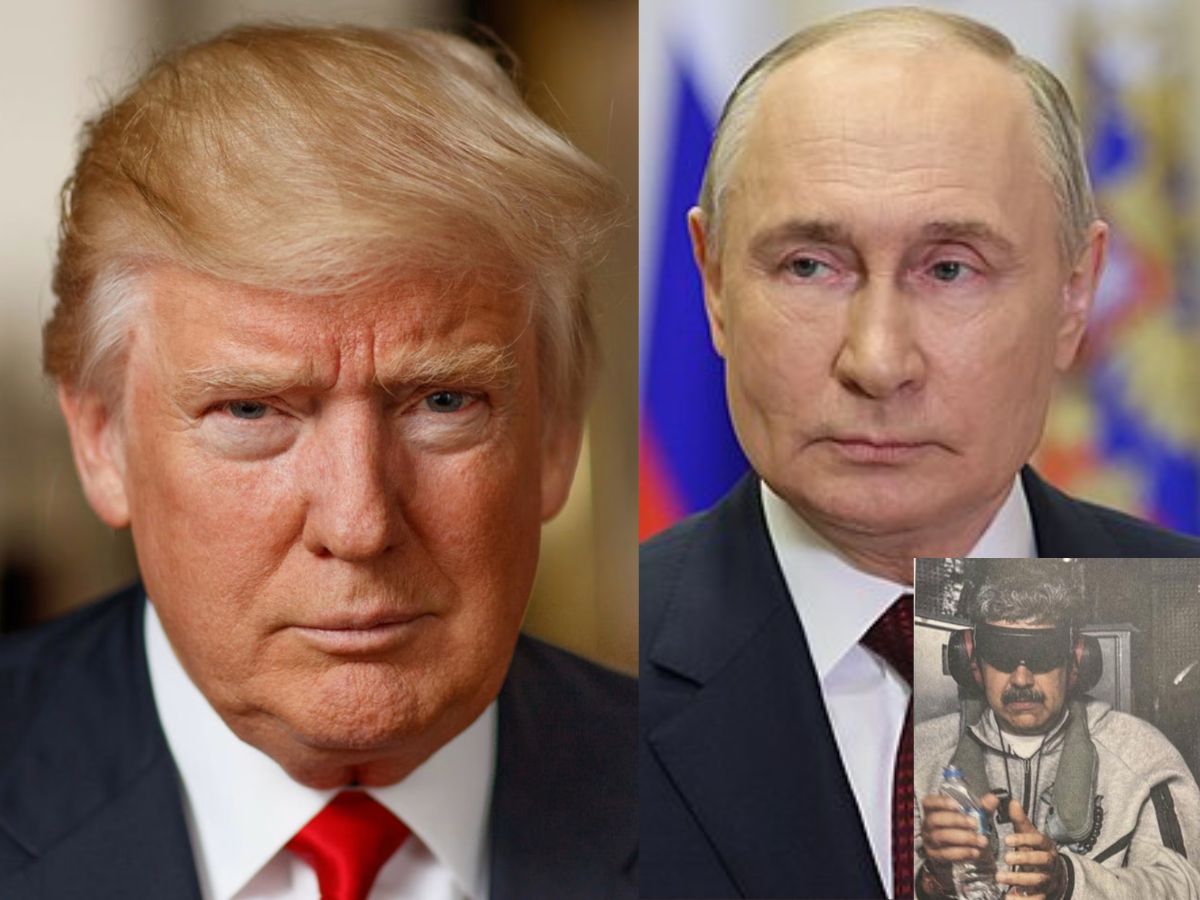
Volodymyr Zelensky hinted the US 'knows what to do next' [Photo: X]
Ukrainian President Volodymyr Zelensky surprised many with his reaction to the US dramatic capture of Venezuelan President Nicolas Maduro. When asked about the raid, Zelensky made a brief remark that many interpreted as a veiled suggestion to take similar action against Russian President Vladimir Putin, intensifying global discussion on how the world addresses dictators who commit aggression.
Zelensky's comment came as the US faces international criticism and Russian condemnation over its military action in Venezuela and as Ukraine continues its long war with Russia.
At a press briefing with European security advisers, Zelensky was asked how he viewed the US operation that led to Maduro’s capture. He responded with a subtle but pointed remark: “If this is how dictators can be dealt with, then the US knows what to do next.”
Zelensky did not explicitly mention Putin or Russia by name. However, the context of his comment, coming amid Russia’s ongoing invasion of Ukraine, led many global observers to interpret it as a reference to the Russian president.
While some see this as Zelensky urging stronger action against leaders who violate international norms, others note that his comment could be a rhetorical way to signal frustration with the nearly four‑year conflict.
Zelensky’s comment came at a time when Russia remains the main aggressor in Ukraine. The remark, “If this is how dictators can be dealt with, then the US knows what to do next”, was widely interpreted as a suggestion to target Putin, though the Ukrainian leader did not explicitly mention him.
The US operation that captured Maduro drew sharp criticism from Russia. The Russian Foreign Ministry condemned the raid, insisting Maduro was the “legitimately elected president” and urging the US to release him and his wife.
Russia’s strong reaction underscores the broader geopolitical tensions. Caracas has been a long‑standing ally of Moscow, complicating relations and adding to the stakes of Zelensky’s comments about potential next moves.
World leaders also weighed in. Many condemned the US action as a violation of sovereignty, while some US allies acknowledged Maduro’s contested legitimacy but stressed that forceful intervention sets a troubling precedent.
Experts warn that Zelensky’s remark was ambiguous rather than a formal call for military action against Putin. In context, it may have been intended to highlight frustration with authoritarian leaders rather than urge direct assault.
A Kyiv‑based analyst said Zelensky likely used the comment to nudge global powers about enforcing international norms, not as a literal instruction for war or capture. Such a step, particularly against Russia’s head of state, would have massive legal, diplomatic and military consequences.
In addition, Ukraine’s diplomatic strategy still focuses on building alliances, securing security guarantees and negotiating peace terms — not open calls for similar raids against other nations’ leaders.
The war between Ukraine and Russia remains at the forefront of Zelensky’s agenda. Recently, he has been engaged in talks with Western leaders to secure long‑term security guarantees and peace frameworks, even as battles continue along the front lines.
Zelensky’s comment about what the US “knows what to do next” could be seen as a broader diplomatic signal — urging Washington and its allies to remain assertive in the face of ongoing aggression and not be deterred by geopolitical pushback.
The intersection of the Venezuela raid, Zelensky’s remarks and the broader Russia‑Ukraine conflict highlights how volatile global politics have become. While a direct push to capture or remove Putin is highly unlikely and legally fraught, Zelensky’s words reflect a sentiment among some US and European policymakers about the need for firmer responses to authoritarian leaders.
As the world watches how diplomats, military planners and international courts respond to these developments, Zelensky’s carefully worded comments are likely to be referenced in discussions about war, sovereignty and international norms for years to come.
