Russian President Vladimir Putin’s upcoming visit to India is expected to deliver major outcomes across defence, energy, nuclear cooperation and trade, the Kremlin said.
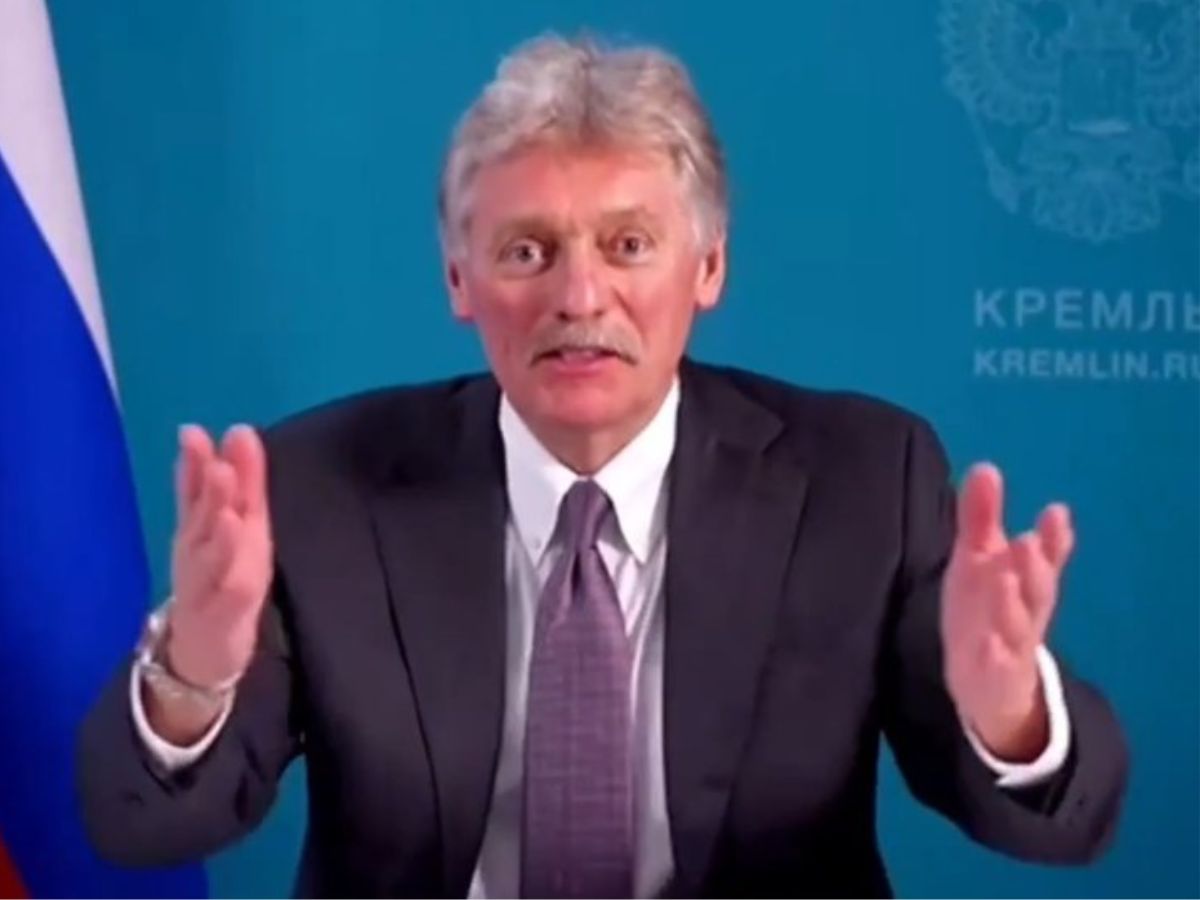
Russian President Vladimir Putin’s upcoming visit to India is expected to deliver major outcomes across defence, energy, nuclear cooperation and trade, the Kremlin said. (Image Credit: IANS LIVE)
NEW DELHI: Russian President Vladimir Putin’s forthcoming visit to India will yield “significant outcomes” across strategic, defence, energy and trade domains, Kremlin spokesperson Dmitry Peskov said on Tuesday.
Speaking at an online media interaction hosted by Sputnik News at the India Habitat Centre, Peskov said the visit is expected to further deepen a partnership grounded in “mutual understanding, partnership and a shared vision of global affairs based on the rule of law”.
He highlighted the long-standing nature of the India–Russia relationship, recalling that Moscow has stood “shoulder to shoulder” with New Delhi during key stages of its development.
Peskov described strategic and defence cooperation as “sensitive areas”, but stressed that Russia remains ready to share its expanded expertise, including in emerging technologies.
Energy and nuclear cooperation are set to figure prominently in the talks between Putin and Prime Minister Narendra Modi. Peskov said Russia continues to supply energy to India at competitive rates, calling the arrangement mutually beneficial. On civil nuclear cooperation, he said ongoing projects and future plans have helped build “a separate sectoral ecosystem” within India’s nuclear industry.
Pertinent to mention that PM Modi and President Putin have spoken to each other 11 times in the last three years apart from personal interactions.A total of four telephone conversations took place in 2024 (15 January, 20 March, 05 June and 27 August), two in 2023 (30 June 30 and 28 August) and five in 2022.
Official sources said that the visit of Putin will be a defining moment of the Modi government and its benefits will be seen both in the short and the long term.
Trade will be another major focus. Bilateral trade has reached $63 billion, with both sides aiming to cross $100 billion by 2030. Acknowledging attempts by “some actors” to disrupt commercial ties—an oblique reference to the United States—Peskov said Moscow intends to correct the trade imbalance by importing more from India. A business congress with companies from both countries will meet a day before Putin’s arrival to identify opportunities for boosting Indian exports.
On the Ukraine conflict, Peskov welcomed India’s “balanced” approach and cited Modi’s remark that “this is not an era of war”. He said Russia values India’s willingness to hear its perspective, contrasting this with what he described as a breakdown in dialogue with Europe. He also confirmed that discussions involving US interlocutors continue, and reiterated Moscow’s openness to peaceful settlement efforts.
Addressing Russia’s growing engagement with China, Peskov said cooperation with Beijing will expand “in every field as far as India allows”, insisting that Moscow’s partnerships with India and China are both strong but independent of one another.
Defence issues—including the S-400 air defence system and the Sukhoi-57 fighter jet—are also expected during the visit. Peskov noted that Russian-origin systems account for 36% of India’s defence imports.
On counter-terrorism, he condemned the recent blast in Delhi and reaffirmed Russia’s long-standing solidarity with India, calling for stronger global cooperation against terrorism.
He added that discussions may also cover the proposed Chennai–Vladivostok maritime corridor, cooperation on Iran’s Chabahar port, and global moves toward de-dollarisation amid increasing “unpredictability” in the international financial system.
