
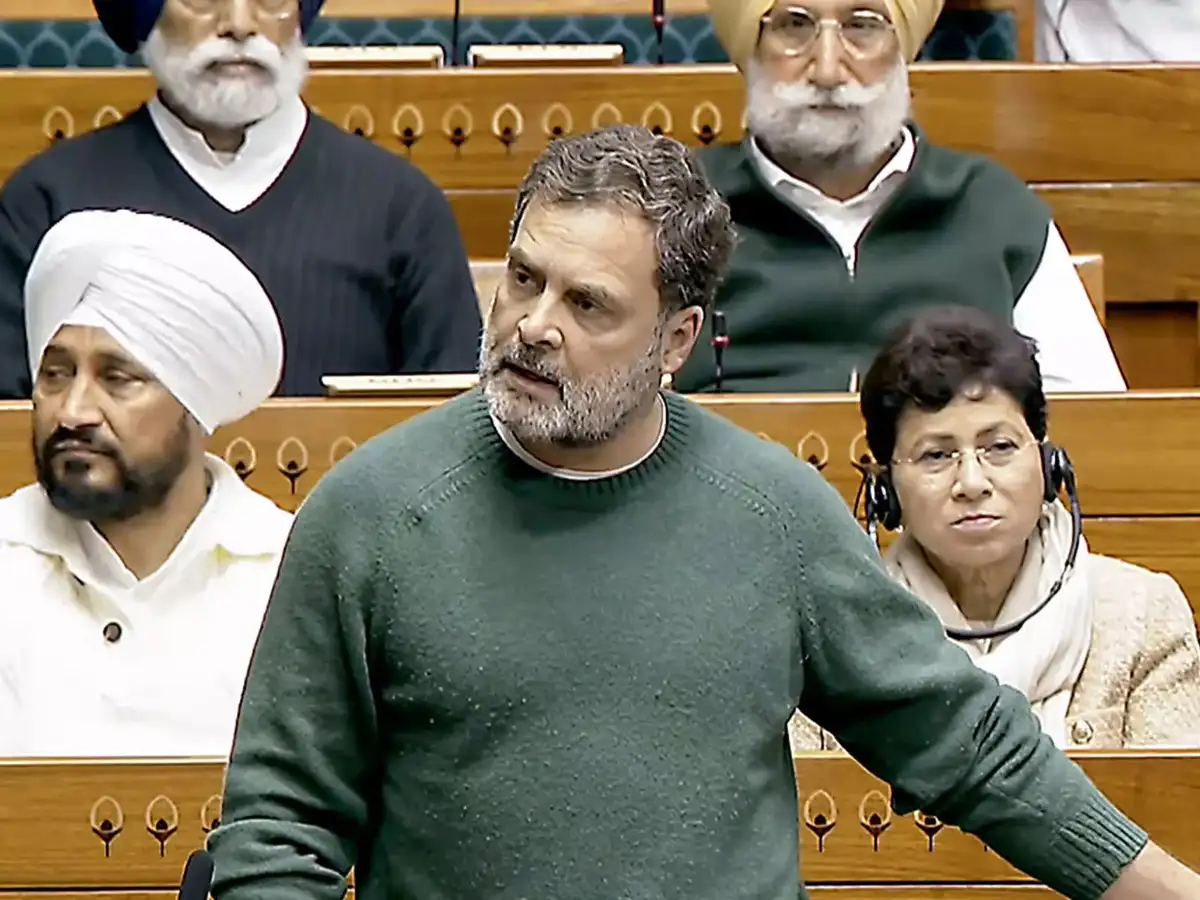
NEW DELHI: The conduct of Leader of the Opposition Rahul Gandhi during the first phase of the Budget Session of Parliament has triggered unease within the Congress and provided the ruling party with an opportunity to mount sustained attacks. While no senior Congress leader has spoken publicly, there is visible discomfort within the party over both strategy and execution.
The Bharatiya Janata Party (BJP) has moved swiftly to capitalise. Senior leader Ravi Shankar Prasad described Rahul Gandhi’s conduct during the first phase as “chaotic and undemocratic,” signalling that the ruling party would not let the issue pass.
Within Congress circles, some leaders privately attribute the situation to flawed floor coordination. General Secretary (Organisation) KC Venugopal is being seen by some as central to the strategy, given his proximity to Rahul inside and outside the Lok Sabha. A few MPs from Kerala were frequently by Rahul’s side. In contrast, Priyanka Gandhi Vadra reportedly maintained distance and was surrounded by other MPs. Several senior and experienced Congress members in the Lok Sabha also kept away during the escalation. Only in the final two days did party MPs collectively protest against the government within the Parliament premises.
The Congress’s difficulties began early in the session. During the debate on the Motion of Thanks to the President’s Address, Rahul Gandhi raised the issue of General Naravane’s unpublished book. The move generated media attention but yielded limited political traction. Government floor managers quickly sensed that Congress might be overplaying the issue and began countering aggressively.
The government released videos highlighting incidents inside and outside the House, including the alleged obstruction of the Prime Minister’s speech and confrontations in the office of Speaker Om Birla. Congress found itself increasingly on the defensive.
As tensions mounted, eight Congress MPs were suspended for the remainder of the Budget Session. Rahul Gandhi then stood with the suspended MPs and referred to Union Minister of State Ravneet Bittu as a traitor—a remark that has reportedly unsettled sections of the Punjab Congress, where Assembly elections are due in less than a year.
The impasse deepened when Rahul Gandhi again insisted on raising Naravane’s book during the general Budget discussion. Despite repeated warnings from Speaker Birla, he persisted. The confrontation escalated to the point where Congress moved a notice of no-confidence against the Speaker. Efforts to break the deadlock were initiated in the Speaker’s chamber. It was agreed that the Budget discussion would proceed first, followed by other issues. However, when proceedings resumed, Rahul Gandhi again referred to the Naravane matter. Parliamentary Affairs Minister Kiren Rijiju objected, stating that all parties had agreed to prioritise the Budget debate.
Government floor managers appeared confident that Congress stood isolated on the Naravane issue. Following service of the no-confidence notice, Speaker Birla refrained from taking the Chair until consensus was achieved. Congress initially believed it had cornered the government, but once agreement was reached, the House proceeded with the Budget debate.
When Rahul Gandhi’s turn came, his speech again drew controversy. He named Union ministers and others without presenting documentary evidence. He also referred to BJP MP Jagdambika Pal, who was presiding at the time, as a former Congressman—a remark that further inflamed tempers. Pal responded sharply, remarking that had Rahul listened earlier, he might not have been in the Opposition.
The atmosphere in the House became charged. The government considered moving a breach of privilege notice against Rahul Gandhi but later stepped back after BJP MP Nishikant Dubey submitted a special motion. If admitted and passed, such a motion could have serious implications, potentially even affecting Rahul Gandhi’s membership.
The second phase of the Budget Session, beginning March 9, is expected to be politically significant. The House will have to address both the no-confidence notice against the Speaker and the special motion submitted by Dubey. While the government’s majority ensures its numerical stability, the developments present a delicate situation for Congress.
If the special motion is admitted, the consequences could extend beyond parliamentary tactics to internal party dynamics. The episode has already intensified scrutiny of Congress’s floor management and strategy. Whether the party recalibrates its approach in the second phase of the session will determine if it regains the political initiative or cedes further ground to the BJP.




