Delhi blast probe uncovers Jaish-linked terror module planning multi-city attacks; key suspects, explosives, and funding traced to Al-Falah University.
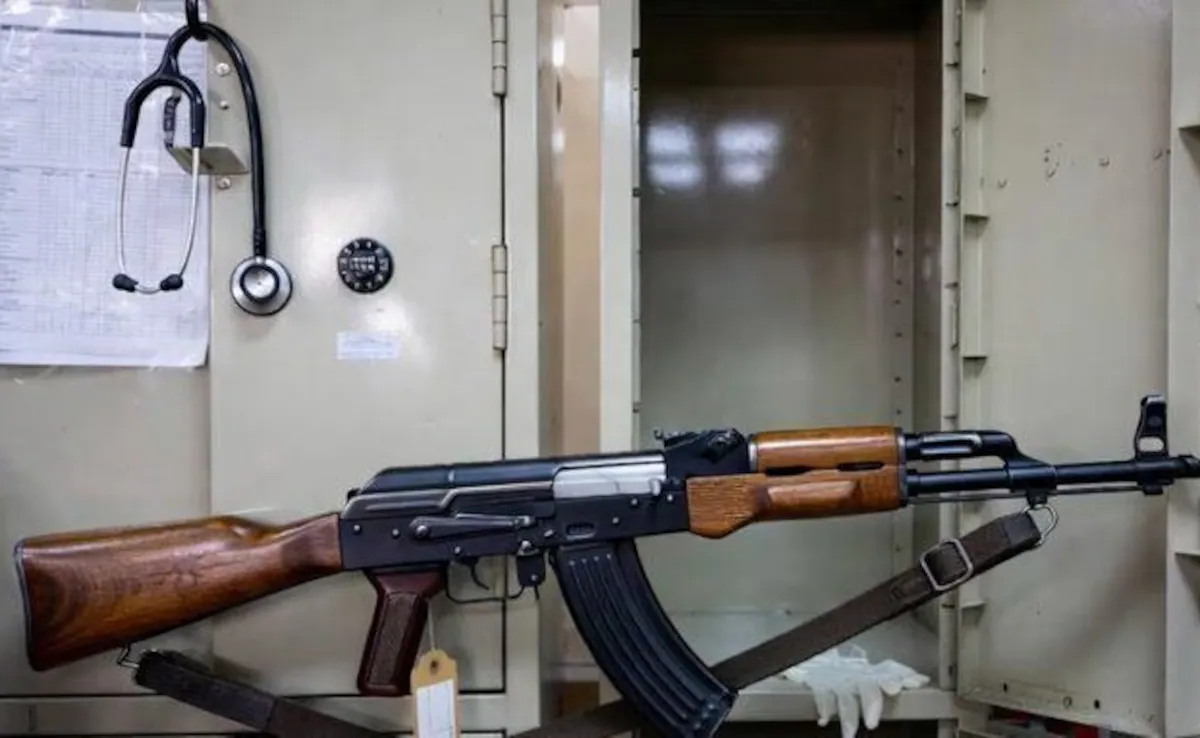
Authorities recover explosives and AK-47 while investigating Jaish-linked Red Fort terror module; Al-Falah University comes under scrutiny (Photo: File)
NEW DELHI: The investigation into the recent Delhi blast has uncovered an extensive and sinister plot by a Jaish-linked white-collar terror module that intended to carry out coordinated explosions across multiple Indian cities. One of the arrested suspects, during interrogation, admitted that the conspiracy was conceived as far back as 2023, sources told The Sunday Guardian.
As agencies pieced together the chain of events behind the 10/11 Red Fort blast, they concluded the explosion triggered in an EcoSport car close to the historic monument was most likely a panic detonation. At least five people lost their lives, and investigators believe the premature blast thwarted what was originally meant to be a large-scale serial-bombing plot.
A major breakthrough in the probe came when terror accused Muzammil gave a detailed confession to the investigators. He revealed that the plan to execute bombings in Delhi and other cities was finalised in 2023, and that he had been sourcing explosive materials over the last two years. According to his statement, Muzammil was tasked with procuring ammonium nitrate and urea. He purchased 26 quintals of NPK fertilizer from markets in Gurugram and Nuh for a sum of Rs 3 lakh. The responsibility of converting this fertilizer into a potent explosive mixture lay with Dr. Umar.
Financial backing for the plan had already been arranged: a total of Rs 26 lakh was pooled and handed over to Umar for preparing the explosives. Adeel provided Rs 8 lakh, and Muzaffar added Rs 10 lakh. Umar himself put in Rs 2 lakh, and Dr. Shaheen gave another Rs 5 lakh.
Intelligence officials further disclosed that Muzammil, arrested after authorities seized over 2,500 kg of ammonium nitrate in Faridabad, had also purchased an AK-47 rifle for more than Rs 5 lakh. This weapon was later found in Adeel's locker. According to intelligence sources, the acquisition of the rifle is a pivotal link in the investigation as it highlights the scale, preparedness, and substantial funding behind the module.
Officials added that every member of the group was functioning under a different handler. Muzammil reported to one handler, while Umar was under another. Two important handlers, identified as Mansoor and Hashim, were themselves being directed by a senior controller believed to be overseeing the entire operation. The structure, officials said, was deliberately layered to avoid detection.
Investigators also confirmed that in 2022, Adeel and accused Muzaffar Ahmad, travelled to Turkey on the directions of an individual named Okasa, who is linked to the Tehrik-i-Taliban Pakistan (TTP). From Turkey, they were expected to be taken to Afghanistan through a local contact. However, after keeping them waiting for nearly a week, the handler abruptly discontinued communication and backed out, sources revealed. Muzammil stayed in contact with Okasa through a Telegram ID.
Umar had been rigorously studying bomb-making material, including online manuals, open-source documents, and instructional videos. He procured chemical supplies from Nuh, as well as electronic components from Bhagirath Palace and Faridabad's NIT Market. He even bought a deep freezer to store and stabilise chemicals while preparing explosive compositions. A source explained that the freezer played a key role in cooling, processing, and stabilising the compound.
Investigators have also verified reports of a heated confrontation between Umar and Muzammil in the premises of Al-Falah University in Faridabad. The altercation, which was reportedly witnessed by several students, was over financial disagreements. After the quarrel, Umar handed over his red EcoSport vehicle already carrying explosive material—to Muzammil. The car was subsequently recovered from Faridabad. While Umar died in the blast after triggering the explosives, the remaining accused have been arrested and are being interrogated.
All of them were associated professionally with Al-Falah University, which is now under scrutiny for possible financial irregularities and its suspected role in enabling the module. According to intelligence agencies, the group intended to stockpile explosive materials at several safe locations and carry out simultaneous strikes. All available evidence from the recovered explosive ingredients to the digital communication trail strongly suggests a coordinated multi-location attack plan.
Agencies also reiterated that the brawl between Muzammil and Umar at Al-Falah University marked a turning point in the operational dynamics of the group. Following this, Umar relinquished his red EcoSport, which later became a key piece of evidence. Umar ultimately perished in the premature blast, while the other accused remain in custody. Investigators are now working to trace the larger network, funding channels, and the international handlers tied to the conspiracy.
Meanwhile, the Delhi High Court on Friday declined to pass directions allowing Jasir Bilal Wani, a co-accused in the Red Fort terror attack case, to meet his lawyer at the National Investigation Agency (NIA) headquarters. Wani continues to remain in NIA's custodial remand.
Notably, this is not the first time Al-Falah University has been mentioned in connection with individuals involved in terrorism-related cases. Investigators discovered that Mirza Shadab Baig—accused in the 2008 Ahmedabad serial bombings and the 2007 Gorakhpur blast—is a former student of Al-Falah University. Baig is suspected of having ties with the Indian Mujahedeen network. Despite this, authorities reportedly failed to monitor his association with the university for nearly two decades. Originally from Baridi village in Lalganj, Azamgarh district, Baig resided at Raja Ka Qila Molalla in Azamgarh with his family. In 2007, he enrolled in the Bachelor of Technology (Electronics & Instrumentation) program at Al-Falah Engineering College in Faridabad, Haryana. He has been absconding for 20 years, and Interpol has issued a Red Corner Notice for his arrest.
