Ayodhya marks a historic milestone as the saffron Dharma flag is hoisted atop the Ram Mandir. Dr. Mohan Bhagwat reflects on Ramrajya, heritage, and India’s civilizational duty.
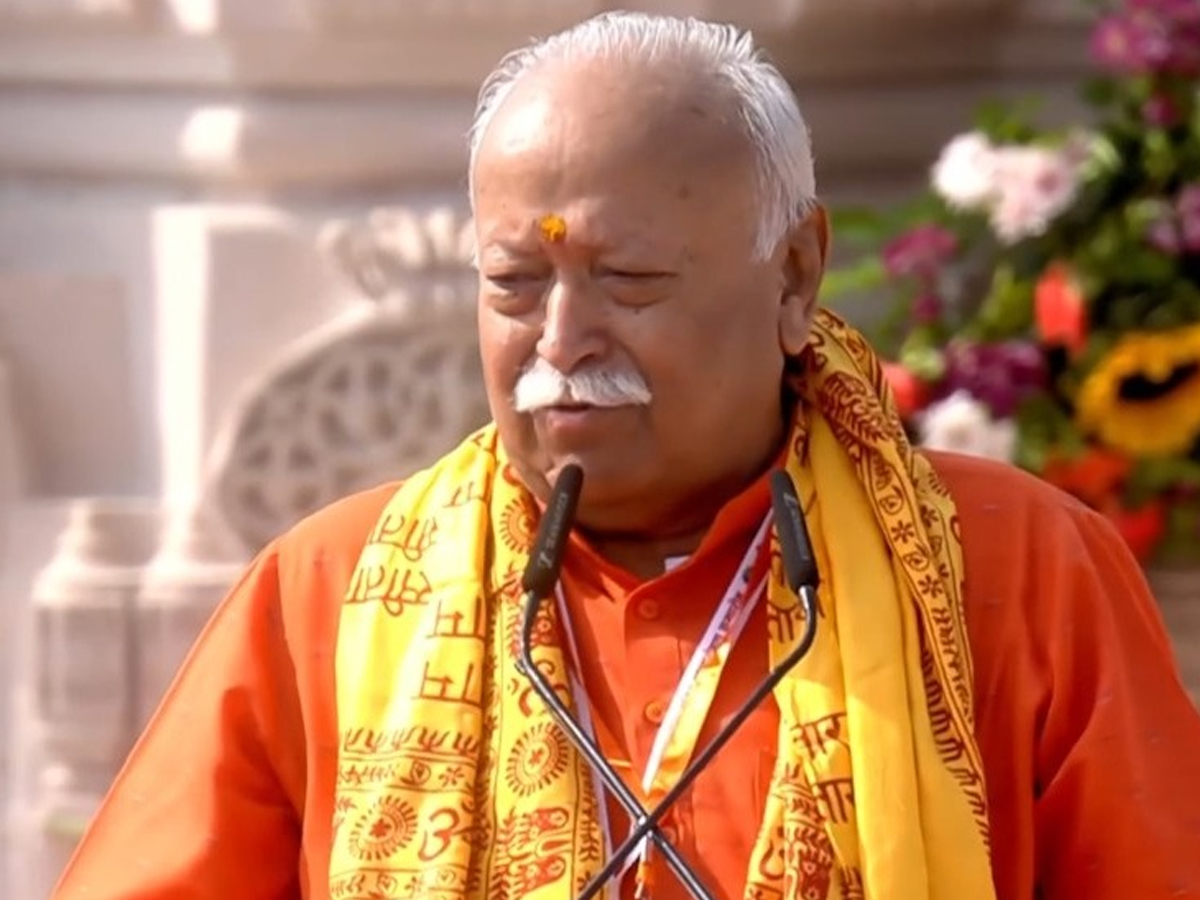
Emphasizing India’s civilizational responsibility, he quoted scriptures to underline the duty of those born in this land. (Photo: Social Media)
New Delhi: As Vivah Panchami dawned—the auspicious fifth day of the bright phase of Margashirsha—Ayodhya and millions around the globe celebrated the landmark completion of the Shri Ram Janmabhoomi Temple. Marking this monumental milestone, the saffron flag was hoisted atop the temple on Tuesday in a ceremony that drew national attention. Speaking at the event, Dr. Mohan Bhagwat, Sarsanghchalak of the Rashtriya Swayamsevak Sangh (RSS), described the day as one of “great significance for all of us.”
Reflecting on the culmination of decades of relentless dedication, cherished aspirations, and innumerable sacrifices, Dr. Bhagwat invoked the memory of the many visionaries and devotees who contributed to the movement. “Ashok Singhal must have truly found peace today. Mahant Ramchandra Das Maharaj, Dalmia and countless saints, householders, and students have persevered and sacrificed. Those who could not witness this moment also longed for this temple, which has now been realized. Today, the classical process of temple construction is complete, and the flag has been hoisted. It is a historic and deeply fulfilling moment, a day of fulfillment and reaffirmation of the resolve passed down by our ancestors.”
Dr. Bhagwat said the flag raised over the temple was a symbol of the revival of Ramrajya—a period associated with peace, justice, and harmony. “The flag of Ramrajya, which once flew in Ayodhya, spreading peace and joy across the world, has now risen again to its rightful pinnacle. We have witnessed this in our own lifetime. This flag is a symbol of dharma. Just as it took time to hoist it so high, it took decades to build this temple. Even if we set aside five centuries of longing, the last 30 years alone have involved tireless effort. Through this temple, we have elevated the values that safeguard the well-being of the entire world. The saffron color of the flag represents dharma itself.”
He elaborated on the sacred symbols represented on the Dharma flag, explaining that the Kovidara emblem is rooted in the traditions of the Raghukul. The Kovidara, resembling the Kachnar tree while integrating qualities of the Mandar and Parijat trees, carries deep philosophical meaning. “Trees stand in the sun, provide shade, bear fruit, and share it with others. ‘Vrikshah Satpurushaah Iva’—trees are like virtuous people. If we are to live such a life, we must remain committed to righteousness, even amidst adversity, scarcity, or a world consumed by selfishness.”
He highlighted that the Kachnar tree is not only decorative but medicinal and edible, symbolizing usefulness and virtue. Turning to the emblem of the Sun, Dr. Bhagwat explained that it represents brilliance and unwavering determination. “It's a chariot with a single wheel, no clear path, seven horses, reins held by a serpent, and a charioteer without legs, yet it traverses the sky from east to west every day, tirelessly achieving its purpose. Accomplishment comes through self-reliance.”
Reflecting on the long historical struggle that preceded the construction of the temple, Dr. Bhagwat said that Hindu society had demonstrated exceptional resilience through centuries. Now, with Ram Lalla restored to His birthplace and the temple standing tall, the community has entered a new era. “Truth is eternal, represented by Omkar. We must establish an India that shares this truth with the world. Our resolve has borne fruit. The work of creating an India that spreads dharma, knowledge, shelter, and positive outcomes globally has begun. Keeping this symbol in mind, we must work together, continuously, even in adversity.”
Emphasizing India’s civilizational responsibility, he quoted scriptures to underline the duty of those born in this land. “‘Etaddeshaprasutasya Sakashadagrajanmanah’—those born in this land must live lives that inspire the world. ‘Svaam svaam charitam shiksharan pruthivyaam sarvamanavaah’—all humanity should learn from the character of Indians. We must build an India that embodies supreme glory, spreads happiness and peace, and delivers the fruits of development. This is the expectation of the world and our duty.”
Concluding his address, Dr. Bhagwat said, “Shri Ram Lalla is present among us. Drawing inspiration from Him, we must accelerate our work. As Ramdas Swami said, ‘Swapni je dekhiley raatri, tete taisechi hotase’—what was dreamt is now even grander than imagined. I extend my best wishes to all followers of Sanatan Dharma and citizens of India, hoping this sacred moment instills penance, devotion, and determination in our hearts.”
