Sakat Chauth, observed on January 6, 2026, is a special form of Sankashti Chaturthi when devotees worship Lord Ganesha and break their fast only after moonrise
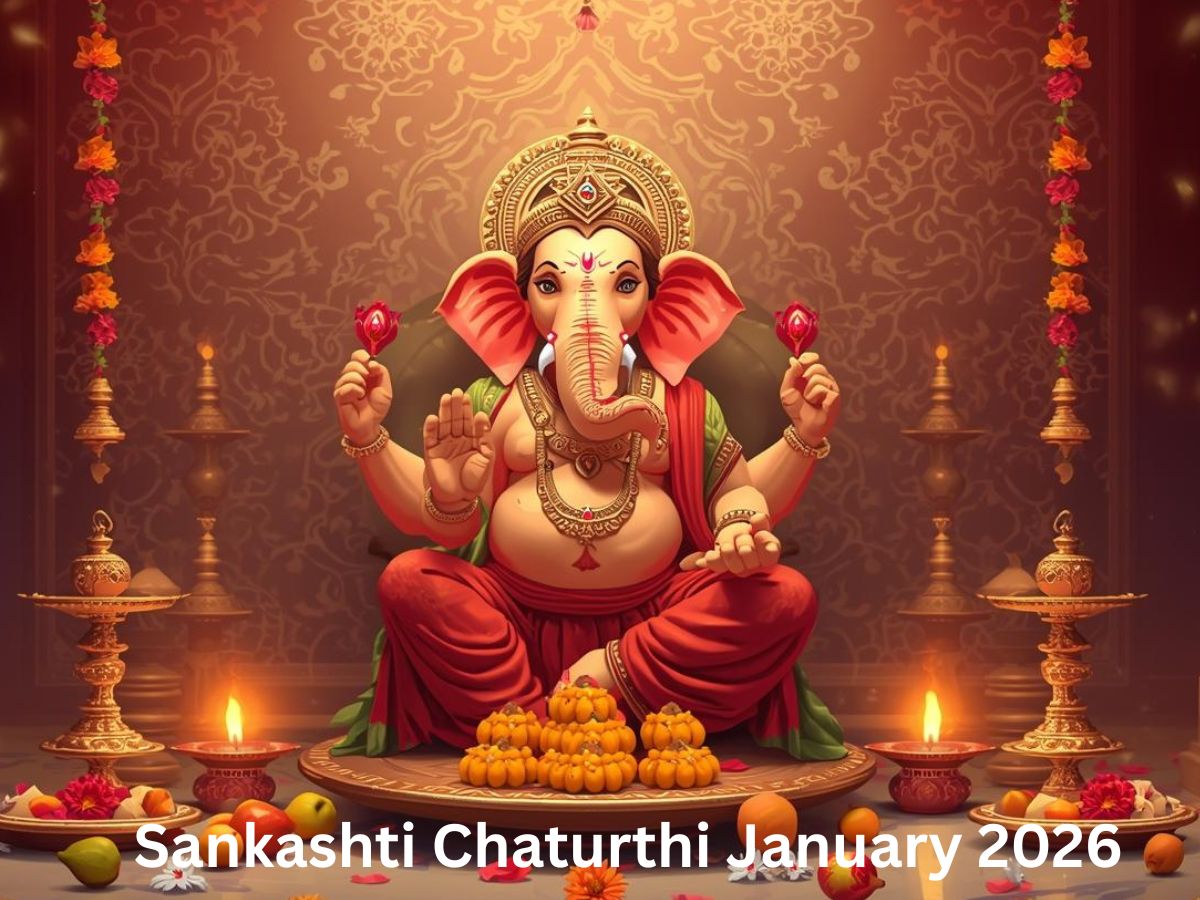
Sankashti Chaturthi January 2026
The Sankashti Chauth fast is observed on the fourth day of the Krishna Paksha every month. This day is dedicated to Lord Ganesha, who is worshipped for wisdom, good fortune, and the removal of obstacles.
When this Chauth falls in the month of Magha, it is specially known as Sakat Chauth. This festival is devoted to Sakat Mata, and on this day, mothers keep a fast for the health, safety, and long life of their sons.
As this fast depends on moonrise, many devotees like to check the moon timing in advance. This becomes even more important during winter, when fog and clouds can affect visibility.
In 2026, Sakat Chauth will be observed on Tuesday, January 6. According to the Hindu lunar calendar, the vrat is kept on the Chauth Tithi of Krishna Paksha in the month of Paush. Devotees keep a day-long fast and perform Ganesh puja in the evening before the moon appears.
Sakat Chauth is different from most Hindu fasts because the fast is not broken until the moon is seen.
After moonrise, devotees:
Offer arghya (water) to the moon
Pray to Lord Ganesha
Then take their first meal of the day
Breaking the fast before moonrise is considered incomplete. That is why knowing the exact moonrise time of your city is very important, especially during winter when the sky is often cloudy.
Devotees should check the Panchang or calendar for their city to know the exact moonrise time. Since the moon appears at different times in different locations, this helps people complete their vrat properly.
The vrat begins at sunrise and continues until the moon rises.
Here is how most devotees observe it:
Wake up early and take a bath
Wear clean clothes
Take a sankalp (promise to keep the fast sincerely)
Do Ganesh puja in the evening
Offer modak, til (sesame seeds), jaggery, flowers, and durva grass to Lord Ganesha
At moonrise, offer arghya to the moon
After prayers, break the fast with simple sattvik food
Sometimes the moon cannot be seen because of fog or heavy clouds, especially in winter.
In such situations, devotees are advised to follow the moonrise time mentioned in the Panchans and offer prayers while facing the direction of the moon, even if it is not visible.
