
New Delhi: With the completion of the first phase of the Bihar Assembly elections, political attention has now shifted to the Seemanchal region, where all major parties are intensifying efforts to woo voters. Historically known for delivering fractured mandates and swinging between alliances, Seemanchal has once again emerged as one of Bihar’s most politically dynamic battlegrounds. The ruling National Democratic Alliance (NDA) and the opposition Mahagathbandhan are conducting back-to-back rallies and high-profile visits to consolidate their positions. The contest, however, has become even more intricate with the entry of Prashant Kishor’s Jan Suraaj and Asaduddin Owaisi’s AIMIM, transforming it into a four-cornered electoral face-off.
Although Seemanchal comprises just 24 Assembly constituencies across Kishanganj, Araria, Katihar, and Purnia, political observers point out that its influence often extends far beyond its numerical strength, shaping the overall electoral narrative of Bihar. The region’s demographic profile plays a key role in this importance—Muslims form a majority in Kishanganj at over 60%, about 45% in Araria, more than 40% in Katihar, and nearly 30% in Purnia. Alongside this, the substantial presence of Yadavs and Extremely Backward Classes (EBCs) further cements Seemanchal’s status as a politically decisive zone in the state’s complex electoral calculus.
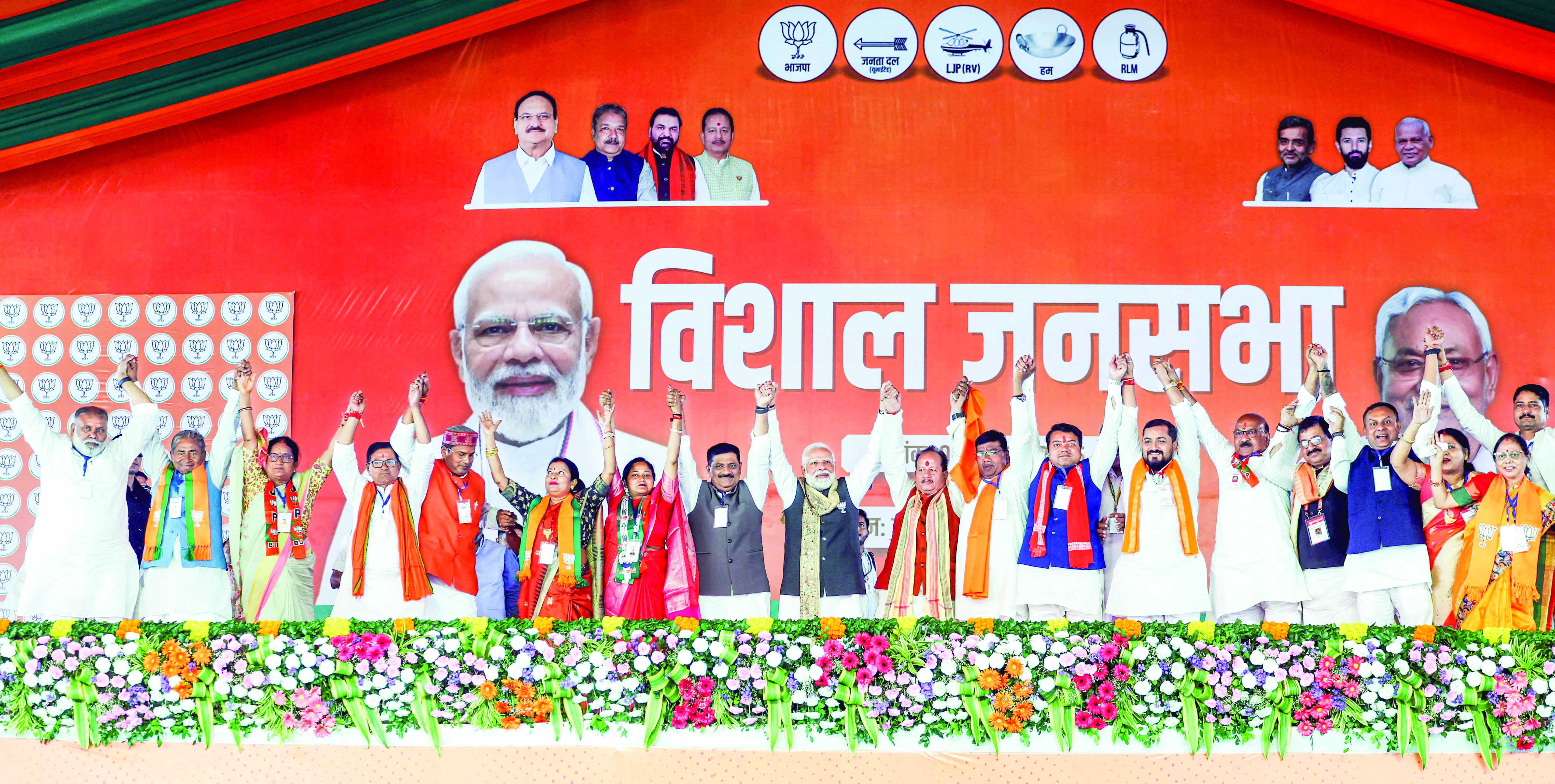
Earlier this week, Prime Minister Narendra Modi, addressing a rally in Katihar, launched a fierce attack on the Opposition, accusing it of “surrendering before extremists”. He alleged that the RJD and Congress were part of a “dangerous conspiracy” in Katihar, Araria, and Purnia to manipulate the region’s demographic balance for electoral gains. Calling Seemanchal a “sentinel of our culture and civilisation,” Modi warned that such actions by the Opposition were putting Bihar’s future and its citizens, including “daughters and children,” at risk. He asserted that whenever the BJP-led NDA talks about removing infiltrators, the Congress and RJD “rush to defend them”. The NDA, meanwhile, continues to anchor its campaign around the theme of development, projecting progress and governance as its key promises for the region.
On the Opposition front, Congress leader Rahul Gandhi has been steadily building momentum through his Voter Rights Yatra, which traversed eight constituencies of Seemanchal, underscoring the unity within the Mahagathbandhan. Displaying rare camaraderie among leaders who were once rivals, the yatra has infused fresh energy into the alliance’s campaign. Complementing Gandhi’s outreach, Congress general secretary Jairam Ramesh launched a scathing critique of the NDA government, pointing to stark indicators of poverty and neglect. He noted that in Araria, Purnia, Kishanganj, and Katihar, 73% of households lack access to tap or hand pump water, 33% still defecate in the open, and 65% rely on wood-fired stoves, exposing them to severe health risks. Further, 84% of families possess fewer than three basic items such as a fan, TV, or bicycle, reflecting extreme deprivation. Ramesh accused the “double-engine government” of keeping the region backward, arguing that Seemanchal continues to suffer from the absence of quality education, healthcare, and employment opportunities. “There is only poverty and migration,” he said, asserting that the people of Seemanchal will this time respond to such neglect by defeating the NDA through the power of their votes.
Adding another layer to this evolving political landscape is the re-entry of AIMIM and the rise of Jan Suraaj. AIMIM, which had secured five Assembly seats in Seemanchal during the last election but now retains only one MLA from Amour, is seeking a political revival. Party chief Asaduddin Owaisi has repeatedly drawn attention to Seemanchal’s chronic backwardness and has even introduced a private member’s Bill in the Lok Sabha, advocating the creation of a Seemanchal Region Development Council under Article 371 to address its persistent developmental gaps. Meanwhile, Prashant Kishor, the political strategist-turned-activist, is devoting significant time to Seemanchal under the banner of his Jan Suraaj movement. Concentrating on constituencies such as Rupauli, Kasha, Banmankhi, and Baisi, Kishor aims to build a grassroots alternative to the established alliances. Backed by Pappu Singh, Jan Suraaj’s national president and a seasoned politician from Purnia, the movement is positioning itself as a credible force capable of reshaping Bihar’s political discourse.
A political analyst observing the evolving scenario in Bihar told The Sunday Guardian that with heavyweight leaders from Patna to Delhi descending on Seemanchal, the region is poised to witness one of the most closely contested multi-cornered battles in the state’s history. While the overarching state-level contest is expected to remain primarily between the NDA and the Mahagathbandhan, the region’s high concentration of Muslim voters, coupled with the assertive campaigns of AIMIM and Jan Suraaj, ensures that Seemanchal will play a decisive role in determining the final outcome. Observers further note that the emergence of AIMIM and Jan Suraaj has disrupted traditional vote banks, potentially fragmenting the support bases of both major alliances, thereby adding fresh complexity to Bihar’s already intricate electoral arithmetic.




