
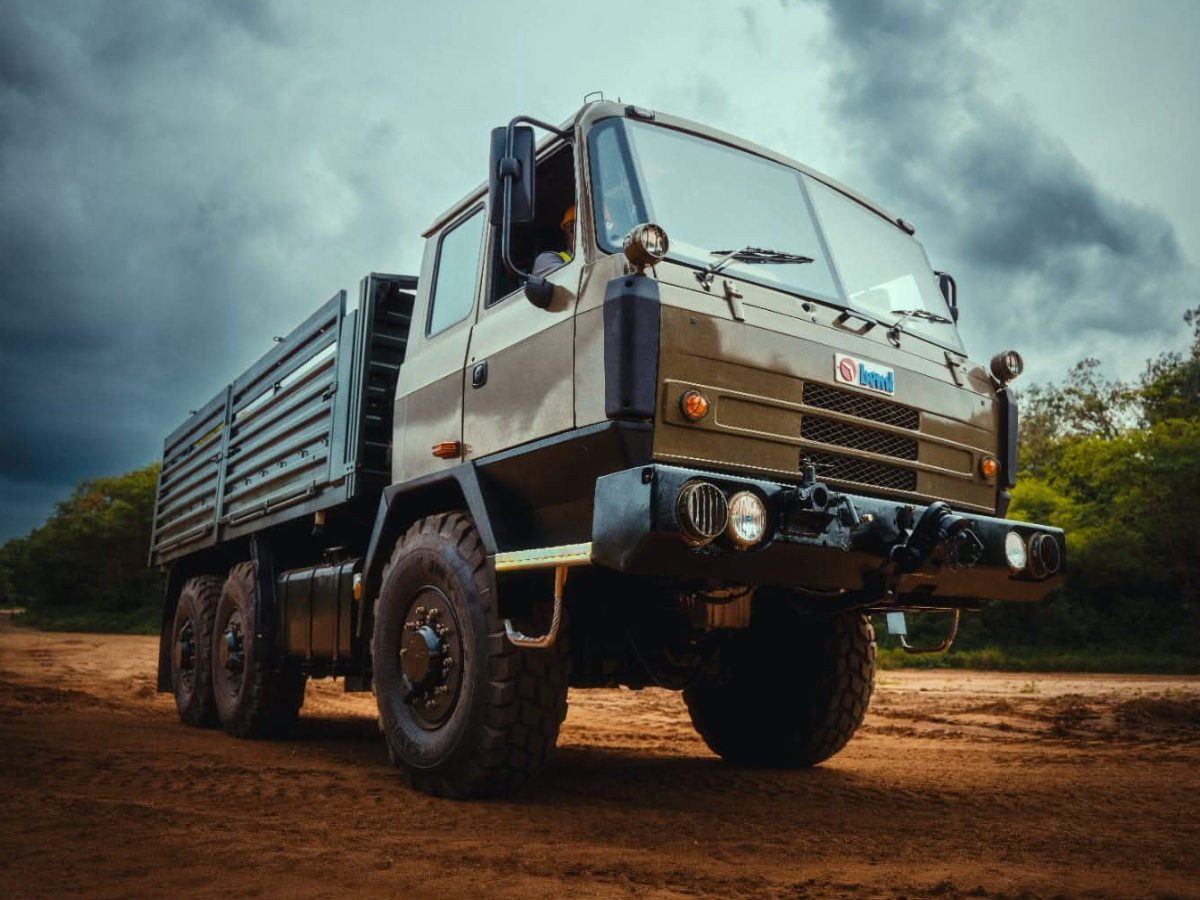
When conversations around India’s defence modernisation arise, the spotlight usually falls on high-visibility platforms, such as fighter jets, submarines, or missile systems. Yet, beneath the headlines lies a fleet of machines that make it possible for those big-ticket assets to function in combat. These are High Mobility Vehicles (HMVs), the silent workhorses of the Indian Army. They rarely draw public attention, but without them, India’s ability to fight, move and sustain itself on the battlefield would be compromised.
India’s geography is unforgiving. From the deserts of Rajasthan to the snowbound frontiers of Ladakh and Arunachal Pradesh, mobility is always contested. Tanks, artillery, and missile systems may be powerful, but they are useless if they cannot be deployed in time or sustained over long distances. This is where HMVs come in. Built for rugged performance, they transport heavy weapon systems, carry supplies, and even serve as platforms for radars and missile batteries. In short, they form the backbone of the Army’s logistical and combat support ecosystem.
The Indigenisation Imperative
India’s reliance on imported platforms in the past often created operational vulnerabilities. Spare parts shortages, long supply chains and rising costs eroded readiness. Recognising this, the government has pushed for self-reliance under Aatmanirbhar Bharat. In the HMV space, this transition has been visible. What began in the late 1980s with licensed production of Tatra trucks at BEML has now matured into a fully indigenous family of vehicles.
These vehicles, manufactured by BEML Limited, are not just copies of foreign designs. Over the decades, they have been re-engineered and customised to suit India’s operational conditions. Variants range from 4×4 to 12×12, offering flexibility to mount everything from bridge-laying systems to long-range missiles. The result is a fleet tailored to Indian requirements, available at scale, and supported by an assured domestic supply chain.
Backbone of Army Operations
The range of roles HMVs fulfil is vast. They are the Army’s only tank transporters, moving main battle tanks such as the T-90 and Arjun from base depots to forward areas. In missile regiments, they carry India’s strategic systems like BrahMos, Prithvi and Agni, as well as air defence platforms such as Akash and Spyder. The radar systems that protect vital installations — Swathi weapon-locating radars, Rohini and LLTR surveillance radars, and 3DTCR systems — all ride on BEML HMVs.
In combat engineering, their importance is just as critical. They deploy Sarvatra mobile bridges and pontoon systems that allow armoured formations to cross canals and rivers. Minefield marking vehicles, munition layers and recovery variants extend operational flexibility. In essence, the Army’s doctrine of mobility and surprise depends on these vehicles to ensure that its heavy firepower can manoeuvre across diverse battlefields.
Engineering for India’s Terrains
What makes HMVs stand out is their engineering. The backbone tube chassis, inherited from Tatra and refined by BEML, protects vital driveline components from dust and water while giving torsional strength for handling heavy loads. Independently suspended swinging half-axles allow each wheel to move over obstacles, offering superior off-road performance. These features are not abstract engineering details — they are what enable HMVs to negotiate snow, sand and riverbeds where standard trucks would falter.
Engines optimised for both deserts and high-altitude zones ensure reliability in the Himalayas, where oxygen levels challenge conventional vehicles. Multi-speed gearboxes with up to 24 ratios allow adaptation to varied terrain and load conditions, while overdrive functions conserve fuel during long convoys. These innovations combine ruggedness with efficiency, making the platform both durable and economical.
The Human Factor
Often overlooked in discussions on military hardware is the comfort and safety of the crews who operate them. Long deployments in hostile environments can be exhausting, and fatigue can significantly impact operational effectiveness. BEML’s HMVs address this with independent suspension systems and vibration-damping features that reduce driver stress. Cabin heating for high-altitude missions and resilience under axle damage add further reliability. These details may seem small, but they make a difference in sustaining momentum during operations.
Beyond Borders
The story of India’s HMVs is not just about domestic security. As India seeks to position itself as a defence exporter, these vehicles are poised to find takers abroad. Their proven performance across varied Indian terrains makes them attractive to countries in Africa, Southeast Asia and Latin America, where ruggedness and affordability are prioritised. With India targeting ₹50,000 crore in defence exports by 2029, HMVs could become an important offering in the mobility segment.
The Unsung Backbone
Fighter jets and submarines may dominate the headlines, but wars are ultimately won on the strength of logistics and mobility. India’s High Mobility Vehicles embody this truth. They may not carry the glamour of front-line weapons, but they carry everything else that matters — tanks, missiles, radars, bridges and the men who operate them. They are not just trucks; they are enablers of strategy.
As India continues to modernise its armed forces and deepen its quest for self-reliance, these silent workhorses deserve recognition. They may never be the face of India’s military power, but they will remain its backbone.
(Aritra Banerjee is a defence, security, and aerospace columnist)




