Violence erupts between activists, media, and temple supporters during ongoing SIT exhumations.
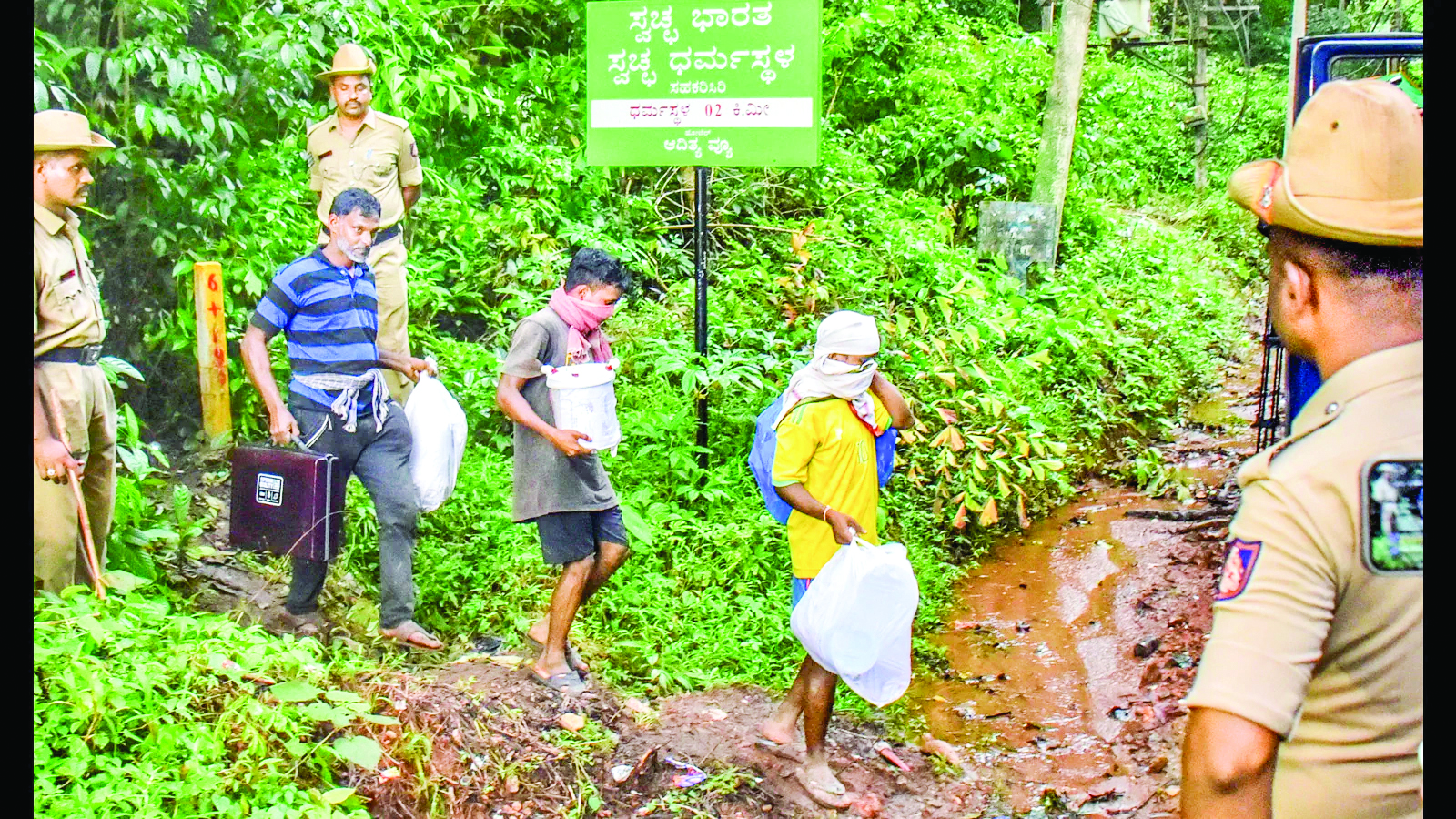
Bengaluru: Even as the Special Investigation Team (SIT) continues its exhumation and excavation operations—searching for human skeletal remains at locations identified by a whistleblower, a former sanitation worker—along the banks of the Nethravathi river and in forested areas of Dharmasthala, violent clashes erupted on August 6 between supporters of the Dharmasthala Temple management and sections of the media, including YouTubers, online influencers, and local activists. These activists have been campaigning for justice for victims—some missing, some kidnapped, others sexually assaulted or murdered in Dharmasthala over the past two decades.
Tanush Shetty, a witness, told The Sunday Guardian (TSG) that since the SIT began its exhumation work, and as independent media and online influencers reported the developments, a group identifying themselves as the “D-Gang” has been intimidating those filming and reporting. “These people arrive in jeeps and other vehicles marked with a ‘D’ sticker and a number, indicating they are from the Dharmasthala Temple side,” Shetty said. “They have even questioned some videographers and reporters on why they were filming—often with veiled threats.”
On August 6, when a vernacular TV anchor visited the house of Soujanya—a 2012 rape and murder victim in Dharmasthala—to reassure her mother that the SIT was doing its job, YouTubers interviewing the anchor were suddenly attacked. A group of men arrived in vehicles, assaulted those filming, damaged camera equipment, vandalised vehicles, and beat the victims severely without provocation. Later, local activists including Mahesh Shetty Thimarody and Girish Mattannavar joined in support of the assaulted YouTubers and influencers, staging a protest in front of the Dharmasthala police station.
Dakshina Kannada Police have registered seven FIRs based on complaints from both sides—four at the Dharmasthala police station and three at Belthangady police station. While the local police investigate the violence, the SIT continues work at the 14 sites identified by the whistleblower, code-named “Bheema.”
SIT members have conducted fresh mahajars (inquests), recording statements from witnesses present during earlier exhumations. So far, human skeletal remains have been found only at site no. 6. A new location, 100 metres from site no. 11 on a hilltop, was also examined. SIT personnel sustained injuries after slipping during the steep climb. Skeletal remains of two men and one woman were recovered here, identified as site no. 14. Preliminary analysis suggests these burials occurred just over two years ago, outside the SIT’s 1995–2014 investigation period. However, investigators are probing whether these burials followed legal procedures.
On Saturday, Bheema guided SIT officials to a spot near a petrol pump in Kalleri, which he said held the remains of a minor girl. In his initial court statement in Belthangady, Bheema described this as the burial that had haunted him most. He claimed the girl’s body bore strangulation marks and signs of sexual assault. She wore a school uniform top but no skirt. The then temple supervisor allegedly ordered Bheema to bury the body along with her school bag and shoes. The SIT has designated this location as site no. 15 and is excavating in hopes of recovering skeletal remains to corroborate Bheema’s account.
For the convenience of complainants, victims’ families, and informants, the Home Department has established a dedicated police station at the Belthangady Police Quarters exclusively for the Dharmasthala Mass Burial case. A Station House Officer will oversee all information related to the case, a senior police official confirmed.
