Solar Eclipse in 2026: The annular and total eclipse will light up skies from Antarctica to Europe and offering rare moments of cosmic alignment.
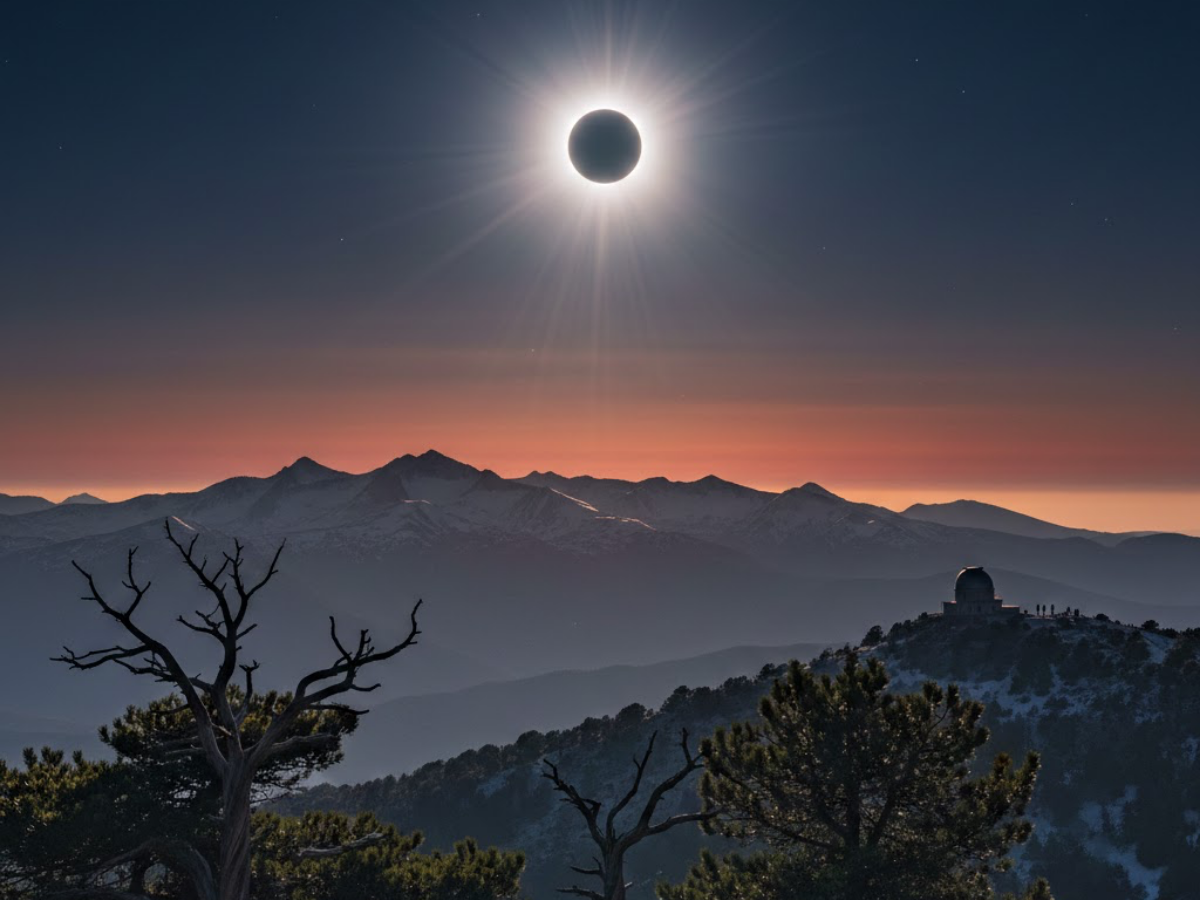
Solar Eclipses 2026 turning daylight into a celestial spectacle (Photo: File)
Solar Eclipse 2026: The year 2026 will offer skywatchers two rare moments when daylight bends to celestial order and redraw the relationship between Earth, Moon and Sun.
One will appear as a glowing ring in the polar south while other will plunge parts of Europe into sudden darkness.
A Solar Eclipse is the event where the moon passes between Earth and Sun partially or completely covering sunlight. This can only happen during a new moon and only along narrow paths on earth.
It is also known as Surya Grahan Depending on distance and position the effect will be partial, annular or total with each type offering a different view.
| DATE | TYPE | TIMINGS (EST) |
| 17 February, 2026 | Partial | 02:30 AM - 06:45 AM |
| 12 August, 2026 | Total | 05:00 AM - 09:15 AM |
| 12 August, 2026 | Partial | 04:00 AM - 08:15 AM |
In 2026, the first solar eclipse arrives on February 17 as an annular event with a classic ring of fire event where the moon covers the sun's center but leaves a bright rim in view.
The path of annularity cuts across East Antarctica and partial phases will be visible across Southern Argentina, Chile, Parts of South Africa and nearby oceans.
The total solar eclipse will be visible on 12 August, 2026 will sweep across Greenland, Iceland and Northern Spain briefly turning day into twilight.
Partial coverage of Solar Eclipse will occur just outside the Parth including Europe, Portugal and Parts of Canada.
