
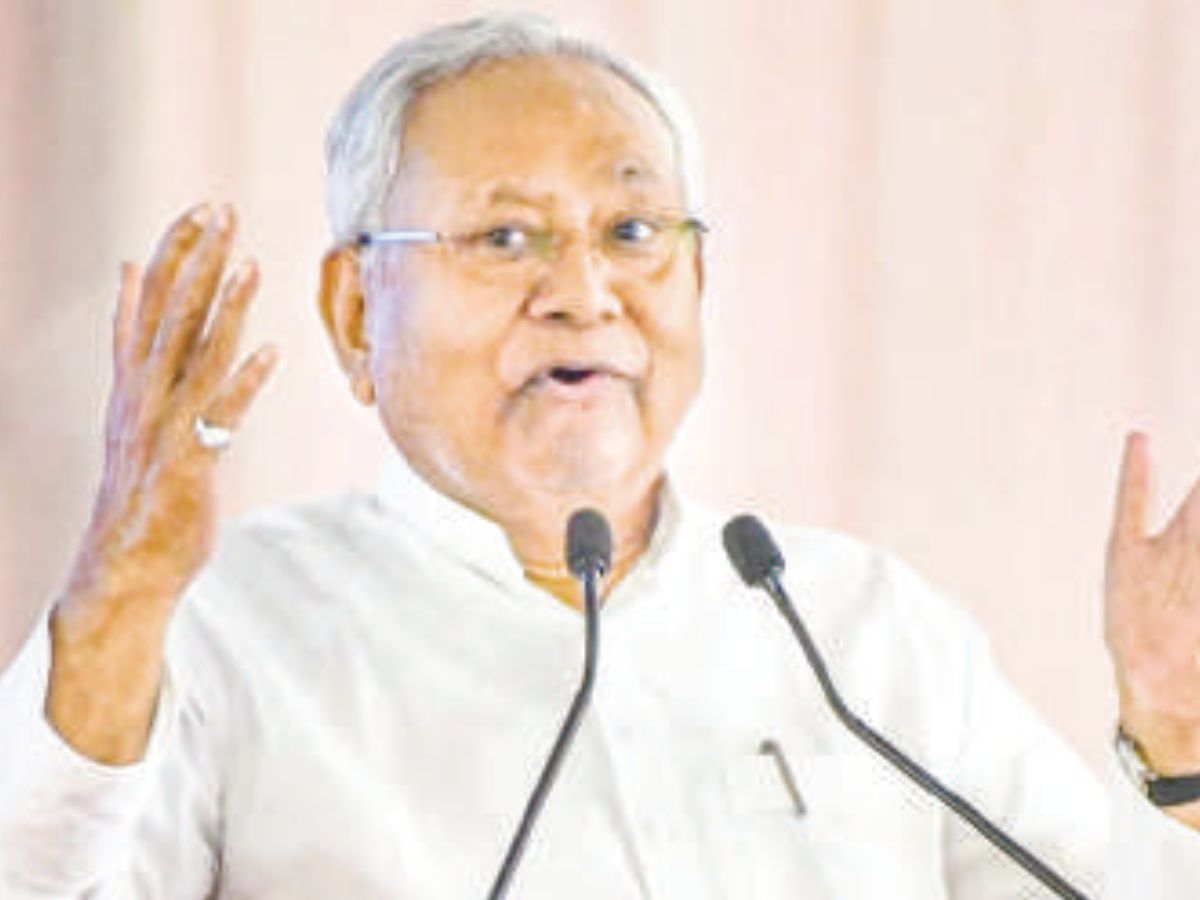
New Delhi: In an indication of the level of anti-incumbency, voter fatigue, and what many see as a calibrated pre-poll inducement strategy, Bihar Chief Minister Nitish Kumar has in recent weeks unveiled a sweeping set of financial measures targeting a broad array of constituencies — from rural healthcare workers and school staff to pensioners, artists, journalists, sanitation workers, self-help group functionaries, and domestic electricity consumers.
All of these announcements have come within a compressed timeline of less than three months before the state heads to assembly elections in October. While the National Democratic Alliance is set to fight the polls with Nitish Kumar as its lead face, party insiders and opposition leaders alike expect a transition in leadership if the NDA secures a majority.
Kumar, who has held office since November 2005 — except for a 270-day period in 2014–15 when his party colleague Jitan Ram Manjhi was briefly installed as Chief Minister — has described the recent welfare rollout as part of his government’s long-term governance agenda.
At the heart of the latest push are substantial salary and honorarium hikes for grassroots public service providers. ASHA workers — Accredited Social Health Activists — will now receive Rs. 3,000 per month, tripled from Rs. 1,000. Mamta workers, who assist in childbirth at government health facilities, will now receive Rs. 600 per delivery, up from Rs. 300.
According to data from the National Health Systems Resource Centre, Bihar employs over 1,00,000 ASHA workers and around 7,500 Mamta workers as of July 2025. Both groups form the core of Bihar’s rural public health delivery system.
In the education sector, midday meal cooks saw their monthly honorarium rise from Rs. 1,650 to Rs. 3,300. Night watchmen in secondary and higher secondary schools will now receive Rs. 10,000 (up from Rs. 5,000), and physical education and health instructors have had their monthly pay doubled from Rs. 8,000 to Rs. 16,000. The annual increment for these roles was also increased from Rs. 200 to Rs. 400.
Local self-governance representatives too have figured in Kumar’s expanding list of pre-election sops. The state government announced a 50 to 100 percent hike in the monthly allowances of mukhiyas, sarpanches, ward members, panchayat samiti members, and Zila Parishad leaders. For instance, the honorarium for a mukhiya or sarpanch has been increased from Rs. 5,000 to Rs. 7,500, and for a ward member from Rs. 800 to Rs. 1,200. The Zila Parishad President will now receive Rs. 30,000 per month (up from Rs. 20,000), while the Vice President will get Rs. 20,000 (previously Rs. 10,000). Additionally, the sanctioning limit for development works under the mukhiya’s authority has been doubled from Rs. 5 lakh to Rs. 10 lakh, giving them wider administrative reach.
Earlier, on 3 July, the Cabinet approved the Mukhyamantri Kalakar Pension Yojana, granting Rs. 3,000 monthly pension to financially distressed senior artists who have contributed to Bihar’s cultural life.
Not leaving anything to chance, on 26 July, the state revised the Patrakar Samman Pension Yojana. Under the revised scheme, retired journalists will now receive a pension of Rs. 15,000 per month (up from Rs. 6,000), while surviving spouses of deceased beneficiaries will receive Rs. 10,000 (previously Rs. 3,000). This was done despite no organised demand being made.
The government also widened the social safety net. On 11 July, Rs. 1,227.27 crore was dispersed via Direct Benefit Transfer (DBT) to over 1.11 crore beneficiaries after their monthly social security pensions were raised from Rs. 400 to Rs. 1,100.
A separate scheme, Mukhyamantri Guru-Shishya Parampara Yojana, was also launched to preserve endangered art forms such as folk tales, drama, dance, music, instruments, classical art, and painting. Under this initiative, the state will provide a monthly honorarium of Rs. 15,000 to the guru, Rs. 7,500 to the accompanying musician, and Rs. 3,000 to each disciple engaged in continuing these art forms.
On the utilities front, the Chief Minister announced on 17 July that, beginning 1 August, all domestic electricity consumers in Bihar will receive 125 units of electricity free of cost each month. The government says this will benefit 1.67 crore households. Further, under the Kutir Jyoti Yojana, rooftop solar installations will be provided with 100 percent government subsidy for the poorest households, while partial subsidy will be extended to others over the next three years.
Additionally, on 21 June, the interest rate for loans above Rs. 3 lakh taken by JEEViKA-affiliated women’s self-help groups was reduced from 10 percent to 7 percent, with the state covering the interest differential. The honorarium of over 1.4 lakh JEEViKA workers — engaged in fieldwork, training, and administration — was also doubled.
Kumar on 28 July announced the formation of the Bihar State Safai Karmachari Aayog. This new commission will advise the state government on policies concerning the welfare, rehabilitation, and rights protection of sanitation workers. The commission will consist of a chairperson, a vice-chairperson, and five members — including at least one woman or transgender representative.
Observers say that given that there are, on an average, 3–4 voters per family, the slew of incentives announced by Kumar in the last one month are expected to impact at least 6–8 lakh voters.




