
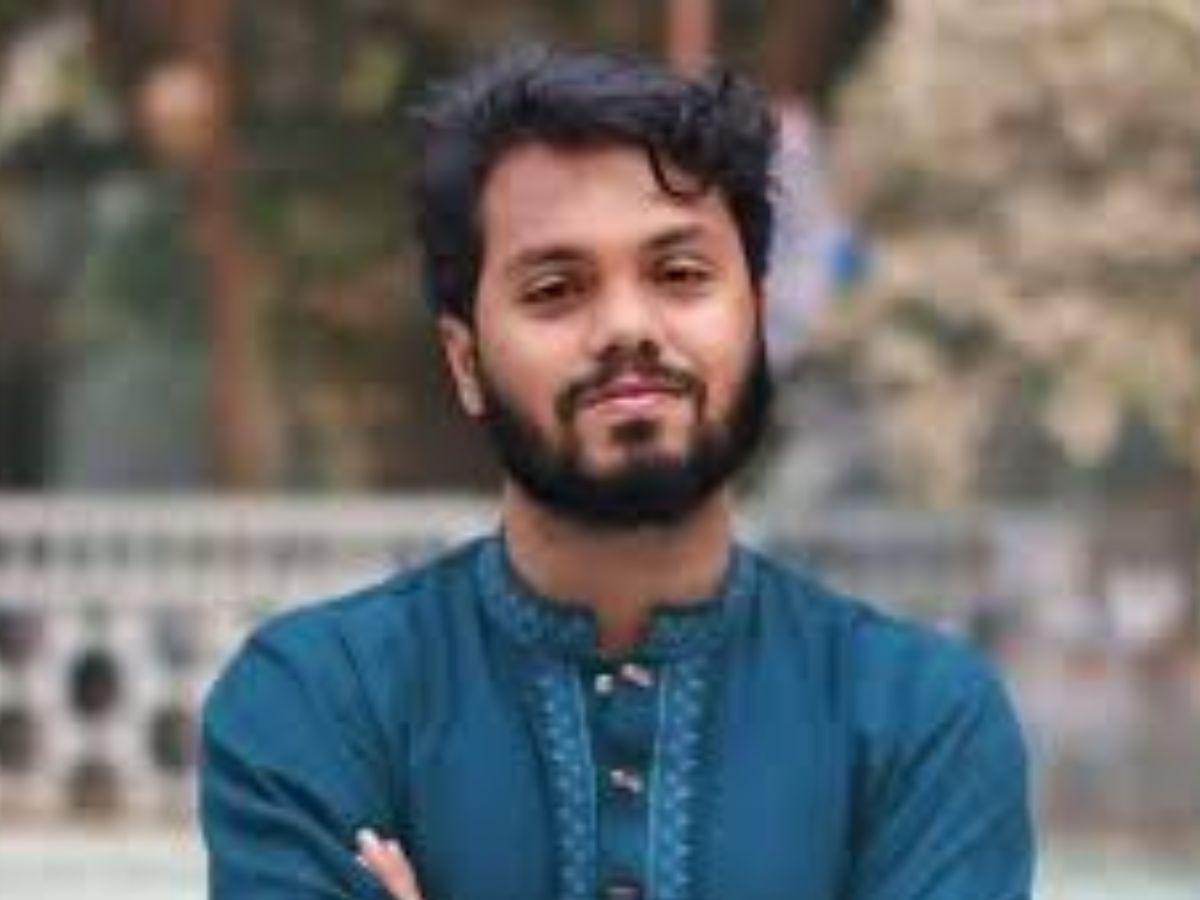
The attack on Osman Hadi, an associated founder and co-organising figure of Inquilab Mancha, was not treated as a crime for very long. Almost immediately, it was repackaged into something else: a political device.
In Bangladesh’s tense transitional phase, the incident was seized upon by a familiar convergence of interests. Pakistan’s deep-state networks, Jamaat-e-Islami, and sympathetic elements embedded within Bangladesh’s own institutional ecosystem moved with striking speed and coordination. Together, they form what can only be described as a destabilising triangle—an alliance that feeds on uncertainty, benefits from disorder, and repeatedly redirects public anger towards India.
To understand why the Hadi episode is being stretched far beyond the facts of the attack itself, and why India has been positioned as the intended villain rather than a bystander, it is necessary to step away from emotion and look at history and incentives.
An Old Partnership That Never Disappeared
The relationship between Pakistan’s security establishment and Jamaat-e-Islami is not conjecture. It is rooted in history. During the 1971 Liberation War, Jamaat openly aligned itself with the Pakistani military, forming paramilitary auxiliaries such as Al-Badr and Al-Shams. Their role in targeting Bengali nationalists and intellectuals is well documented.
Pakistan’s military defeat did not end this relationship. It simply altered its form. Networks that had operated openly were pushed underground, reorganised, and preserved. Over time, they resurfaced through student bodies, social organisations, charities, and informal patronage systems. These structures did not seek constant visibility. They waited for moments of political flux—precisely the kind Bangladesh is experiencing now.
For Pakistan’s intelligence apparatus, this provided something invaluable: an ideological and organisational presence inside Bangladesh that could be activated when circumstances allowed.
How Osman Hadi Was Recast
Osman Hadi was never a strategic asset for India, nor was he a meaningful threat to it. His politics were divisive, his ideological positioning often unclear, and his actual reach limited. As a political actor, he could be challenged, questioned, and countered within Bangladesh’s own discourse.
That changed the moment the attack was reframed.
A living figure invites scrutiny. A wounded—or potentially martyred—figure invites mythmaking. Once stripped of political context and complexity, Hadi became useful in a way he never was before. This is where the destabilisation strategy takes shape: not through the individual, but through the symbolism constructed around him.
Turning a Crime into a Narrative Weapon
What followed the attack adhered closely to a well-worn script.
First, the incident was detached from domestic failures—criminality, political rivalry, institutional weakness—and elevated into something larger and more sinister. Next, blame was nudged outward, with India quietly inserted into the story despite the absence of credible evidence. Finally, emotion was leveraged to mobilise street pressure, disrupt governance, and cast doubt on Bangladesh’s secular political framework.
Every actor in this alignment gained—except India.
Pakistan benefits by reviving a long-standing objective: loosening the Bangladesh–India partnership and presenting New Delhi as a malign regional presence. Jamaat benefits by re-entering the political conversation through agitation, grievance, and mobilisation. Elements within the establishment benefit by justifying heavier intervention under the language of restoring order and security.
Why the India Accusation Collapses Under Scrutiny
The idea that India would gain from targeting a marginal and polarising Bangladeshi figure does not survive even cursory strategic examination.
India’s core interest has remained consistent for decades: a stable, sovereign, and economically viable Bangladesh. Instability along its eastern frontier fuels radicalisation, disrupts trade corridors, complicates border management, and opens space for hostile external actors. None of this serves Indian interests.
New Delhi has invested heavily in connectivity, energy cooperation, and people-to-people engagement. Political violence and regime manipulation would undermine, not advance, those investments. More importantly, such an act would hand adversaries an emotionally potent narrative that cannot be disproved through facts alone.
Pakistan understands this dynamic. India does as well. That is precisely why the “India did it” claim functions not as analysis, but as propaganda designed for maximum emotional yield.
The More Dangerous Layer: Internal Enablers
The most consequential element of this destabilising alliance is not Pakistan or Jamaat in isolation. It is the presence of internal enablers—actors within Bangladesh’s own institutional and political spaces who view chaos as opportunity.
These factions do not require direct foreign control. They operate on plausible deniability, ideological sympathy, and calculated silence. By exploiting episodes like the Hadi attack, they weaken democratic norms, normalise street coercion, and steadily erode public confidence. The damage is cumulative and often invisible until it is advanced.
Choosing Stability Over Convenient Targets
The Hadi episode should be a moment of reckoning, not misdirection.
Bangladesh’s choice is not between nationalism and India. It is between institutional stability and permanent manipulation. India is not the architect of Bangladesh’s crises; it is the easiest external target in a strategy conceived elsewhere and executed locally.
Recognising this distinction is essential if Bangladesh is to protect its sovereignty and preserve the secular, plural foundations forged in 1971. Disorder may serve the alliance exploiting this moment. Stability, however, serves Bangladesh—and the long-term peace of South Asia.
(Ashu Mann is an Associate Fellow at the Centre for Land Warfare Studies. He was awarded the Vice Chief of the Army Staff Commendation card on Army Day 2025. He is pursuing a PhD from Amity University, Noida, in Defence and Strategic Studies. His research focuses include the India-China territorial dispute, great power rivalry, and Chinese foreign policy.)




