Rupee was devalued by 57% at a stroke, paving the way for the US dollar as the world’s reserve currency. What followed shaped history.
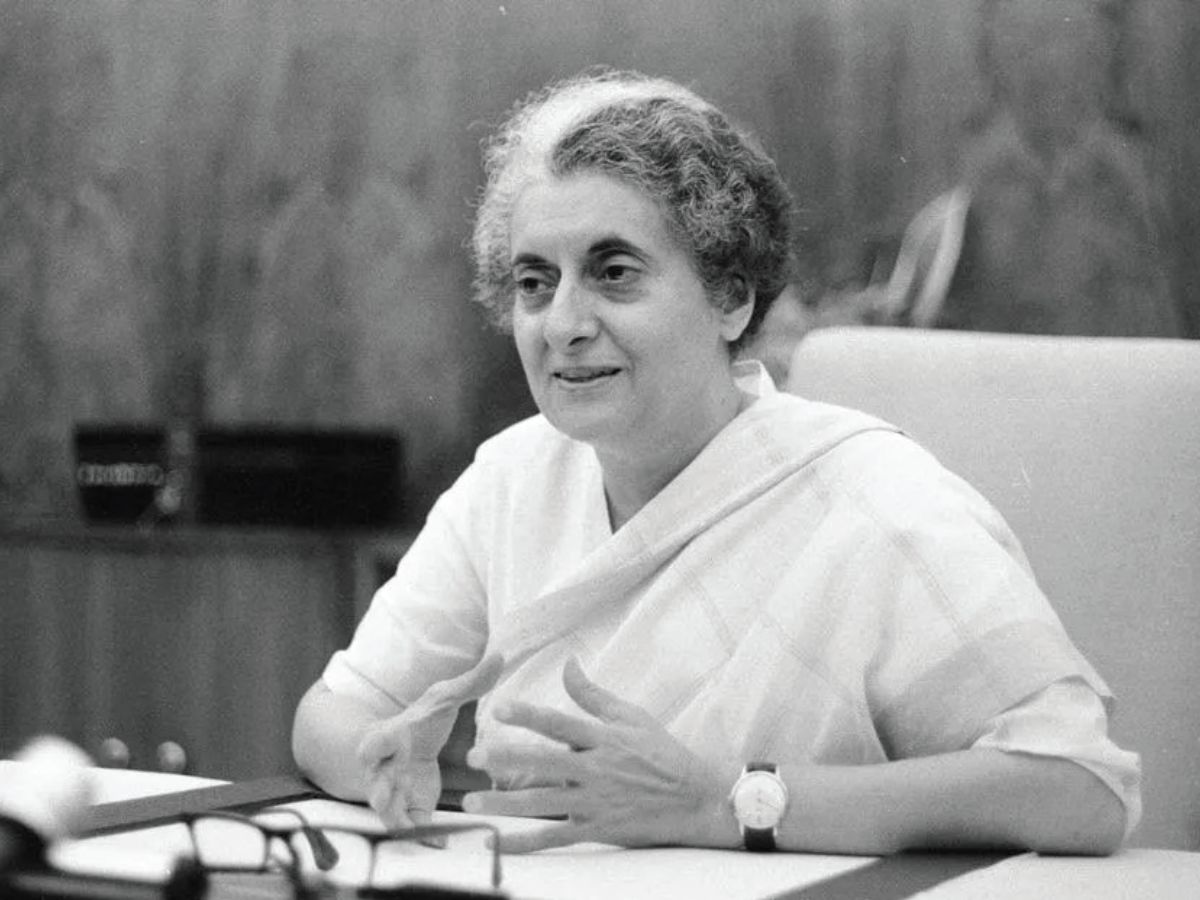
Former India Prime Minister Indira Gandhi
Most Indians don’t know this—but for a brief, extraordinary period, the Indian rupee was not merely a national currency. It was a regional monetary anchor, stretching from Kathmandu to Kuwait, from East Africa to Southeast Asia. Before the US dollar conquered the world, the rupee actually moved it.
To manage gold smuggling and currency arbitrage, India had issued a special offshore currency: the Gulf rupee. Identical to the Indian rupee—but printed in red, with a “Z” prefix—it powered daily trade in the UAE, Qatar, Oman, Bahrain, and Kuwait. India, by default, was a regional financial hegemon. Even East Africa—Kenya, Uganda, Tanganyika (Tanzania)—ran on rupees under the British system. This gave India’s rupee the status of what many nations still dream of—a currency accepted beyond its borders. Trust without treaties and power without military projection. All this was not lost in war. It was given up—when Indira Gandhi buckled under US pressure.
FIRST CRACK: THE SLOW SABOTAGE
India’s first blow came quietly. In 1949, Britain devalued the pound. India, still tethered to the sterling system, followed automatically—without debate, without sovereignty. The rupee fell by about 30%. The dollar was suddenly Rs 4.76. This wasn’t a policy choice. It was a colonial hangover. But the damage was limited. The rupee still held credibility. The Gulf still trusted it. Africa still used it.
The real rupture came later.
1966: INDIRA GANDHI’S DECISION
In 1966, India defused its own monetary standing and sovereignty for dollars. On an unremarkable morning that year, India woke up poorer—quietly, clinically, and without public debate, the exchange rate had shifted from Rs 4.76 to Rs 7.50 to the dollar. With that single announcement, the Indian rupee lost something far more valuable than numbers on a chart. It lost credibility.
The decision was presented as technical. Necessary. Inevitable. But history shows it was neither sudden nor unavoidable. It was the culmination of weeks of pressure, hurried negotiations, and a “young and politically inexperienced Prime Minister” discovering—too late—the price of governing from a position of weakness. History shows that at the time, Indira Gandhi was still finding her footing. Barely months into office, she faced a fragile economy. India needed food aid. And Washington, along with the World Bank and IMF (International Monetary Fund), knew it. The message was subtle but unmistakable: help would come—after adjustments.
DEVALUATION WAS THE ADJUSTMENT
For New Delhi’s economic managers, the move was meant to unlock foreign aid and restore balance-of-payments stability. For India’s trading partners, however, it sent a very different signal. A currency that could be slashed overnight under external pressure was a currency that could not be relied upon.
Nowhere was this signal received more clearly than in the Persian Gulf. At the time, several Gulf states were still using the Gulf rupee, a special offshore version of the Indian rupee issued by India. Printed in red ink and marked with a “Z” prefix, it circulated widely across Kuwait, Bahrain, Qatar, Oman, and what would later become the United Arab Emirates. Indian workers were paid in it. Local markets priced goods in it. Trade moved on it. The system had worked because the rupee was stable—and because India was seen as a dependable issuer. But the 1966 devaluation shattered that assumption.
Almost immediately, Gulf governments began to rethink their dependence on the Indian currency. The logic was brutally simple: if India could devalue once, it could do so again. Oil revenues were rising. National ambitions were growing. And monetary sovereignty suddenly seemed urgent. Within a few years, the Gulf rupee was abandoned. One by one, Gulf states introduced their own national currencies and pegged them to the US dollar. The transition was swift, orderly—and permanent.
India barely noticed what it had lost. What disappeared was not just an offshore currency arrangement, but a rare form of influence. The rupee’s geographical footprint collapsed by the late 1960s. Nepal and Bhutan remained exceptions. The rest moved on. The irony is that the rupee did not fall because it was weak. It fell because it was treated as expendable.
Again history shows, Indira Gandhi later cultivated the image of a strong leader—nationalising banks, standing up to foreign powers, centralising authority. But in 1966, she did the opposite. She conceded ground at the most sensitive frontier of all: the currency. The promised rewards, on the back of the rupee devaluation, never fully arrived. Aid flows were slower than expected. Political backlash at home was fierce. Within a year, Gandhi distanced herself from the very economic advisers who had supported the move. But the damage had already been done. Currencies, like reputations, are slow to build and fast to lose.
The rupee did not collapse overnight. It weakened gradually, shaped by inward-looking policies, fiscal stress, and repeated use as a buffer for political failure. When India finally liberalised in 1991, it revived growth—but not the rupee’s former standing and charm. By then, the dollar ruled the Gulf, global trade, and energy markets—birthing the petrodollars—the game changer that elevated the US to become the global hegemon that it is today.
In Indian schools or the history of the financial markets, the 1966 devaluation is rarely taught as a turning point. In the news media it was framed as an unfortunate necessity, a footnote in a difficult decade, and buried so deep that even the staunch opponents of the Congress party are unaware. But viewed in hindsight, it marked the moment India voluntarily stepped away from monetary leadership. No war forced it. No sanction demanded it. No collapse compelled it. It was a choice—of Indira Gandhi. And in making it, India didn’t just cheapen its currency. It quietly surrendered a position of power it has never reclaimed.
THEN AND NOW: A DIFFERENT RESPONSE TO PRESSURE
What makes the 1966 episode relevant today is not nostalgia—it is contrast. Even now, the United States presses India hard—on trade, tariffs, market access, and strategic alignment. Negotiations are tense. Pressure is real. But this time, India has not yielded at the currency altar. Under Narendra Modi, New Delhi has resisted demands that could compromise monetary or strategic autonomy. Talks have stalled rather than bent. Red lines have been drawn, not erased. India has absorbed friction instead of purchasing relief at the cost of sovereignty. The difference is not circumstance. It is posture.
Palak Shah is a seasoned investigative journalist and author with two decades of experience
