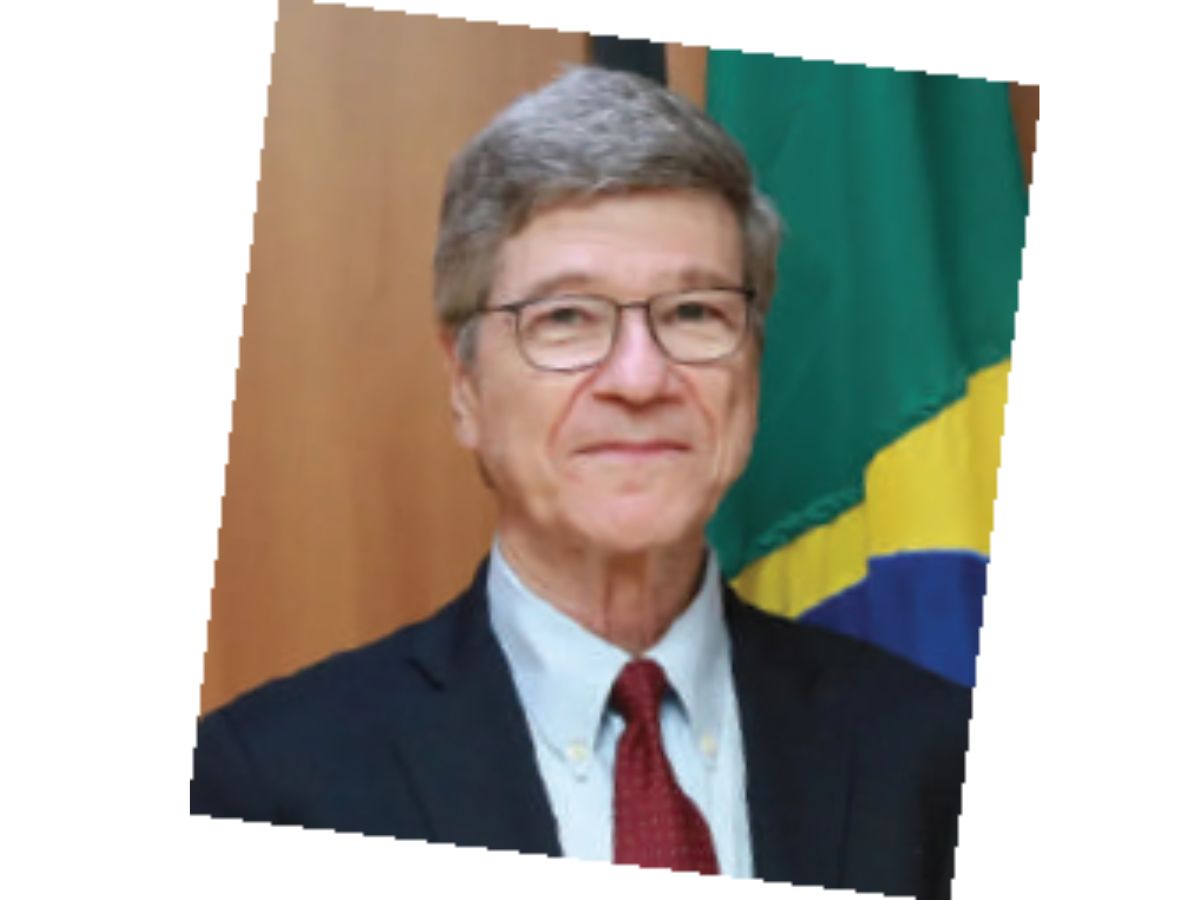
Jeffrey Sachs
In an interview to The Sunday Guardian, economist Jeffrey Sachs delivers a blunt warning that US foreign policy has shifted from diplomacy to open coercion, driven by regime change operations, unilateral sanctions, weaponised finance, and explicit threats of force. He argues that the United Nations has been gravely weakened not by irrelevance but by the failure of other major powers to confront US lawlessness, a failure that now threatens the foundations of the post-1945 order. Sachs urges the non-Western world, particularly the BRICS under India’s chairmanship, to act collectively to defend the UN Charter, rebalance global power, and resist being drawn into US confrontation strategies.
Edited excerpts:
A: The US has gravely wounded the UN, mainly because the other major powers have not called out the thuggery of the US. The UN is not yet dead and needs to be rescued before it’s too late. The BRICS can and should play a vital role in that rescue, and India has the chairmanship of the BRICS this year. I suggest three things. First, the BRICS as a group should strongly condemn the US unilateralism and express their intention to defend the UN Charter and to reject absurd US policies such as the “Board of Peace,” which aims to weaken the UN. Second, the BRICS as a group should support India and Brazil for permanent seats in the UN Security Council, to counterbalance the grossly excessive weight of the US and Europe. Third, India should leave the Quad, so as not to be used by the US in America’s dangerous anti-China policies.
The main point is that the US is just one of the 193 countries, and just 4% of the world population, 12% of world trade, and 14% of world output (at PPP). The rest of the world should not tolerate the US government’s abuses of international law or attempts to destroy the UN.
A: Silicon Valley, Wall Street, and the Military-Industrial Complex still very much think they are in power. This is not a mask. It is a delusion, and a very dangerous one.
A: Nothing in this world is irreparable except mass deaths from war, nuclear annihilation, and irreversible climate change. Those are the calamities we must avoid at all costs. The US political system is deeply broken, and so the US is no longer a constitutional government, but things can change. And we must work towards that before we succumb to the real irreversible disasters.
A: The Military-Industrial-Complex, which is now the Military-Industrial-Digital Complex (with Silicon Valley and AI weapons systems), runs US foreign policy, and has done so for decades. There is no significant anti-war group in either party or in the mainstream media, and there is no real democratic oversight of foreign policy.
A: Trump is saying out loud what used to be said only in private. In that sense, it is an advantage. The US foreign policy is gangsterism and now is more widely understood to be gangsterism. Only the rest of the world, acting on UN principles and in a united way, can push back against US militarism. Time is short. The US might attack Iran any day.
