A new form of strategic subcontracting is taking place, where influence is divided among friendly powers aligned with China’s long-term maritime calculus.
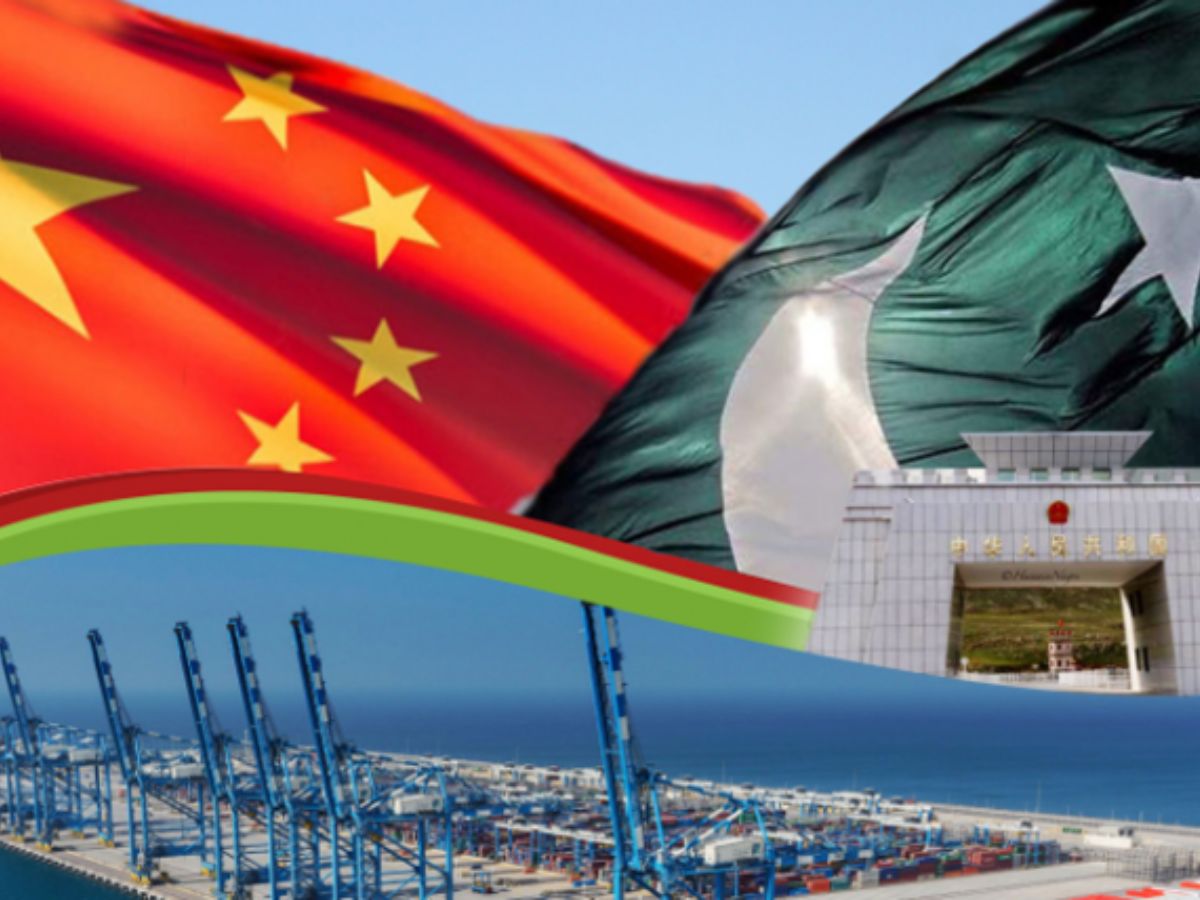
China is shifting its strategy in the Indian Ocean from direct military basing to using proxies to secure its strategic interests. (Image: Ref.)
New Delhi: China is perfecting a new kind of playbook for the Indian Ocean Region—one that advances its strategic reach without the diplomatic friction that comes with overt basing. Where a Chinese military footprint provokes alarm, Beijing now relies on trusted intermediaries to secure access under friendlier flags. Nowhere is this quiet recalibration clearer than in the Horn of Africa, where Pakistan’s new defence agreement with Somalia mirrors China’s sea-lane priorities while avoiding the optics of a direct PLA presence.
China’s 2017 base at Djibouti—the first overseas facility of the People’s Liberation Army—was a turning point in Beijing’s global military posture. Positioned at the gateway to the Red Sea and Suez Canal, it gave China its first permanent logistics hub beyond Asia. The base’s capacity for thousands of troops, a deep-water pier, and helicopter facilities elevated Beijing’s ability to project power across the western Indian Ocean. But Djibouti came at a cost. It deepened suspicions in Washington, New Delhi, and African capitals that China’s Belt and Road Initiative (BRI) was less about trade than about territory. A similar pattern unfolded in Sri Lanka, where mounting debt led Colombo to hand over Hambantota Port to a Chinese state-owned operator in a 99-year lease. What was marketed as infrastructure cooperation became shorthand for strategic dependency. The lesson was unmistakable: direct control triggered backlash. Beijing’s response has been adaptation, not retreat.
Rather than repeat the Djibouti and Hambantota models, China now seeks the same outcomes—access, influence, and sea-lane security—through intermediaries that already orbit within its strategic ecosystem. These partners, bonded through defence cooperation, technology transfers, and diplomatic alignment, help advance Chinese objectives while maintaining plausible deniability. Pakistan is the most important of these proxies. It sits at the core of Beijing’s flagship BRI project, the China-Pakistan Economic Corridor (CPEC), which links western China to the Arabian Sea through Gwadar. Over the past decade, China has equipped the Pakistan Navy with some of its most advanced warships, including four Type 054A/P multi-role frigates, and is building eight Hangor-class submarines based on Chinese designs. The stated purpose is to enhance Pakistan’s capacity to protect sea lines of communication. The unspoken benefit is Beijing’s extended reach—through a loyal fleet flying a different flag.
The past two years have showcased how this alignment works in practice. Pakistan’s recurring command of the multinational Combined Task Force 151 (CTF-151) in 2025—a key element of international counter-piracy operations—has given it operational presence along the Gulf of Aden and Somali coast. Islamabad frames these deployments as contributions to collective security, yet the strategic geography they cover overlaps precisely with China’s maritime lifelines from the Middle East. The same logic extends to Somalia. In August 2025, Mogadishu approved a defence cooperation agreement with Pakistan covering training, modernisation, and naval capacity building. The agreement allows Pakistan to train Somali officers from cadet to staff-college level, assist in maintaining vessels, and support the establishment of new naval units. A joint defence committee will meet annually to supervise implementation—effectively institutionalising Islamabad’s presence in Somali security planning.
Somalia’s government sees the partnership as a path to rebuild its neglected navy and reduce piracy risks. But it also represents a new test case for Beijing’s proxy model. By outsourcing influence to Pakistan, China secures a foothold at the western edge of the Indo-Pacific without attracting the political scrutiny that a PLA presence would invite. For Pakistan, the deal provides diplomatic relevance and operational experience at a time of domestic economic strain—all while reinforcing its role as China’s regional facilitator. The Somalia MoU’s significance lies not in its content but in its context. It bypasses African Union and United Nations frameworks that have guided maritime capacity building for over a decade. Instead, it adds another bilateral track in a region already crowded with external actors.
Turkey has maintained a large footprint in Somalia since 2017, training soldiers at its Camp TURKSOM base in Mogadishu. In 2024, Ankara signed a 10-year maritime security pact granting it authority to help “protect Somalia’s seas” and rebuild its navy—including revenue-sharing arrangements for offshore resource exploration. The entry of Pakistan, backed by Chinese finance and technology, creates overlapping defence layers that blur accountability and strain Somalia’s fragile institutions. For Beijing, this diffusion of responsibility is a feature, not a flaw. It allows China to protect vital shipping lanes through multiple intermediaries—Turkey as a quasi-partner and Pakistan as a loyal proxy—while keeping its own naval role discreet. The result is a new form of strategic subcontracting, where influence is divided among friendly powers aligned with China’s long-term maritime calculus.
The risks for African states are structural. As more bilateral security arrangements proliferate, regional coordination weakens. The African Union’s mechanisms for maritime governance and the UN-endorsed counter-piracy architecture depend on transparency, joint planning, and shared command structures. Bilateral MoUs, by contrast, concentrate influence and obscure accountability. In economic terms, the parallels with infrastructure dependency are striking. Where Hambantota and Djibouti illustrated how hard assets can translate into strategic leverage, these new defence partnerships replicate the same dynamic through the security sector. The tools have changed—from cranes and ports to patrol boats and training missions—but the result could be the same: enduring dependency masked as capacity building.
China’s evolving playbook in the Indian Ocean reflects an awareness of the limits of direct control. By empowering Pakistan to act as a security provider in Africa, Beijing secures influence by proxy—expanding reach while sidestepping responsibility. For Somalia and other coastal states, the challenge is to preserve agency amid the influx of external patrons. The lessons of Djibouti and Hambantota still apply: when foreign “partners” offer infrastructure or security solutions with opaque terms, sovereignty is the first casualty. Pakistan’s Somalia track is therefore more than a bilateral defence story. It is a blueprint—an experiment in proxy power that, if left unchecked, could redefine how China projects influence across the African littorals. For Africa, the test is whether it can recognise the pattern in time.
Ashish Singh is an award-winning senior journalist with over 18 years of experience in defence and strategic affairs.
