
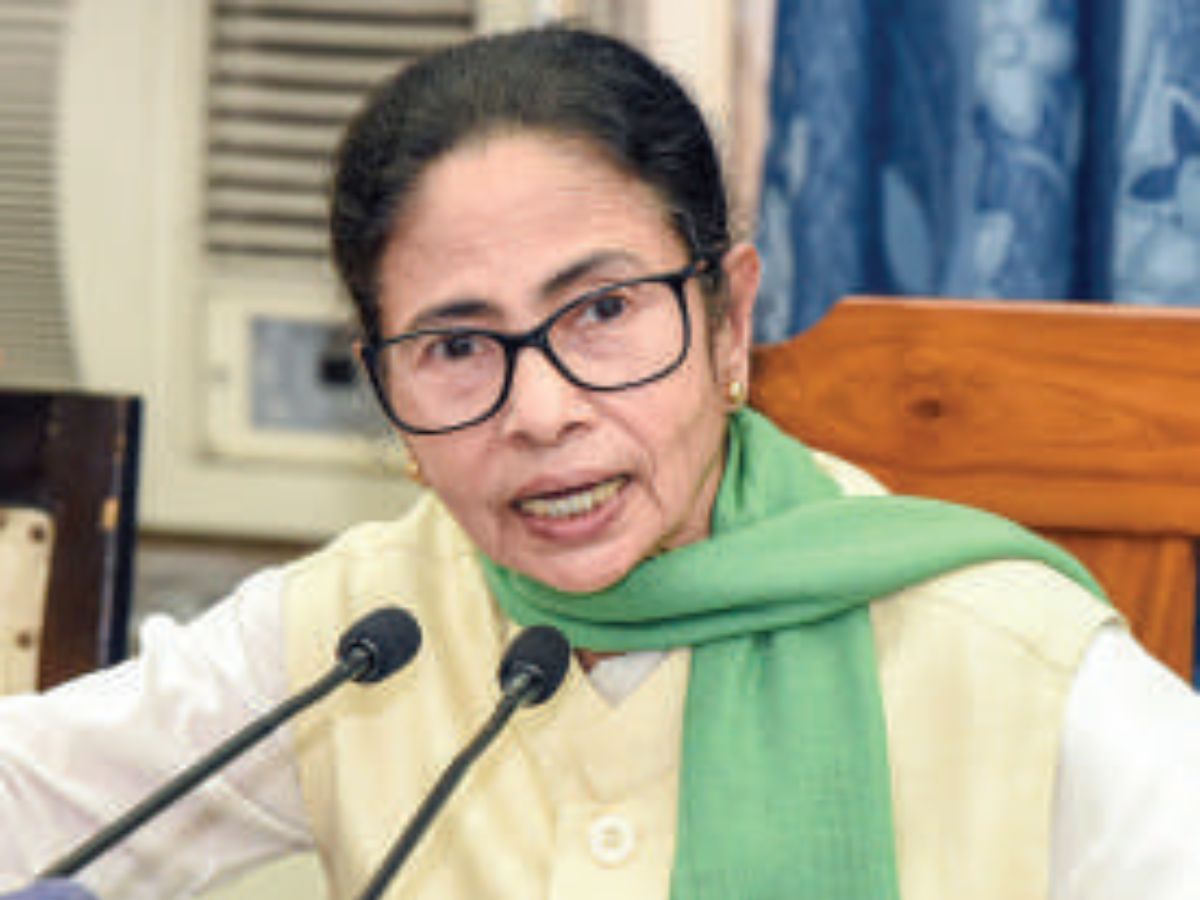
In sharp contrast to West Bengal Chief Minister Mamata Banerjee’s populist budget blitz with new schemes like enhanced Lakshmir Bhandar and Banglar Yuva Sathi aimed at women and youth ahead of the 2026 Assembly elections, the Bharatiya Janata Party (BJP) is pursuing a precision-targeted “segmentation strategy” to harness growing anti-Trinamool Congress (TMC) resentment among key professional and discerning voter groups.
While Banerjee’s Trinamool Congress has rolled out cash doles and welfare expansions totalling over Rs 1.80 lakh crore for social welfare in the interim 2026-27 state budget—seen widely as pre-poll sops—the BJP is eschewing broad-brush promises for focused outreach.
Party insiders describe this as a “corporate-style campaign,” with sharply delineated gatherings for professionals like lawyers, teachers, doctors, and traders, featuring high-profile national leaders such as BJP MP Bansuri Swaraj and national spokesperson Sambit Patra.
“We are not throwing money at voters like TMC; we are building conviction among the educated, urban, and professional classes who are fed up with TMC’s corruption, violence, and appeasement politics,” said Samik Bhattacharya, West Bengal BJP president. “Our segmentation taps anti-TMC sentiments boiling over issues like post-poll violence, infiltration, and scams—issues that discerning voters care about deeply.”
The BJP’s approach kicked into high gear last month with a series of closed-door meetings across Kolkata, Howrah, and Siliguri.
On Friday, Bansuri Swaraj, the dynamic New Delhi BJP MP and lawyer-turned politician, addressed over 500 legal practitioners at a packed auditorium at Spring Club in Kolkata.
“TMC has turned Bengal’s courts into their playground—bail for goons, harassment for BJP workers. Lawyers know the rot; it’s time to vote for justice, not dynasty,” Swaraj declared, invoking recent Supreme Court rebukes to the state government on poll violence and appointments.
Attendees, including Bar Association leaders, nodded in agreement, citing TMC’s misuse of police against Opposition voices.
A week later, Sambit Patra, BJP’s national spokesperson, is expected to be the marquee name at a specially convened teachers’ conclave, titled Sammelan.
“Since Mamata Banerjee came to power, our educators and the education sector itself faced many problems. From lack of infrastructure in schools, colleges, and universities, the lack of permanent teacher appointments, and the endless corruption in schools, colleges, and universities where there have been appointments, the TMC’s criminality knows no end. No one has forgotten, or should be allowed to forget how Mamata Banerjee and her party leaders sold thousands of teachers’ jobs. Thousands of innocent teachers lost their jobs because the Mamata Banerjee government preferred to side with the TMC criminals who sold the jobs and those who bought them. On the other hand, BJP stands for Ram, merit, and development,” BJP leader Bimal Shankar Nanda told The Sunday Guardian. He also linked the series of meets that are being lined up to the party’s broader narrative on “demographic changes” in border districts.
Sources say similar events targeted at doctors and traders are also being lined up, with Suvendu Adhikari, Leader of Opposition, promising “zero tolerance for TMC’s syndicate raj.”
This micro-targeting draws from data analytics of 2021 and 2024 polls, focusing on 80-odd marginal seats where booth-level consolidation can flip outcomes. “It’s like a war room for segments—region-wise, caste-wise, profession-wise,” explained a senior BJP strategist. “PM Modi’s four-pronged blueprint—demography, corruption, central funds, development—guides us.”
BJP insiders said that the strategy capitalizes on simmering grievances: rampant post-poll violence (echoing 2021’s 50+ BJP deaths), voter list manipulations and SIR opposition, and scandals like ration and cattle smuggling. BJP claims TMC’s budget is “kami-kaj” (mere show), masking a Rs 2 lakh crore debt bomb.
“BJP’s segmentation is smart—they’re wooing the ‘bhadralok’ (educated middle class) alienated by TMC’s muscle-flexing. Mamata’s sops may sway masses temporarily, but professionals want governance, not giveaways,” opined Biswanath Chakraborty, a Kolkata-based political analyst and professor at Rabindra Bharati University. “With leaders like Swaraj and Patra adding star power, it’s resonating—anti-TMC sentiment is palpable among lawyers tired of partisan probes.”
Political observer Suman Chattopadhyay concurred: “TMC’s broad welfare net risks vote fragmentation; BJP’s laser focus on segments like teachers (hit by recruitment scams) and lawyers (witnessing judicial delays) builds loyalty. It’s classic marketing—segment, target, position against TMC’s failures.” He highlighted a recent BJP survey showing 35% swing potential in urban pockets.
Party spokespersons amplified the message. “TMC’s budget is election EVM (cheat)—fake promises to buy votes. Our gatherings expose the emperor’s nakedness,” asserted Agnimitra Paul, BJP MP from Asansol, referencing Patra’s pressers slamming Banerjee’s “provocative” SIR stance. “She says BJP will ‘shake the country’s foundation’—this is hate speech against democracy,” Patra had retorted earlier.
Former BJP state president and Central Minister Sukanta Majumdar added: “From lawyers to teachers, every segment hears our truth: TMC = goonda raj; BJP = vikas raj. 2026 will see parivartan.” The party plans 50 more such events by March, integrating booth-level workers to sustain momentum.
On the other hand, TMC’s Kunal Ghosh dismissed it as “desperation.” But with BJP eyeing a vote share jump from 38% (2021) to 45%, the segmentation bet seems paying dividends. As elections near, Banerjee’s welfarism meets BJP’s scalpel-sharp counter—Bengal’s battle lines are drawn segment by segment.




