
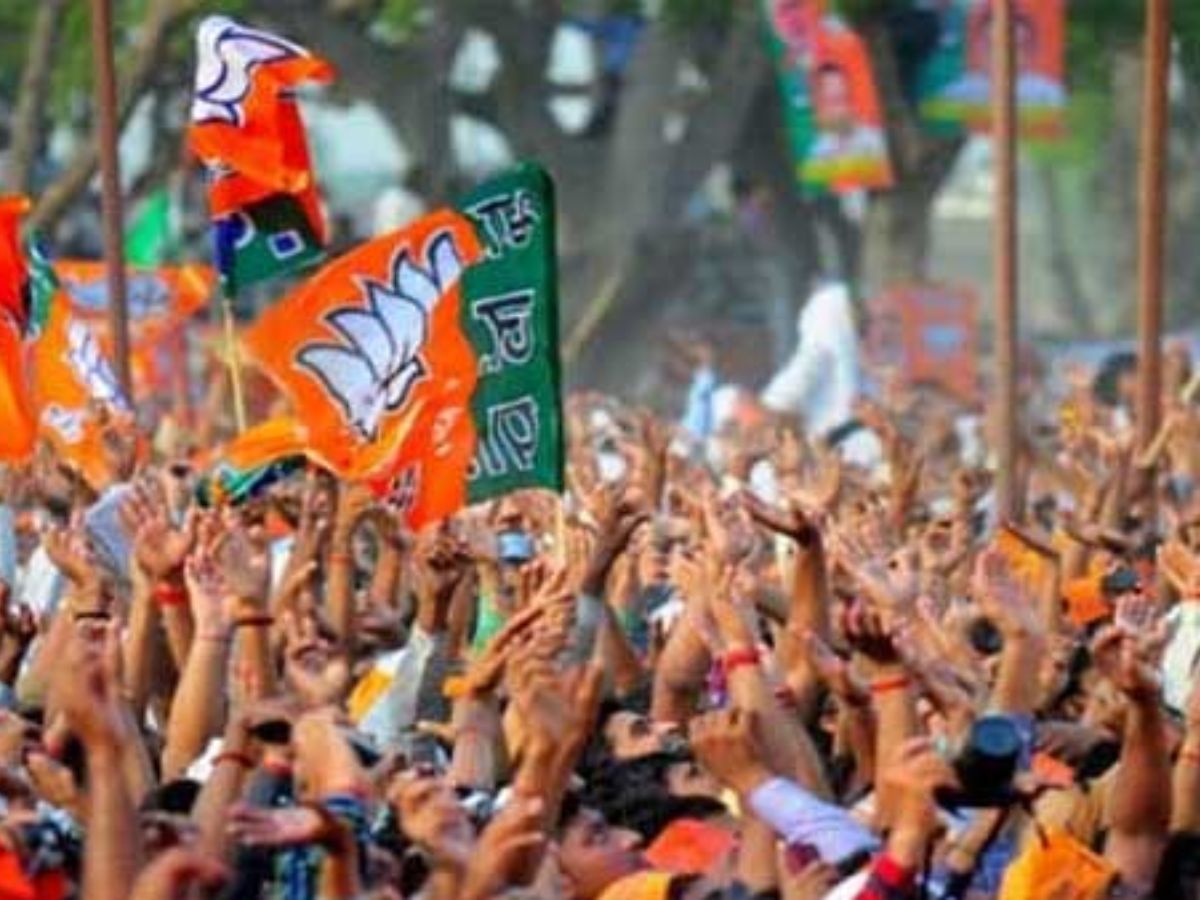
For Nitin Nabin, the newly minted president of the Bharatiya Janata Party, West Bengal represents far more than just another electoral battleground. It is his first major test, a political crucible that will define his leadership and the party’s ambitions in eastern India. Having chosen the poll-bound state for his maiden tour after assuming charge, Nabin has signalled that cracking the Bengal code remains the BJP’s most critical organizational priority.
Scheduled to arrive in Kolkata on January 27 for a two-day visit, Nabin will hold closed-door meetings with top state leadership before addressing what is expected to be his first major public rally as national president on January 28 in the strategically significant Durgapur-Bardhaman industrial belt. The choice of venue is deliberate—these constituencies have witnessed economic stagnation and job losses that the BJP intends to weaponize against Chief Minister Mamata Banerjee’s Trinamool Congress government. The visit assumes added significance as it will be followed immediately by Union Home Minister Amit Shah’s scheduled tour between January 30 and 31. The back-to-back deployment of the party’s top brass underscores the existential importance Bengal holds in the BJP’s electoral calculus. According to party sources, both leaders will focus exclusively on internal organizational meetings rather than public rallies during their January visits, suggesting a tactical shift towards consolidating the party machinery before launching the full-scale campaign.
THE SIX-LEADER ‘SPECIAL FORCES’
What sets the BJP’s 2026 Bengal strategy apart from previous attempts is the deployment of six veteran leaders from across India, each handpicked for their specialized skills in hostile territory management. This unprecedented move transforms the state unit into what party insiders describe as a military-style command centre, with each leader assigned specific geographical zones and tactical responsibilities.
The team includes Jayendra Pratap Singh Rathore from Uttar Pradesh, an IIT-BHU alumnus and current UP Minister who masterminded the BJP’s organizational machinery during the 2017 and 2022 state sweeps. Rathore has been assigned 35 seats with a focus on clinical booth-level management. From the same state comes Suresh Rana, a firebrand leader known for aggressive Hindutva mobilization, who has been handed North 24 Parganas, including the volatile Sandeshkhali region.
C.T. Ravi, a four-time MLA from Karnataka and former national general secretary, serves as the ideological anchor of the group. His southern credentials give him unique insights into navigating states where the BJP is not the natural incumbent. Kailash Choudhary from Rajasthan, a former Union Minister with deep roots in the farmers’ wing, has been tasked with penetrating the North Bengal agrarian belt, particularly Cooch Behar. Uttarakhand’s Dhan Singh Rawat, a Cabinet Minister with a PhD in History and strong RSS ties, ensures ideological purity during the expansion phase. Rounding out the team is Haryana’s Sanjay Bhatia, who won his 2019 Lok Sabha seat by one of the highest margins in India and now works to replicate that success model in Hooghly district.
All six report directly to Sunil Bansal, the BJP national general secretary widely credited as the architect of the party’s 2014 and 2017 successes in Uttar Pradesh. The deployment of this Hindi heartland task force has necessitated an innovative “shadow translator” system, pairing each leader with a local Bengali bilingual aide to ensure central directives aren’t lost in translation during grassroots interactions.
The BJP’s internal analytics reveal a sobering reality: in 2021, the TMC secured 48.02% of the vote to the BJP’s 37.97%. But party strategists believe they don’t need a landslide—just a surgical 5% shift. By targeting low-margin seats like Dinhata, where the 2021 margin was a microscopic 57 votes, the party hopes to flip constituencies one at a time. This approach reflects Union Home Minister Amit Shah’s meticulous style.
According to reports, Shah plans to spend maximum days each month in Bengal starting January 2026 until the Model Code of Conduct takes effect, operating from a house being arranged in Sector 5, Salt Lake, rather than hotels or government guest houses. This level of hands-on management marks an escalation from previous election cycles.
Nabin’s organizational meeting with West Bengal leaders finalised a comprehensive strategy targeting 15 years of Trinamool rule. The focus areas are starkly political: governance failures, economic distress despite rich natural resources, collapsed health infrastructure, declining education standards, and what the BJP describes as worsening women’s safety conditions. The party has decided to prepare detailed constituency-level chargesheets listing local failures of the TMC government, from infrastructure gaps to civic issues. Senior leaders will publicly release these during rallies, followed by door-to-door distribution. The strategy aims to hold individual sitting MLAs accountable rather than making abstract governance critiques.
The slogan “Paltano darkar, chayee BJP sarkar” (Change is needed, we want a BJP government), first articulated by Prime Minister Narendra Modi at a Malda rally, will serve as the campaign’s central theme. Party sources indicate the leadership will amplify this through rallies, outreach programs, and a dedicated campaign song.
Both PM Modi and Nitin Nabin have made pointed references to demographic changes in West Bengal, with the new president raising the issue twice within two days of assuming office. Speaking at the party headquarters, Nabin stated that changing demographics in poll-bound states present “a challenge for us,” while the PM referred to infiltration and demographic imbalance as major contemporary concerns. This messaging dovetails with the party’s long-standing critique of alleged illegal infiltration along the Bangladesh border. Shah, during his December visit to Bengal, said infiltration had stopped in Tripura and Assam but continued in West Bengal, accusing Mamata Banerjee of permitting it for vote bank politics.
While organizational muscle and strategic planning are formidable, substantial challenges remain. The TMC won 213 seats with 47.9% vote share in 2021 and maintains deep organizational roots across the state. The BJP must convert anti-TMC sentiment among former Left voters without alienating Bengal’s traditionally pluralist political culture. The Special Intensive Revision of electoral rolls has become a flashpoint, with 58 lakh names deleted from draft voter lists. The TMC has alleged selective targeting of legitimate voters, while the BJP maintains this is necessary to curb illegal infiltration.
For Nitin Nabin, West Bengal is not just an electoral challenge—it is an opportunity to prove that his ideologically assertive leadership can succeed where others have struggled. The deployment of the six-leader task force, Shah’s unprecedented commitment of time and resources, and the party’s data-driven targeting of marginal constituencies, all signal that the BJP views 2026 as its best chance yet to breach the TMC’s fortress.
As one senior BJP leader noted, the new president plans to “talk about issues very openly and unapologetically,” with West Bengal witnessing this approach first. Whether this combination of organizational prowess, ideological clarity, and tactical precision can overcome 15 years of TMC governance and Mamata Banerjee’s formidable political skills will become clear in the months ahead. For now, all eyes are on Nabin’s January 27-28 visit—the opening salvo in what promises to be one of 2026’s most closely watched electoral battles.




