
The return of the Bangladesh Nationalist Party (BNP) to power restores a governing structure in Dhaka that operates within established diplomatic channels with India and Western capitals. This shift has blocked the immediate possibility of Islamist political forces capturing state authority, while creating a performance-dependent equilibrium whose stability will be shaped by Bangladesh’s economic dependence on India, the United States, and China, amidst the continuing presence of Islamist political networks with historical links to Pakistan.
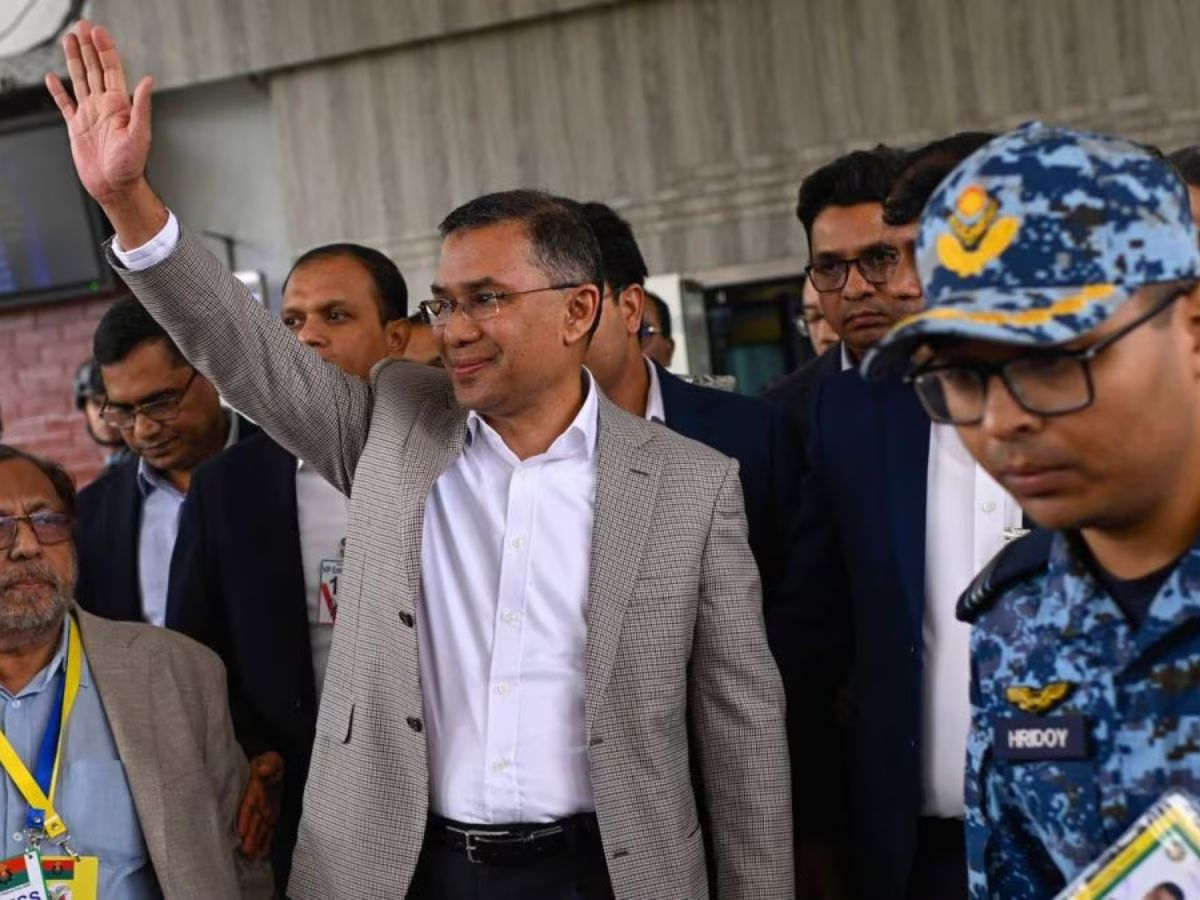
Tarique Rahman, who led the BNP to victory, directed the party from London, where he has lived since 2008. His uninterrupted residence in the United Kingdom allowed him to maintain operational command over the party during Bangladesh’s political transition and provided him institutional safety, communications access, and continuous diplomatic exposure unavailable to domestically suppressed political actors. This enabled the BNP to preserve organizational continuity and remain a viable governing alternative.
During this period, the BNP leadership maintained engagement with foreign diplomatic establishments, including India, the United States, and the United Kingdom. Officials, who have been a part of the engagement, told this newspaper that such engagement reflected standard geopolitical practice in which major political parties maintain international diplomatic channels to ensure continuity of state relations in the event of electoral transition.
It is understood that India had extended its support to Rahman as it became clearer that the son of the late former Prime Minister Khaleda Zia was positioning himself to depart from the adversarial framework that had characterized Delhi-Dhaka ties during the earlier BNP administration.
Following the election result, both India and the United States moved rapidly to engage the incoming government, reflecting Bangladesh’s central role in India’s national security architecture. Even before final tallies were announced, Prime Minister Narendra Modi and the United States embassy in Dhaka congratulated Rahman and the BNP.
Bangladesh shares India’s longest international border, stretching over 4,000 kilometres. Control over territory adjacent to this border directly affects insurgency containment, cross-border terrorist movement, arms trafficking, and internal stability in India’s northeastern states.
As per intelligence assessments accessed on Friday morning, Pakistani intelligence agencies and their various arms are expected to exploit the transition following the electoral loss of Jamaat, the political bloc they supported.
Bangladesh’s geographic position also makes it indispensable to India’s economic connectivity strategy. India relies on transit routes through Bangladesh to move goods and heavy equipment to its northeastern states. These transit corridors bypass the narrow Siliguri Corridor, reducing logistical vulnerability and improving economic integration of India’s Northeast with the rest of the country.
Simultaneously, Bangladesh’s economic system depends structurally on engagement with both India and China. India remains the largest regional trading partner, with bilateral trade exceeding US$14 billion annually. China is the largest infrastructure investor, financing critical projects that support an exportdriven industrial economy. This dual dependence creates a structural economic constraint requiring simultaneous engagement with both powers.
A decisive pivot in this landscape occurred on 9 February, just 72 hours before the polls, when the US-installed caretaker government under Muhammad Yunus signed a landmark Agreement on Reciprocal Trade with the United States. This “Cotton-for-Garments” deal serves as a strategic masterstroke, preconfiguring the economic rails for the incoming administration. By linking zero-tariff access for Bangladeshi apparel to the use of US-produced cotton and man-made fibres, Washington has created a supplychain alignment that incentivizes Dhaka to decouple from regional raw material dependencies. Apart from cotton, Dhaka has committed to other promises related to defence, nuclear energy, and civil aviation—all of which, critics argue, suit Washington’s interests.
The timing of this deal—signed by a technocrat with deep Western ties—was a clear signal that the US sought a predictable, technocratic successor rather than a volatile Islamist force like Jamaat. The agreement locks the state into $15 billion in US energy purchases and $3.5 billion in agricultural deals over 15 years, alongside significant defence and aviation commitments, including the procurement of 14 Boeing aircraft.
The BNP, under Tarique Rahman’s London-refined leadership, is structurally better positioned than Islamist formations to manage these “golden handcuffs.” Negotiating the complex labour, intellectual property, and environmental compliance standards mandated by the US deal requires a governing entity that operates within a Western-aligned, centre-right democratic framework. For Jamaat-e-Islami, such deep institutional alignment with the US would have created a fatal ideological crisis with its domestic base and its historical linkages to Pakistan’s intelligence ecosystem.
The election also produced a structurally significant increase in parliamentary representation for Jamaat-e-Islami, which secured 68 seats to emerge as the main opposition party. Jamaat has historically maintained ideological and organizational links with Pakistan, dating back to 1971. These linkages, often facilitated by the ISI, make the political growth of Islamist forces a primary national security concern for India.
The current election outcome, while preventing Islamist political forces from gaining executive control of the state, has shown their political viability and relevance. This is likely to create a structural political pressure point in the future for the BNP-led government that will take oath.
A critical macro-economic anchor for this period is the scheduled graduation from Least Developed Country (LDC) status in November 2026, which will trigger the loss of duty-free access to European markets.
Officials said that failure to maintain economic stability will produce political volatility for Bangladesh; hence, the BNP’s ability to act as a bridge for Western-aligned Gulf states and international financiers is essential to avoid a “political risk premium” that would trigger capital flight.
It is understood that India’s strategic interest therefore operates on two levels: immediate stability through a functioning state authority in Dhaka, and long-term stability dependent on the governing authority’s ability to sustain growth and prevent the expansion of hostile networks.
The election has resolved the immediate question of state control; the longerterm landscape will be determined by whether the BNP can leverage its technocratic advantages to navigate the economic cliff while managing the competing ideological forces within the country.




