
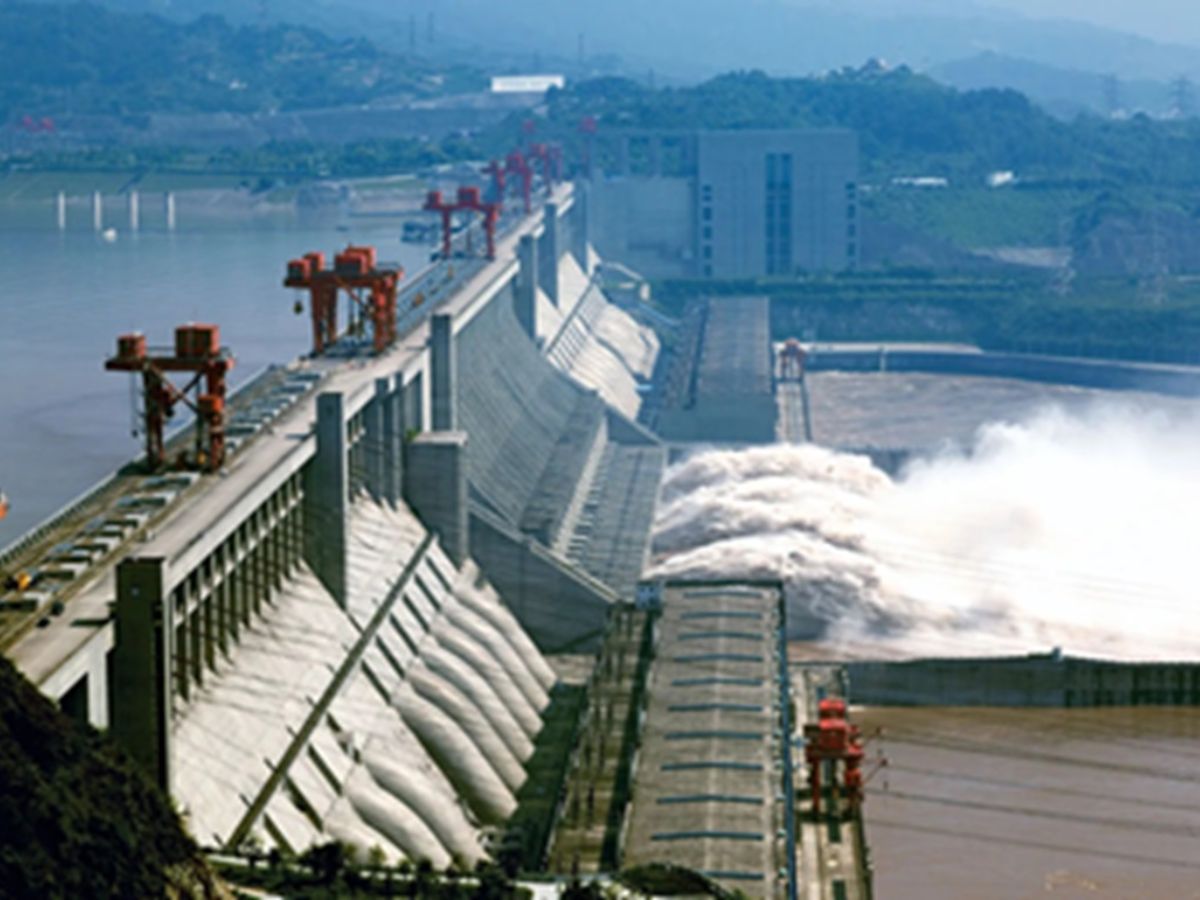
New Delhi: China’s vast South-to-North Water Diversion Project (SNWDP), the largest hydraulic engineering venture ever attempted, along with its relentless dam construction across the Tibetan Plateau, is reshaping Asia’s rivers with consequences that stretch far beyond its borders. What Beijing frames as domestic infrastructure has, in effect, become a form of hydrological coercion—one that threatens water security for tens of millions downstream, from Bangladesh to Vietnam. By mid-century, these interventions could displace up to 50 million people, cripple fisheries, and undermine the livelihoods of nearly 200 million farmers.
The SNWDP alone diverts around 45 billion cubic metres of water each year from China’s water-rich south to its arid north. Through its eastern and central routes, more than 28 billion cubic metres are already being siphoned annually, with cumulative diversions exceeding 76 billion cubic metres by late 2024. The gravest danger lies in the proposed western route. By tunnelling into the Tibetan headwaters of the Brahmaputra (Yarlung Tsangpo), Mekong (Lancang) and Salween rivers, this plan would deprive downstream regions of vital flows, sediment and seasonal flooding cycles that sustain over half a billion people.
For Bangladesh, the threat is existential. Over 90% of its river water originates upstream, feeding a delta that supports 80% of the country’s habitable land and sustains nearly 170 million people. The Ganges-Brahmaputra system carries roughly a billion tonnes of sediment each year—sediment that counteracts sea-level rise and keeps the delta alive. When upstream dams trap this material, land erosion accelerates, saltwater pushes deeper inland, crops fail, and fisheries collapse. The United Nations has already warned that the consequences could be catastrophic, particularly as dry-season flows weaken and monsoon patterns grow increasingly erratic.
The Mekong Basin offers a glimpse of this future in real time. China’s eleven major dams on the Lancang mainstream, along with dozens of tributary projects, now control the overwhelming majority of basin storage. Since 2016, Vietnam’s Mekong Delta has seen more than 1.7 million hectares salinized, inflicting billions in economic losses. Cambodia’s Tonle Sap fish stocks have collapsed by around 70%, pushing rural communities towards food insecurity. Farmers in Thailand face shrinking harvests, while Laos struggles with sudden, manipulated floods and prolonged dry spells dictated by upstream reservoir releases.
India’s Northeast faces a similar reckoning. The Medog mega-dam—an enormous 60,000-megawatt project approved in December 2024 at the Great Bend of the Yarlung Tsangpo—threatens to divert flows and dewater a 200-kilometre canyon before the river enters Arunachal Pradesh and Assam. For the roughly 35 million people who depend on the Brahmaputra in this region, the risks include chronic shortages punctuated by sudden, devastating floods, echoing the disasters witnessed in 2024. Slated to power China’s trillion-yuan industrial ambitions by 2033, the project underscores how water control is being folded into strategic leverage.
The human toll is already severe. More than a hundred million people face drinking water stress. Delta systems are starved of sediment, accelerating subsidence. Around 20 million fishers are seeing their livelihoods disappear, while 200 million farmers confront declining yields and repeated crop failures. Flash floods and abrupt releases from upstream reservoirs claim thousands of lives each year. With nearly 200 dams now operating or planned across Tibet, China has effectively positioned itself as a hydrological gatekeeper over rivers that sustain close to two billion people—without transparent data sharing and in open disregard of international norms such as the UN Water Convention.
India has begun responding, though largely on the defensive. It has expanded real-time monitoring along the Brahmaputra and repeatedly sought hydrological data from China, requests that are routinely ignored. India is speeding up dam projects on rivers such as the Subansiri and Teesta to secure water flows before they enter neighbouring countries. It is also closely tracking upstream dam activity using satellite systems shared with Quad and AUKUS partners. At the same time, India has increased support for Bangladesh by investing in embankments and barrages to reduce saltwater intrusion effectively. It has also strengthened cooperation with Vietnam to share river data and monitor developments in the Mekong basin.
However, these steps remain isolated and uncoordinated. Downstream countries need a united approach that pushes for clear and reliable sharing of river data. Legally binding agreements must be in place to ensure minimum water flows and joint investment in protecting vulnerable deltas through measures such as dredging, sediment restoration and desalination.
At the global level, Beijing’s actions are drawing calls for sharper diplomatic and economic responses such as formal scrutiny under international water governance frameworks.
As climate volatility intensifies, China’s unilateral control over Asia’s major rivers leaves more than 500 million downstream residents exposed to decisions made far beyond their borders. Without swift and unified action among affected nations, projects described as internal development will continue to redraw the map of human survival—quietly, but with devastating and irreversible consequences.
-
Ashish Singh is an award-winning senior journalist with over 18 years of experience in defence and strategic affairs.




