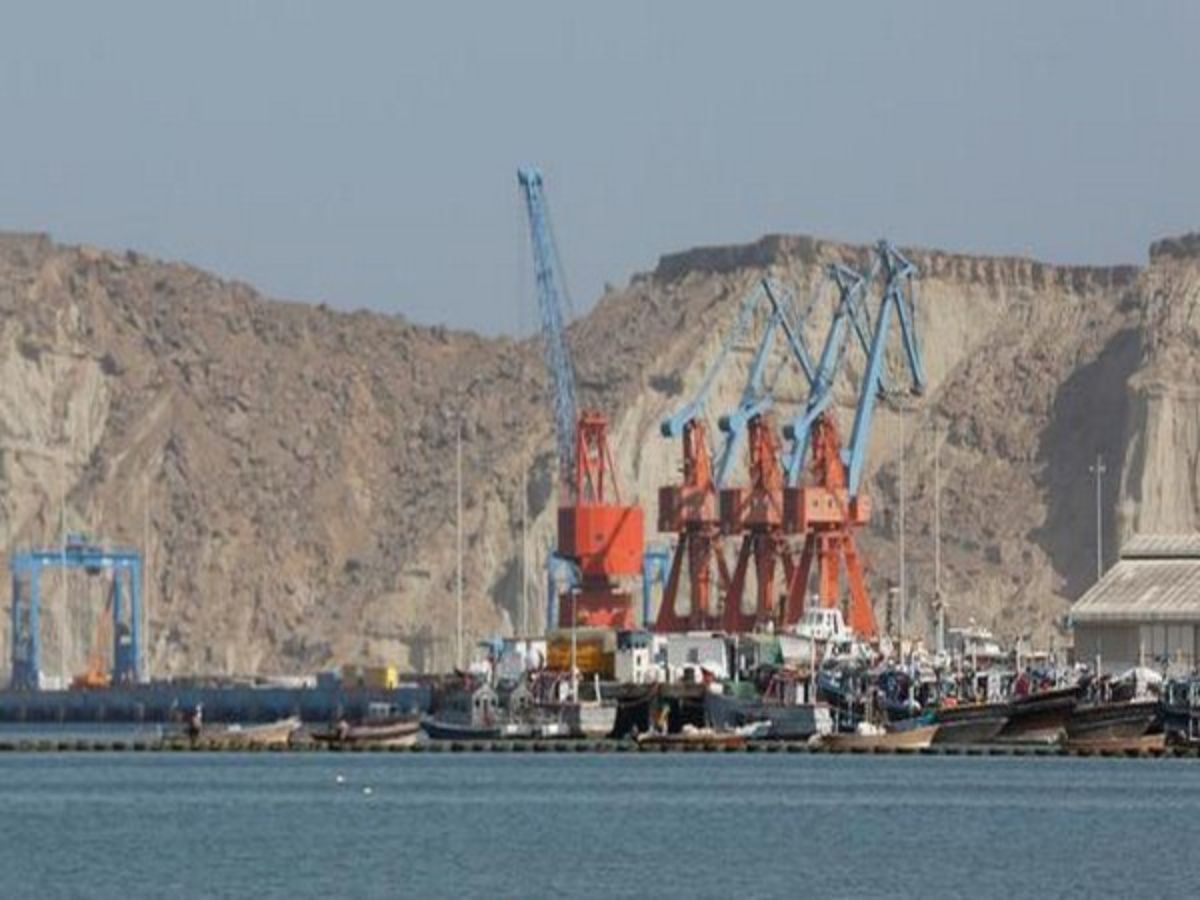
CPEC remains on track but Chinese investment momentum slows (Image: ANI)
New Delhi: Pakistan and China have once again reiterated that the China–Pakistan Economic Corridor (CPEC) remains “on track”, according to the joint press communiqué issued after the seventh round of the China–Pakistan Foreign Ministers’ Strategic Dialogue earlier this week. The statement reaffirmed political commitment to the corridor, described it as the “flagship project” of bilateral cooperation, and outlined areas of continued engagement under what both sides term CPEC’s second phase.
However, a macro-level review of official Pakistani government data, central bank statistics, parliamentary disclosures, and project records indicates that while CPEC continues as a framework, the scale, pace and intensity of Chinese economic cooperation have moderated significantly compared with the initiative’s early years.
CPEC was formally launched in 2015 with an indicative investment envelope of around USD 62 billion, a figure that Pakistani and Chinese officials later revised upwards to USD 65 billion as additional power and infrastructure projects were added. Official CPEC documentation shows that the overwhelming bulk of these commitments were made between 2015 and 2018, a period marked by rapid approvals and financial closures.
During this phase, Pakistan approved and financially closed more than 10 large power projects, many in the USD 1–2 billion range each, along with major road infrastructure such as the Multan–Sukkur Motorway (USD 2.9 billion). Coal, hydropower and transmission projects together accounted for over 70 percent of CPEC’s committed value.
By 2018, CPEC-related energy projects alone had added over 8,000 megawatts to Pakistan’s installed capacity, according to official Planning Commission figures.
However, an examination of foreign direct investment (FDI) data published by the State Bank of Pakistan (SBP) shows a clear change in momentum thereafter. According to SBP balance-of-payments data, Chinese FDI into Pakistan peaked during the height of early CPEC implementation, crossing USD 2 billion in FY2017–18. In subsequent years, annual inflows declined sharply.
By FY2022–23, Chinese FDI inflows were well under USD 1 billion, reflecting a significant contraction from peak levels and indicating a more cautious and selective investment posture by Beijing. While China has remained Pakistan’s largest single-country investor, the magnitude of annual inflows has not returned to levels seen during CPEC’s initial construction surge. SBP data also show that in several years, profit repatriation and debt servicing related to earlier projects offset a portion of new inflows, dampening net figures.
Official investment stock data reinforce this picture.
China’s equity FDI stock in Pakistan reached roughly USD 9–11 billion by the early 2020s, but growth has slowed sharply, with annual additions now limited to a few hundred million dollars compared with multi-billion-dollar increases during the early CPEC years.
This emerging plateau contrasts sharply with the rapid build-up between 2015 and 2018, when the investment stock expanded quickly as multiple large projects reached financial close.
Since 2019, very few new sovereign-backed mega-projects comparable to early CPEC power plants or highways have reached financial close, with most initiatives increasingly classified as “ongoing”, “under consideration” or “revised”.
The Main Line-1 (ML-1) railway upgrade, valued at USD 6–8 billion depending on scope, illustrates this shift.
Despite being repeatedly described by both governments as CPEC’s next flagship, the project has yet to reach financial close. Successive Pakistani railways ministers have acknowledged in Parliament that project costs had to be revised downward following Chinese objections. Financing terms were renegotiated multiple times, and the project’s scope was scaled back in phases to reduce the debt burden.
Further analysis of Chinese investment data shows that CPEC remains heavily concentrated in a narrow set of sectors. Roughly 70–75 percent of Chinese investment in Pakistan has gone into the energy sector, while transport infrastructure accounts for most of the remainder. Industrial zones, agriculture and manufacturing - central to the promised “second phase” - account for a much smaller share in realised investment terms.
Of the nine Special Economic Zones identified under CPEC, official disclosures from Pakistan’s CPEC Secretariat show that only four are under active development, with most progressing slowly and attracting limited foreign investment so far.
At the same time, official data show that the number of Chinese workers entering Pakistan has declined from peak construction years, partly because major construction projects are complete and because new, labour-intensive construction projects have been fewer in recent years.
Significantly, CPEC’s recalibration has coincided with Pakistan’s repeated reliance on IMF-supported stabilisation programmes. Since 2019, Pakistan has entered multiple arrangements with the International Monetary Fund, each requiring greater disclosure of external liabilities, emphasis on debt sustainability, and restraint on new sovereign guarantees. IMF programme documents and Pakistani Finance Ministry statements confirm that external borrowing, including Chinese loans, now falls under tighter scrutiny.
During the same period, Pakistan has expanded engagement with the United States in specific areas, notably counterterrorism cooperation, military-to-military contacts and economic stabilisation.
These engagements, documented in official readouts from both sides, mark a shift from the relative diplomatic freeze that followed the US withdrawal from Afghanistan.
This convergence of IMF oversight, slower Chinese project approvals and renewed Western engagement has sharpened debate among regional observers, with analysts describing Islamabad’s balancing strategy as increasingly difficult to sustain amid tighter financing conditions and competing external expectations.
