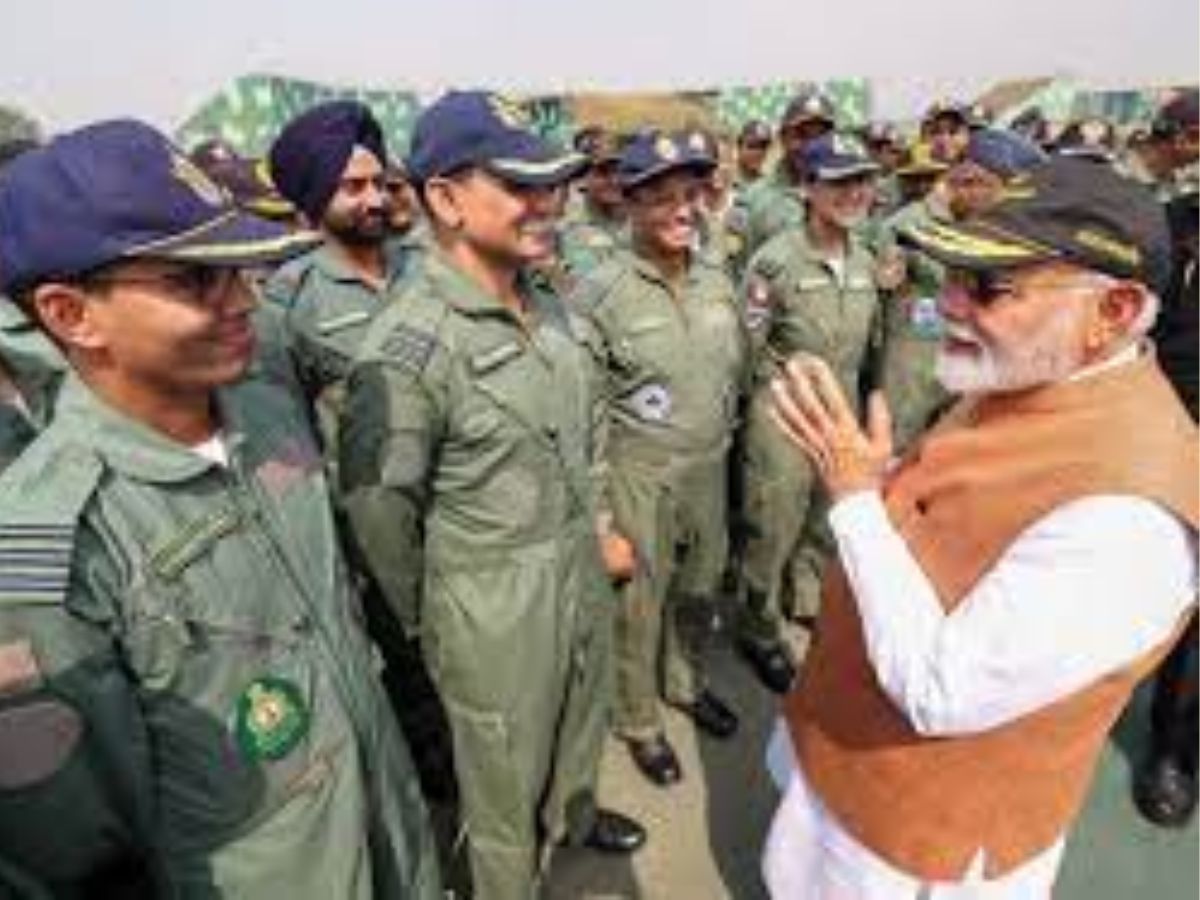
The roadmap is clear: by March 31, 2026, India will be completely free from the scourge of Naxalism. (Image: Instagram)
New Delhi: Prime Minister Narendra Modi declared on Friday, “The day is not far away when India will be freed from red terror,” calling Naxalism a sin against the nation. He described Maoist extremism as an injustice to India’s youth, reaffirming his government’s unwavering resolve to eliminate it completely. His statement came as Union Home Minister Amit Shah announced the historic surrender of 258 battle-hardened Left-Wing Extremists (LWEs) in just two days—170 in Chhattisgarh, 27 earlier in Sukma, and 61 in Maharashtra’s Gadchiroli.
The Prime Minister’s words and data-backed declaration that Abujhmarh and North Bastar are now Naxal-free, mark a defining moment in India’s internal security history. The Modi Doctrine—a blend of political will, developmental inclusion, and military precision—has brought India to the threshold of ending one of its longest-running internal conflicts.
RED TERROR TO NATIONAL RENEWAL
When the Modi government took office in 2014, Naxalism was India’s gravest internal security threat. Over 120 districts across Chhattisgarh, Jharkhand, Odisha, and Maharashtra lived under Maoist shadow. Villages were terrorised, security forces ambushed, and governance crippled.
Prime Minister Modi changed the national mindset. He refused to treat Naxalism as a manageable disorder—it was a national wound that had to be healed. His government’s approach integrated hard power with human development—roads with rights, bullets with books, and strength with sensitivity.
NUMBERS TELL THE STORY OF TRANSFORMATION
From 126 Naxal-affected districts in 2014, the figure has dropped to just 38. Violent incidents have fallen by over half—from 1,091 in 2013 to 412 in 2023. Civilian deaths are down by 86%, and security personnel casualties by 77%. The kill ratio now heavily favours the forces—a complete reversal from a decade ago.
Since the BJP returned to power in Chhattisgarh, over 2,000 Naxalites have surrendered, nearly 1,800 arrested, and more than 450 neutralised. Among the latest to surrender was Mallojula Venugopal Rao, alias Bhupathi or Sonu—a Politburo member of the CPI (Maoist)—along with 60 cadres in Maharashtra’s Gadchiroli. In Jharkhand’s Latehar district, the joint CRPF-state police operation eliminated JJMP commander Pappu Lohra (Rs 15 lakh bounty) and Pappu Ganjhu (Rs 5 lakh). The earlier neutralisation of Basavraj, CPI (Maoist)’s general secretary, dealt perhaps the heaviest blow to the insurgency’s leadership.
These victories prove what the government has long asserted—the backbone of Maoism is broken. What remains are its final fragments.
DEVELOPMENT: THE HEART OF COUNTERINSURGENCY
The Modi government recognised early that extremism breeds in neglect. The fight was not just about guns—it was about governance. Under the Special Central Assistance Scheme, each severely affected district now receives Rs 30 crore annually to strengthen local development and security infrastructure. Over Rs 6,500 crore has been invested in modernising police forces, fortifying stations, building roads, and providing basic amenities.
Thousands of kilometres of rural roads have been built, bringing once-isolated villages into the national mainstream. Mobile connectivity in LWE-affected areas has surged from under 30% to over 90%, empowering millions with digital access. Clean water, solar power, schools, and health centres now stand in areas once ruled by the gun. Development has achieved what decades of confrontation could not—it has permanently eroded the Maoists’ social base.
HUMANITARIAN APPROACH: SURRENDER, NOT SYMPATHY
Over 8,000 Naxalites have surrendered since 2014, including 1,600 in the past 16 months alone. The government’s surrender and rehabilitation policy provides financial aid, vocational training, and full reintegration into mainstream life. Each surrender represents a victory of the Constitution over coercion, and faith over fear. The message is crystal clear: “Those who surrender are welcome; those who continue with violence will face the full might of the Indian forces.” This balance of compassion and firmness defines the new era of India’s internal security doctrine.
EXPOSING THE ECOSYSTEM: FROM JUNGLE TO CAMPUS
PM Modi has also exposed the ecosystem that fuelled Maoism for decades. While jawans sacrificed their lives in forests, a section of “urban Naxals” in cities provided ideological cover, legal aid, and propaganda support to insurgents. These intellectual sympathisers glorified Maoist violence under the pretext of “human rights” and “revolutionary justice.” Even worse, the Congress and its ecosystem repeatedly romanticised and legitimised Maoism, calling it “Naxalism”—softening its brutality and turning national security into political theatre. This moral compromise gave extremists political oxygen. The Modi government has decisively ended that hypocrisy.
Today, India makes no distinction between a gun-wielding Maoist in the jungle and an urban conspirator abetting violence from behind a keyboard. Both are enemies of democracy—and both are being defeated.
MARCH TO 2026: THE FINAL PHASE
The Home Ministry’s latest data shows that the number of LWE-affected districts has dropped from 18 to 11, with only Bijapur, Sukma, and Narayanpur now classified as “most affected.” Operations are ongoing with precision and purpose.
The roadmap is clear: by March 31, 2026, India will be completely free from the scourge of Naxalism. The Modi Doctrine has redefined how India secures peace—through force when needed, and faith when deserved. The forests that once echoed with gunfire now resonate with the sounds of schools, roads, and marketplaces.
As PM Modi said, Naxalism is a sin against the nation—and India has chosen righteousness over rebellion. Under his leadership and Amit Shah’s resolve, the final battle is underway—and the outcome is certain. India’s march toward a Naxal-free future is not a promise—it is destiny in motion.
Pradeep Bhandari, National Spokesperson, Bharatiya Janata Party.
