Linguistic inclusivity in higher education will democratize education itself. The colonial inertia has to do with the continued dominance of English in HEIs.
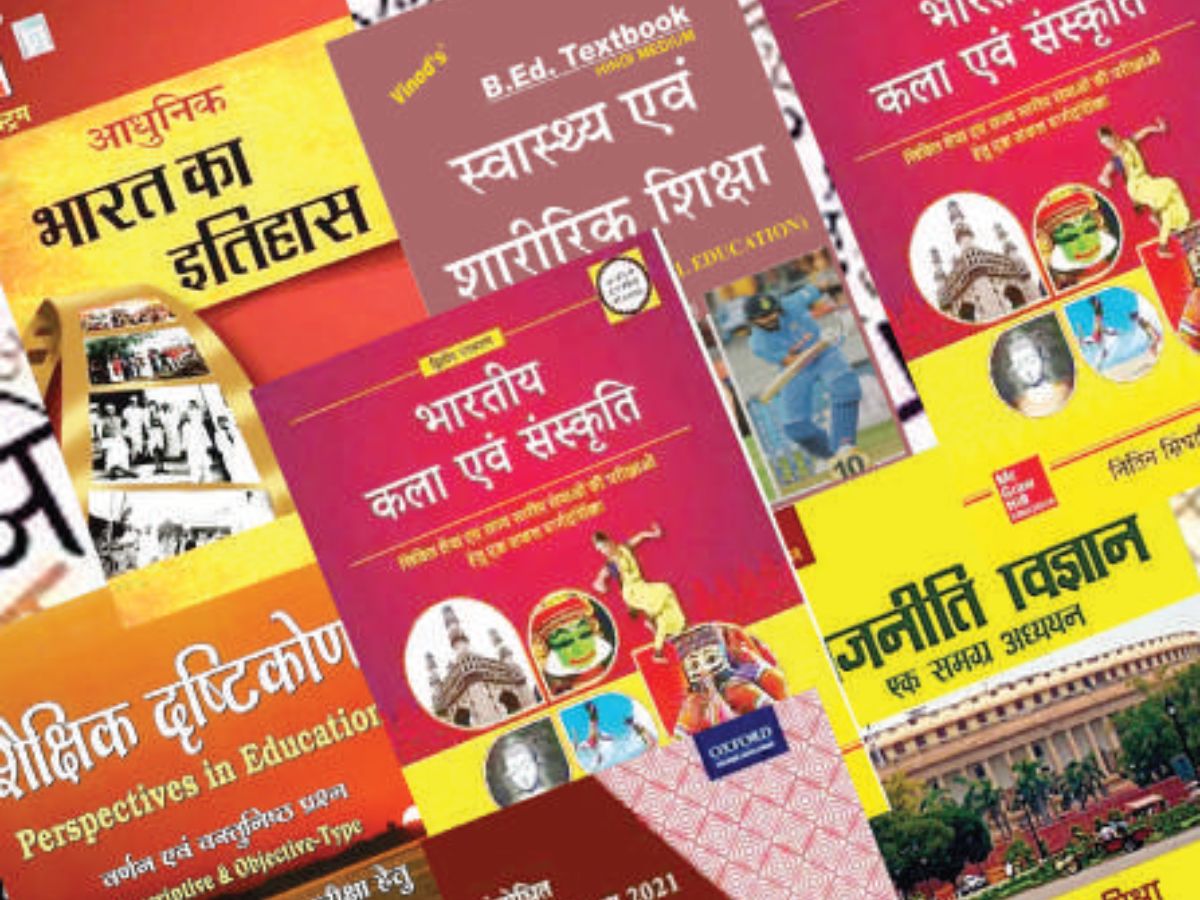
New Delhi: Indian languages represent our culture, traditions, and national identity and connect us socially and culturally. However, some think English is the key to employment opportunities. They believe only English can help us connect with the rest of the world. This mindset has long affected the use of the Indian language medium in Indian education. The National Education Policy (NEP) 2020 recognises India’s multilingual heritage. It advocates Indian language medium of instruction as a serious policy intervention to ensure inclusivity.
India has a rich tradition of scholarship in its languages. However, it is interesting to see how English has become the default medium in higher education institutions (HEIs). Despite the Kothari Commission (1964-66) recommending Indian language medium of instruction, its implementation did not take off. Seven decades later, this unresolved legacy weighs directly on student outcomes. Prioritizing English alone as the medium of instruction in HEIs leads to a decline in learning outcomes. Very few educational systems in the world impose such a burden on their students. They don’t make students learn complex concepts in a language they are uncomfortable with.
When rural students, particularly first-generation learners, are routinely placed in English medium schools due to anxiety, they lose self-esteem and ultimately discontinue higher education altogether. It is, in effect, a system designed to hobble rather than enable. This phenomenon explains why the University Grants Commission (UGC) recently asked all the higher education institutes to allow students to write their examinations in their mother tongue, even if the language of instruction is English. The principle is simple but transformative. Assess students on their subject knowledge, not their English.
The long standing misconception is that promoting Indian languages somehow comes at the cost of English proficiency. It is an old colonial anxiety disguised as pedagogy. The evidence says otherwise. Multilingualism is not a barrier but a cognitive advantage. Students who learn in their mother tongue do not lose English; they often gain it more confidently. Strengthening Indian languages does not have a negative impact on English learning. The evidence on this front is unambiguous. Teaching students in their first language significantly improves their conceptual clarity and cognitive flexibility. By contrast, when English is imposed as the only medium of instruction, students struggle.
It is not necessarily because they cannot grasp science, mathematics, or law. They are constrained by a language barrier that creates needless pressure in the minds of the learner. The casualty is critical thinking itself. Our education should not undermine students’ reasoning, problem-solving, and imagination. Instead of being an opportunity for mobility, education should not turn into a maze of frustration. Research demonstrates that employing bilingual or multilingual methods leads to the most effective teaching, even in English-medium programs. The idea that inclusivity ends with physical access to classrooms is deceptive.
To realize inclusivity, students require access to a classroom ecosystem that makes them confident enough to engage in learning. At IIT Jodhpur, a pilot BTech program in Hindi has helped students enhance their understanding of difficult subjects. Therefore, any serious dialogue about language policy must be grounded in scientific research and global best practice. And the research is unequivocal. Denying students the opportunity to study in their mother tongue clearly disregards their educational needs. It is also a failure of imagination, for it accepts the myth that Indian languages cannot be used to acquire modern knowledge.
And yet, the debate around English persists, mainly because it is framed on flawed assumptions. Linguistic competence is too often reduced to an arbitrary metric of English proficiency, as though fluency in that one language is synonymous with academic merit. In doing so, the debate conveniently ignores the fact that some of the best-performing education systems in the world, from Germany to Japan and France to South Korea, conduct their higher education entirely in their native languages. Their global standing has not been compromised. For example, in Japan, higher education is in Japanese, yet in research output, Japan is among the top 20 globally. German-taught STEM programs in Germany have world-class standing.
Global practice and cognitive research do not support the belief that English is inherently superior for higher education. It is exclusionary. It narrows opportunity, rewards privilege, and leaves many students behind. While NEP 2020 promotes multilingualism, systemic resistance tends to slow the adaptation. We must make deliberate, sustained, and courageous integration of Indian languages into mainstream higher education. That is the only way to make linguistic equity a reality by default.
The Union Budget 2025 introduced the Bharatiya Bhasha Pustak Scheme (BBPS). The aim of this scheme is produce high-quality textbooks at undergraduate and postgraduate levels in 22 Indian languages across various disciplines. For decisive implementation, HEIs should not treat the Indian language textbooks as supplementary or secondary. HEIs must promote the Indian language textbooks in higher education as standard practice. Faculty members must be trained in bilingual teaching and encourage research publications in Indian languages alongside English. Together, the industry too must adopt multilingual documentation, training modules in Indian languages, and localized software tools.
Linguistic inclusivity in higher education will democratize education itself. The colonial inertia has to do with the continued dominance of English in HEIs. The colonial structures were designed to exclude rather than empower. The sure way to break such structures is for HEIs to rethink pedagogy from the ground up. They must integrate Indian languages into instruction, examinations, and research. It means discarding the colonial benchmark that defines excellence as the ability to think in English alone.
Our fundamental mission in higher education should be to eschew reproducing colonial hierarchies. Today’s student who struggles with comprehension in the English medium of instruction is expected to become tomorrow’s professional. But such education only stunts their potential. And tomorrow’s unrealized potential is today’s institutional failure. The choice is whether our higher education system will remain a filter of privilege or become a foundation of opportunity for all by embracing the Indian language medium of instruction.
Mamidala Jagadesh Kumar, former Chairman, UGC and former Vice-chancellor, JNU. Views are personal.
