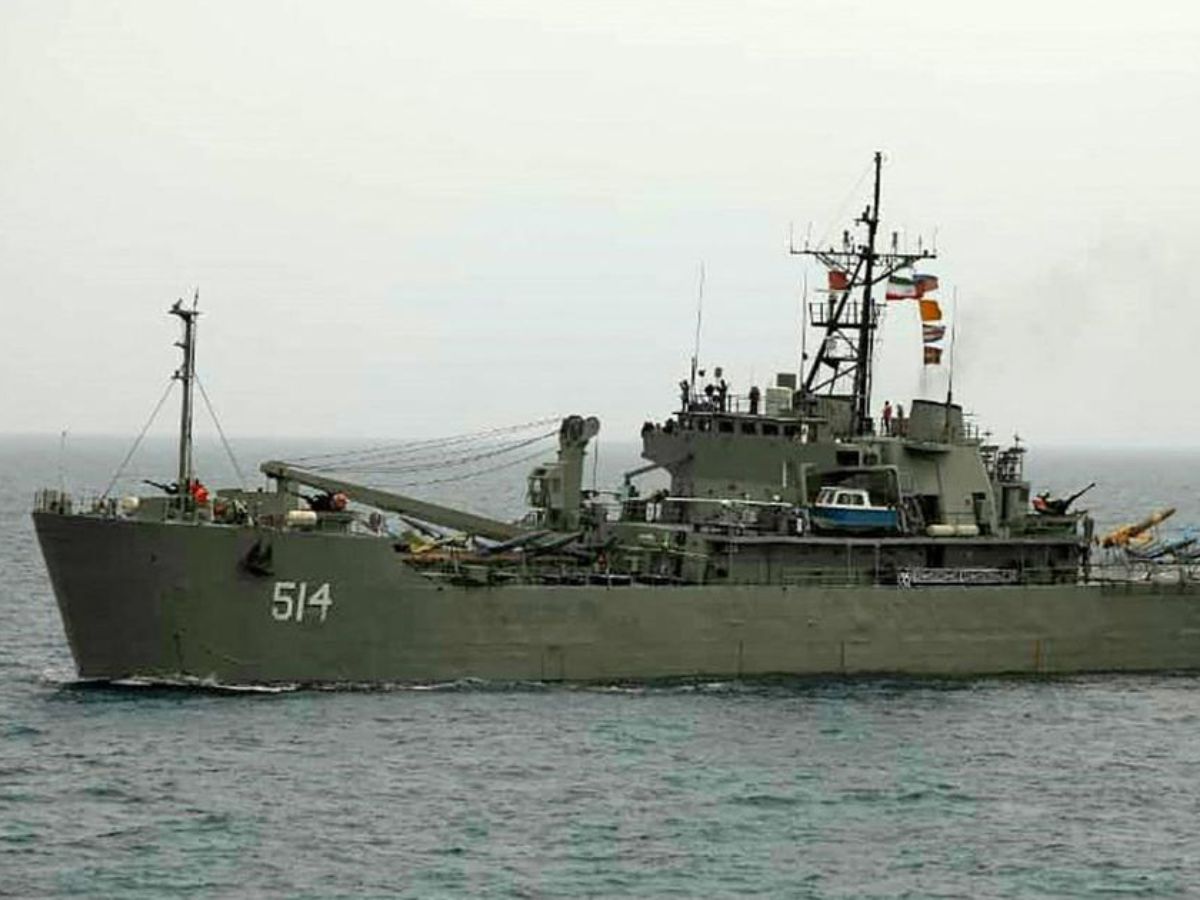
Facts clear the fog over IRIS Dena as IRIS Lavan docks in Kochi
Days before the US torpedoed the Iranian warship IRIS Dena south of Sri Lanka, Indian authorities had already received an urgent maritime request regarding another Iranian vessel operating in the region. According to government sources, a communication received on 28 February 2026 sought permission for the ship IRIS Lavan to dock in India after it developed technical issues following operations linked to MILAN 2026 and the International Fleet Review. The request indicated that the vessel required immediate logistical assistance and a safe harbour. After internal consultations, approval was granted on 1 March for the ship to dock at Kochi. IRIS Lavan subsequently arrived on 4 March, and its 183-member crew has been accommodated at naval facilities there while the vessel undergoes the necessary checks and arrangements. The decision reflects a longstanding maritime norm: ships in distress are allowed refuge regardless of nationality or political alignments. Navies across the world routinely extend such assistance under humanitarian and safety obligations at sea. Yet in the days following the unfortunate sinking of IRIS Dena, speculation emerged in some quarters about whether India or the Indian Navy bore any responsibility for the circumstances surrounding the incident.
On 4 March 2026, the Iranian warship IRIS Dena, participating in the International Fleet Review, was torpedoed by a US submarine south of Sri Lanka and sank with about 180 personnel aboard. As the nearest coastal state, Sri Lanka launched immediate search-and-rescue operations, recovering 32 survivors and 87 bodies. A distress call had earlier been received by MRCC Colombo from a position about 20 nautical miles west of Galle, within Sri Lanka’s SAR region. The Indian Navy soon joined the humanitarian search and rescue effort following the sinking. After receiving the information, the Navy deployed a long-range maritime patrol aircraft the same day to support the search operations being led by Sri Lanka. Another aircraft equipped with air-droppable life rafts was kept on standby for immediate deployment. INS Tarangini, which was operating nearby, was directed to the area and reached the search zone by 1600 hours the same day. By then, search and rescue operations had already been initiated by the Sri Lankan Navy and other agencies. Meanwhile, INS Ikshak sailed from Kochi to further augment the effort and continues to remain in the area assisting in the search for missing personnel as part of the ongoing humanitarian operation.
SEQUENCE OF EVENTS
The Iranian destroyer IRIS Dena had participated in MILAN 2026 in Visakhapatnam. The sea phase of the exercise concluded on 24 February, and by the afternoon of 25 February, the vessel had departed the Vizag coast. Once the ship sailed away from Indian waters, it ceased to be a guest of the Indian Navy. Under international maritime practice, the responsibilities of a host navy extend only while visiting ships remain within its territorial waters. Once they depart, those obligations end. After leaving Visakhapatnam, IRIS Dena moved through international waters and the exclusive economic zone of Sri Lanka, with Hambantota recorded as its last port of call. For more than eight days following the exercise, the ship remained in the broader region outside Indian jurisdiction. During this period, India had neither operational control nor involvement in the vessel’s movements.
The regional security environment also changed rapidly during this time. The escalation between Iran and the United States, along with Israel, started on 28 February, four days after the conclusion of the exercise. The subsequent attack on IRIS Dena occurred roughly eight days after MILAN ended, placing the incident well outside the timeline of India’s naval engagement with the ship.
Naval history offers little comfort to those who believe that a prior port visit or diplomatic engagement confers any protection upon a warship in contested waters. From the unrestricted submarine warfare of the First World War—in which German U-boats targeted vessels with scant regard for their last port of call or the neutrality of associated nations—to the vast convoy battles of the Second, ships were hunted and sunk based on their flag and their military character, not their recent itineraries. The logic of naval warfare has always been unsparing in this respect: once a vessel is classified as a legitimate military target, its diplomatic history becomes irrelevant the moment hostilities begin. This is not a cynical observation—it is simply the operational reality that has governed naval conflict for over a century, recognised in the laws of armed conflict and borne out repeatedly in practice.
The strike on IRIS Dena occurred in waters that fall within the search-and-rescue region overseen by the Maritime Rescue Coordination Centre Colombo. As per international procedures, Sri Lanka coordinated the response. India’s role was therefore limited to humanitarian support. The Indian Navy activated available assets to assist in search-and-rescue efforts when required—an obligation shared by maritime forces across the world.
The controversy has also been shaped by selective attention. Multiple Iranian vessels have been struck during the current confrontation, yet public debate has focused almost entirely on the one ship that previously visited India—framing that implies operational connection where none exists. In reality, once IRIS Dena left Visakhapatnam on 25 February, its movements and subsequent fate were entirely outside India’s jurisdiction. Naval diplomacy—whether through fleet reviews, training exchanges, or exercises like MILAN—is meant to build professional cooperation among maritime forces.
The sequence of events, therefore, matters. One Iranian vessel sought humanitarian refuge in India because of technical issues and India responded according to established maritime norms. Another vessel from the same naval group was later struck in international waters amid an escalating regional conflict.
In the end, the episode illustrates how quickly maritime incidents can be pulled into larger political narratives. One Iranian vessel was granted refuge in India on humanitarian grounds after reporting technical difficulties—an action consistent with established naval practice. Another vessel from the same deployment was later struck in international waters amid a rapidly escalating regional confrontation. Conflating the two risks obscures the basic facts. India’s role remained limited to what maritime norms require—hosting visiting ships during an exercise and responding to distress at sea when asked. What unfolded afterward was shaped not by events in the Bay of Bengal, but by the shifting fault lines of a conflict far beyond it.
Ashish Singh is an award-winning senior journalist with over 18 years of experience in defence and strategic affairs.
