
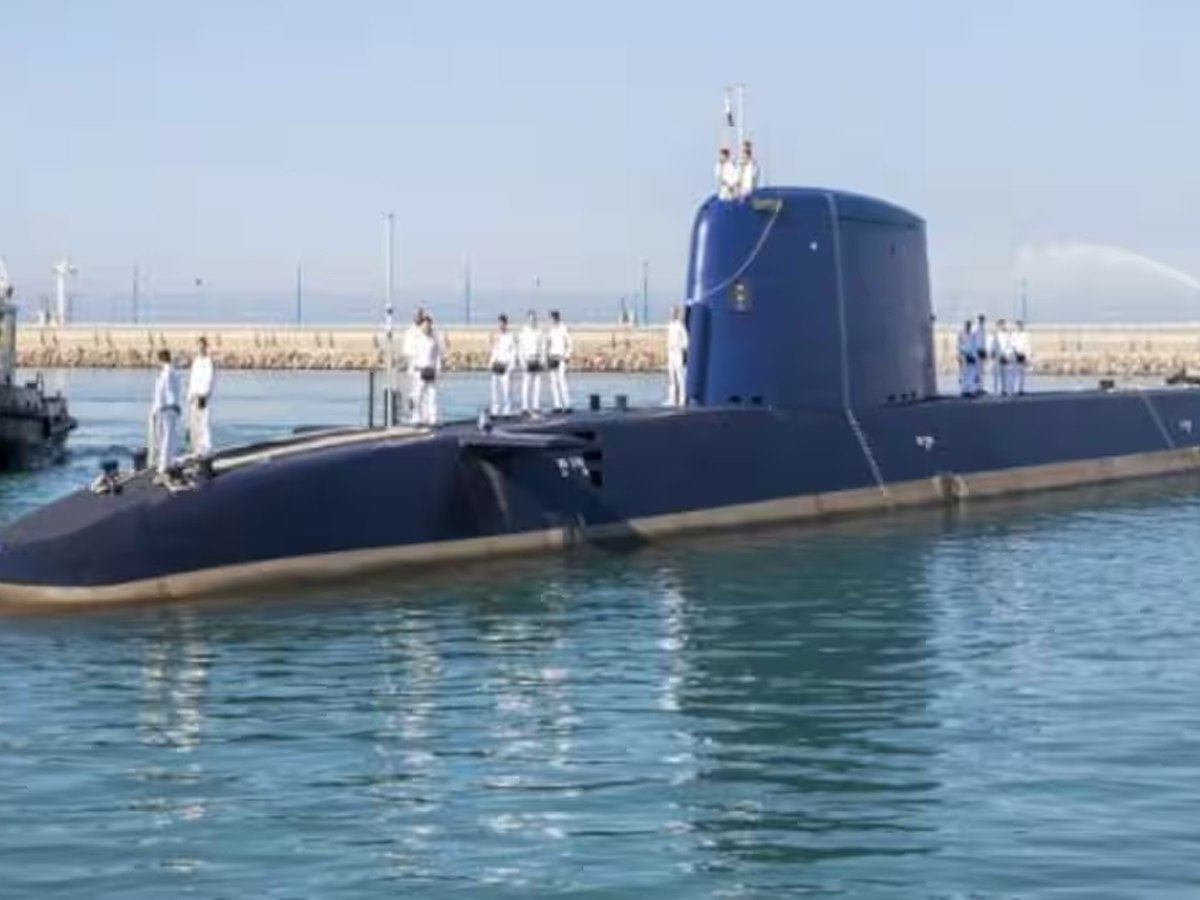
New Delhi: India’s proposed acquisition of six next-generation conventional submarines under Project75I is emerging as one of the most expensive non-nuclear submarine deals globally on a per-unit basis, according to a comparison of recent international contracts and defence budget disclosures.
The figure currently associated with negotiations between India and Germany’s Thyssenkrupp Marine Systems is around $10 billion for six submarines, implying a per-boat cost of approximately $1.66 billion.
The submarines being offered are based on the Type-214 design family, a diesel-electric platform equipped with fuel-cell air-independent propulsion that is already in operational service with multiple foreign navies.
At this price point, Project75I sits at the extreme upper end of global pricing for conventional submarines and well above the norm established by comparable acquisitions elsewhere.
By comparison, Poland’s purchase of Saab A26 submarines under its Orka programme is valued at roughly $2.7 billion for three boats, or about $900 million per unit. Pakistan’s Hangorclass programme, based on a Chinese Type-039 derivative, is estimated at $4-5 billion for eight submarines, implying a unit cost of $500- 625 million.
Malaysia acquired two Scorpène submarines for about $1.1 billion, or roughly $550 million per boat. Japan’s latest Taigeiclass submarines, which rely on advanced lithiumion batteries instead of AIP, are estimated at around $600 million per unit.
The same German Type214 platform has been sold to several countries at significantly lower prices.
South Korea signed a contract in 2000 for three Type-214 submarines for about $1.2 billion, or roughly $400 million per boat, with deliveries beginning seven years later. Portugal ordered two Type-214 submarines in 2004 for about €1-1.1 billion, implying a unit cost of roughly $500-550 million, with the first boat delivered six years after contract signing.
Turkey signed a 2009 contract for six Type-214 submarines at an estimated €2.5-3 billion, or about $420-500 million per unit, though the programme has experienced extended delays due to localisation and design changes.
Even the most expensive Type-214 programme to date, Greece’s four-boat order signed in 2000 and plagued by contractual disputes, placed per-unit costs at roughly $700 million, less than half of the figure now implied for India.
Only a small number of recent non-nuclear submarine programmes approach India’s projected per-unit cost.
Taiwan’s domestically built Narwhal submarine, developed under diplomatic isolation and heavy first-of-class research and development constraints, is estimated to have cost about $1.6 billion for a single boat.
To put India’s price point in perspective, the US Navy’s Virginia-class nuclear-powered attack submarines, specifically the Block V variant equipped with the Virginia Payload Module, currently cost approximately $4.3-4.5 billion per unit.
At the top of the global scale sits the Columbia-class ballistic missile submarine programme, where followon boats are projected to cost $8-9 billion each.
The price differential is compounded by timelines.
Under current projections, once the Project-75I contract is formally signed, the first submarine is expected to be delivered about seven years later, placing induction in the early 2030s around 2032-2033. The remaining five submarines are expected to follow at roughly yearly intervals, with the full six-boat fleet projected to be delivered by around 2036.
Historically, Type-214 programmes have taken between six and seven years at best, and more than a decade in more complex cases, to deliver the first submarine after contract signing.
Officials say the elevated cost of Project-75I cannot be explained by platform capability alone. A substantial portion of the $10-billion figure is tied to mandatory transfer of technology, full domestic construction at Mazagon Dock Shipbuilders Limited, integration of Indian combat systems and weapons, and long-term lifecycle support.
Crucially, officials describe this cost as a strategic investment linked to India’s future indigenous submarine programme, Project-76. The objective is to internalise submarine design, manufacturing, and systemsintegration expertise so that the next generation of Indian submarines can be built with minimal foreign dependence.
In effect, India is paying not only for six submarines, but for the industrial capability required to design and construct its own boats in the future. Industry experts describe this as an industrialisation premium, distinct from the cost of the platform itself.
Even accounting for technology transfer and indigenous build requirements, the implied $1.66-billion per-unit cost places Project75I well above the global median for conventional submarines. Most modern diesel-electric or AIPequipped submarines delivered internationally over the past decade have fallen within a $500-million to $900-million range per boat.




