
When BJP under Prime Minister Narendra Modi took office in May 2014, some foreign policy observers—both domestic and international—warned that India’s traditionally close ties with the Gulf nations might fray under a government led by a “Hindutva”- oriented political party. The assumption was that ideological divergence, particularly with Islamic monarchies, would inhibit strategic cooperation. A decade later, that prediction has been soundly disproven. The Gulf Cooperation Council (GCC), as of today, is India’s largest trading bloc, overtaking the European Union, ASEAN, and even top bilateral partners like the United States and China.
In FY 2023-24, India’s total bilateral trade with the GCC reached an estimated USD 162 billion, surpassing ASEAN (USD 110 billion), the EU (USD 130-140 billion), and the US (USD 118 billion). This makes the GCC India’s largest regional trading partner for the second consecutive year, a position it first attained in FY 2022- 23. Back in FY 2013-14, the total India-GCC trade stood at approximately USD 120 billion, meaning the trade volume has grown by over 35% in a decade.
The UAE alone accounted for USD 84 billion in bilateral trade, while Saudi Arabia contributed over USD 43 billion. A major turning point came in April 2022, when India signed the Comprehensive Economic Partnership Agreement (CEPA) with the UAE. Within the first 12 months of implementation, Indian exports to the UAE surged by 12%, and the number of tariff-free product lines expanded to over 80%. Since the signing of CEPA, bilateral merchandise trade has nearly doubled from USD 43.3 billion in FY 2020-21 to USD 83.7 billion in 2023-24.
A similar agreement with Oman, expected to eliminate duties on USD 3 billion worth of Indian exports, is in final stages. In July 2023, India and the UAE signed a local currency settlement agreement, allowing trade in rupees and dirhams. This was the first such framework India signed with any Gulf country, reducing reliance on the US dollar. Meanwhile, foreign direct investment (FDI) from the Gulf region—led by UAE, Saudi Arabia, and Qatar— has seen a sharp rise. FDI inflows from the GCC increased from USD 326 million in 2014 to nearly USD 7 billion by 2020, with sovereign wealth funds like Abu Dhabi Investment Authority and Saudi PIF participating in Indian infrastructure, logistics, and technology sectors.
India’s growing reliance on Gulf energy continues to underpin the relationship, official sources told The Sunday Guardian. Saudi Arabia, UAE, Kuwait, and Qatar together supply over 50% of India’s crude oil and LNG imports. In April 2025, India and Saudi Arabia signed a new energy agreement to cooperation on crude oil, LPG, and petrochemical supply chains, and to explore joint investments in green hydrogen and renewable energy. The India-UAE Strategic Energy Dialogue has been institutionalised, and the two sides have set up a Joint Strategic Reserve Mechanism, where UAE’s Abu Dhabi National Oil Company (ADNOC) stores crude in India’s underground facilities.
India also invited Saudi Aramco to invest in the longdelayed Ratnagiri Refinery and Petrochemicals project, which could become one of the largest refining complexes in the world. Officials pointed out that the shift is not just transactional—it’s strategic, something that has been taken with a lot of thinking going behind it. India now sees Gulf oil not just as a commodity but as a fulcrum of long-term energy security, pricing stability, and diplomatic leverage. Another landmark initiative that has been brought into existence is the IndiaMiddle East-Europe Economic Corridor (IMEC), announced during the G20 Summit in New Delhi in September 2023. The multi-nation infrastructure and connectivity project—backed by India, the UAE, Saudi Arabia, the US, and the European Union—envisions a shipping and rail corridor linking Indian ports to Europe via the Gulf and the Mediterranean. Seen as a strategic alternative to China’s Belt and Road Initiative, IMEC aims to bolster supply chain resilience and trans-regional trade. For India and its Gulf partners, the corridor represents a shared commitment to deeper integration beyond bilateral ties, extending their strategic cooperation into global infrastructure and economic architecture.
SECURITY AND INTELLIGENCE COOPERATION
While economic ties have taken centre stage, security cooperation between India and the GCC, something which was seen as impossible, has also expanded significantly since 2014— albeit more quietly and institutionally. The breakthrough came with the signing of a defence cooperation agreement with Saudi Arabia in 2014, covering joint military training, intelligence sharing, logistics support, and hydrography. This laid the groundwork for a Strategic Partnership Council, launched in October 2019, with two parallel tracks: political-security and economic-investment. With the UAE, India conducted its first joint air force drill, “Desert Eagle”, in 2016, followed by naval exercises (Gulf Star-I) and special forces cooperation in counterterrorism and urban warfare scenarios.
The two countries now regularly participate in high-level defence dialogues, and India has stationed a defence attaché in Abu Dhabi since 2016. In 2021, India and Saudi Arabia launched their first bilateral naval exercise, “AlMohed Al-Hindi”, followed by coordinated naval missions in the Arabian Sea. In 2023, India, France, and the UAE launched their first trilateral Maritime Partnership Exercise in the Gulf of Oman, marking a new multilateral defence format involving Gulf partners. India’s strategic integration into Gulf-led mini-laterals took shape with the formation of I2U2 in 2022. The grouping—India, Israel, UAE, and the US—aims to enhance food corridors, clean tech, and infrastructure funding. Intelligence cooperation has also matured. In December 2020, Indian and UAE agencies jointly foiled a terror plot in New Delhi linked to ISI-backed Khalistani and Hizbul Mujahideen operatives. The cell’s leader was arrested in Dubai, following a tip-off from UAE authorities, and later deported to India along with several domestic suspects.
The episode marked one of the first publicly acknowledged counter-terrorism operations between the two countries. Further institutionalisation came in April 2023, as The Sunday Guardian had revealed, when the Saudi Cabinet formally approved an agreement with Indian intelligence agencies, including the Research and Analysis Wing (RAW). This was the first formal intelligencesharing framework between the two countries and coincided with Saudi Arabia’s accession as a dialogue partner to the Shanghai Cooperation Organisation. It represented a turning point in intelligence cooperation, from ad hoc coordination to structured partnership.
This development, a senior official commented, is a “good gauge” to measure the level of mutual trust that exists between the two countries. The strength of these security ties was further reinforced in April 2025, following the brutal terror attack in Pahalgam that killed 26 Hindu civilians. The Gulf countries reacted swiftly and decisively. The United Arab Emirates denounced the massacre as a serious criminal act and reiterated its rejection of terrorism in all forms. Qatar expressed “strong condemnation and denunciation,” underlining that violence against civilians cannot be justified under any pretext. The Gulf Cooperation Council (GCC) issued a regional-level statement condemning the attack and extending condolences to India, marking a rare unified expression of solidarity from the bloc. This public and timely support reflected the maturity of the IndiaGCC security relationship and signalled that counterterrorism was no longer a peripheral concern, but a core area of strategic convergence.
TWO-SIDED OUTREACH
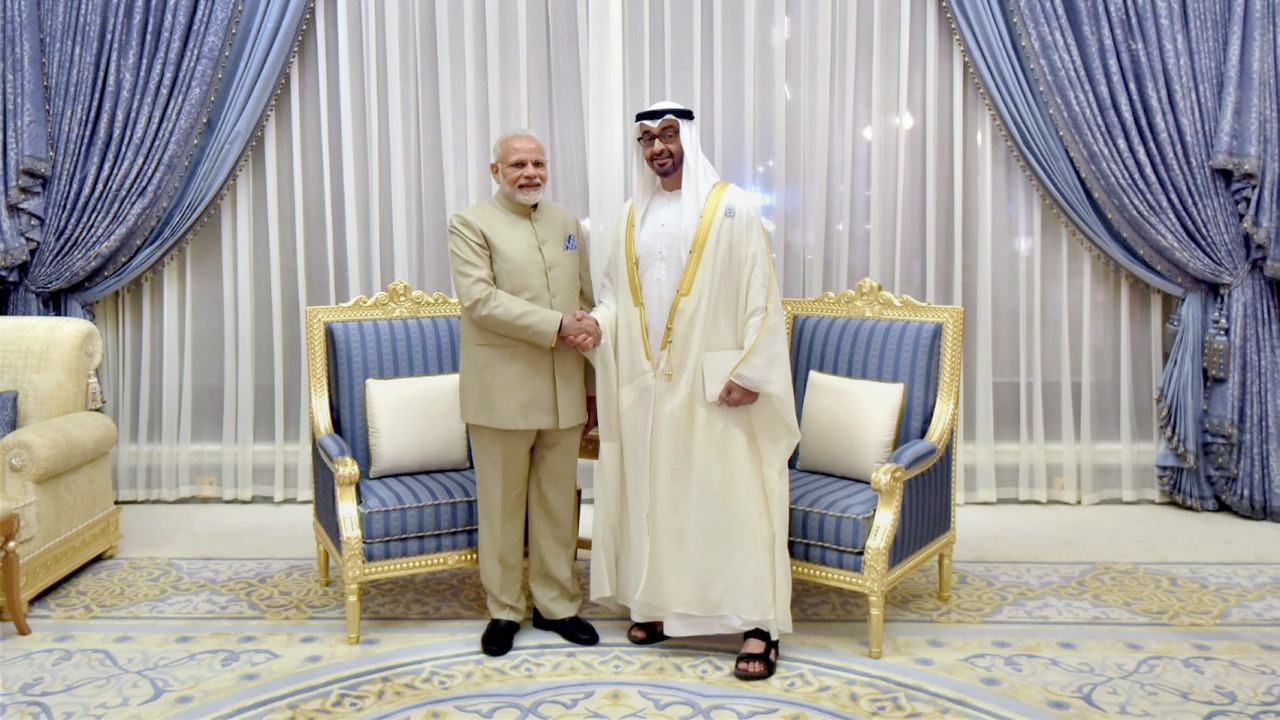
The outreach has been twosided. Gulf leaders have increasingly made India a top diplomatic destination. Abu Dhabi’s Crown Prince Sheikh Mohammed bin Zayed visited India twice within 18 months and was the Chief Guest at the 2017 Republic Day parade—an unprecedented gesture. Saudi Crown Prince Mohammed bin Salman visited India in 2019, pledging $100 billion in investments and cementing defence and energy ties. Leaders from Bahrain, Oman, and Qatar have also engaged actively, with Qatar’s Emir hosting Modi in February 2024 to personally oversee the release of Indian Navy veterans. Labour and diaspora diplomacy under Prime Minister Narendra Modi has deepened with over 9 million Indians living in the Gulf.
India and UAE signed a 2023 MoU on skill harmonisation and mutual recognition of qualifications to boost mobility. Contrary to early assumptions that the current Indian government’s ideological positioning might create discomfort in the Gulf, Prime Minister Narendra Modi’s personal diplomacy has instead earned him some of the region’s highest honours. In 2016, during his first visit to Riyadh, Saudi Arabia conferred on him the King Abdulaziz Sash, the kingdom’s highest civilian award. Three years later, the United Arab Emirates awarded him the Order of Zayed, its top honour, citing his efforts in elevating bilateral ties to a comprehensive strategic partnership. That same year, during a landmark visit to Bahrain, PM Modi received the King Hamad Order of the Renaissance—the first such visit by an Indian Prime Minister. In one of the most highprofile cases in recent years, eight former Indian Navy personnel were sentenced to death in Qatar in 2023 on charges of espionage. Despite the opacity surrounding the trial, India opted for quiet diplomacy even as inimical entities were out to dent the bilateral relations by tying these officers to a fictional intelligence operation.
During his February 2024 visit to Doha—days after attending the World Governments Summit in Dubai—PM Modi personally met with Qatar’s Emir, Sheikh Tamim bin Hamad Al Thani, and secured the eventual commutation of the death sentences and release of the officers. Their return underscored the effectiveness of PM’s personal influence across Gulf capitals. His latest April 2025 visit to Saudi Arabia has further deepened strategic ties. PM Modi co-chaired the second India-Saudi Strategic Partnership Council alongside Crown Prince Mohammed bin Salman, resulting in the formation of two new ministerial-level subcommittees on defence cooperation and cultural exchanges.
New agreements were inked to expand cooperation on crude oil and LPG trade, scale up defence manufacturing partnerships, and improve counter-terrorism coordination. India also granted an exemption to the Saudi Public Investment Fund (PIF), allowing its subsidiaries greater flexibility in Indian equity markets— paving the way for deeper Saudi capital inflows. Taken together, these honours, intelligence breakthroughs, and diplomatic milestones illustrate a broader shift for India: from transactional dependence on Gulf energy to a multidimensional strategic partnership grounded in trade, defence, counter-terrorism, and diaspora welfare.




