The unmasking of the terror cell was not the result of proactive intelligence but a mere ‘chance investigation’.
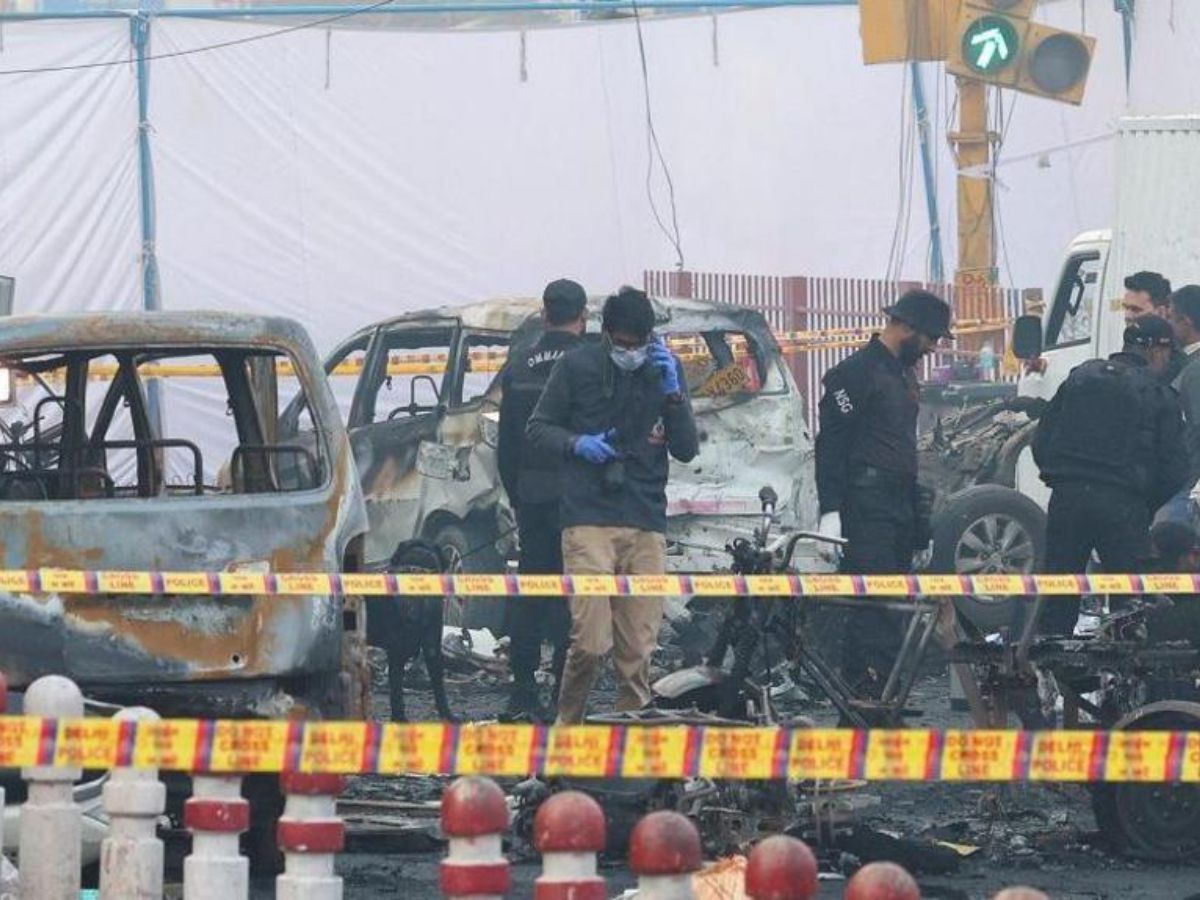
IB failed to detect Red Fort blast module for more than a year (Image: BBC)
New Delhi: The deadly car explosion near the Red Fort on 10 November has ripped the lid off a massive security and intelligence failure, with sources confirming that the terror module responsible—operating from nearby Faridabad—was active for at least one and a half years right in the National Capital Region (NCR).
The key members of the cell, now linked to the Jaishe-Mohammad (JeM) and Ansar Ghazwat-ul-Hind (AGuH) outfits, were allegedly working together, accumulating a staggering 2,900 kg cache of bombmaking materials, just a stone’s throw away from the power seat of Delhi, all without any detection by India’s primary internal security apparatus, led by the Intelligence Bureau (IB). The IB, among the multiple security agencies, is responsible for collecting, collating intelligence that will pre-empt terror incidents inside the country’s borders.
The discovery of the sophisticated module, which included highly educated medical professionals, dubbed “white-coat terrorists,” has cast a searing spotlight on the operational competence of the nation’s internal intelligence-gathering setup. Sources indicate a clear and catastrophic failure to gather actionable intelligence that such a deep-rooted module was operating in NCR. “It is a clear failure of the internal intelligence gathering setup,” a source stated plainly. “They failed to gather that such a module was active in NCR—just next to Delhi’s power seat.” Multiple sources, present and former, told this newspaper that the responsibility and accountability lies with the IB.
The unmasking of the terror cell was not the result of proactive intelligence but, as sources reveal, a mere “chance investigation”. The entire module would not have been revealed had it not been for a decision by the Kashmir Police to investigate the appearance of Jaish-e-Mohammad posters in Pulwama. “No one had any clues about such a module operating in NCR till the first week of November,” the source revealed, underscoring the accidental nature of the bust that pre-empted what investigators now believe was a much larger, multi-city attack plot.
The gravity of this lapse has led to serious questions about accountability within the intelligence hierarchy. Sources confirm that despite the scale of the failure, there has been “no action or accountability” identified against any IB official in the recent past. This lack of disciplinary action is being seen as a fundamental flaw in the system. “Disciplinary action needs to be taken,” the source asserted, calling for immediate steps to address the systemic vulnerabilities exposed by the Faridabad cell’s long-term operation.
The government has confirmed the explosion as a “heinous terror incident,” and the National Investigation Agency (NIA) has taken over the probe. Apart from unravelling the remaining threads of this module, the focus should now turn to how the system will address the intelligence vacuum that allowed a major terror plot to brew undetected for so long in the nation’s most sensitive region.
