
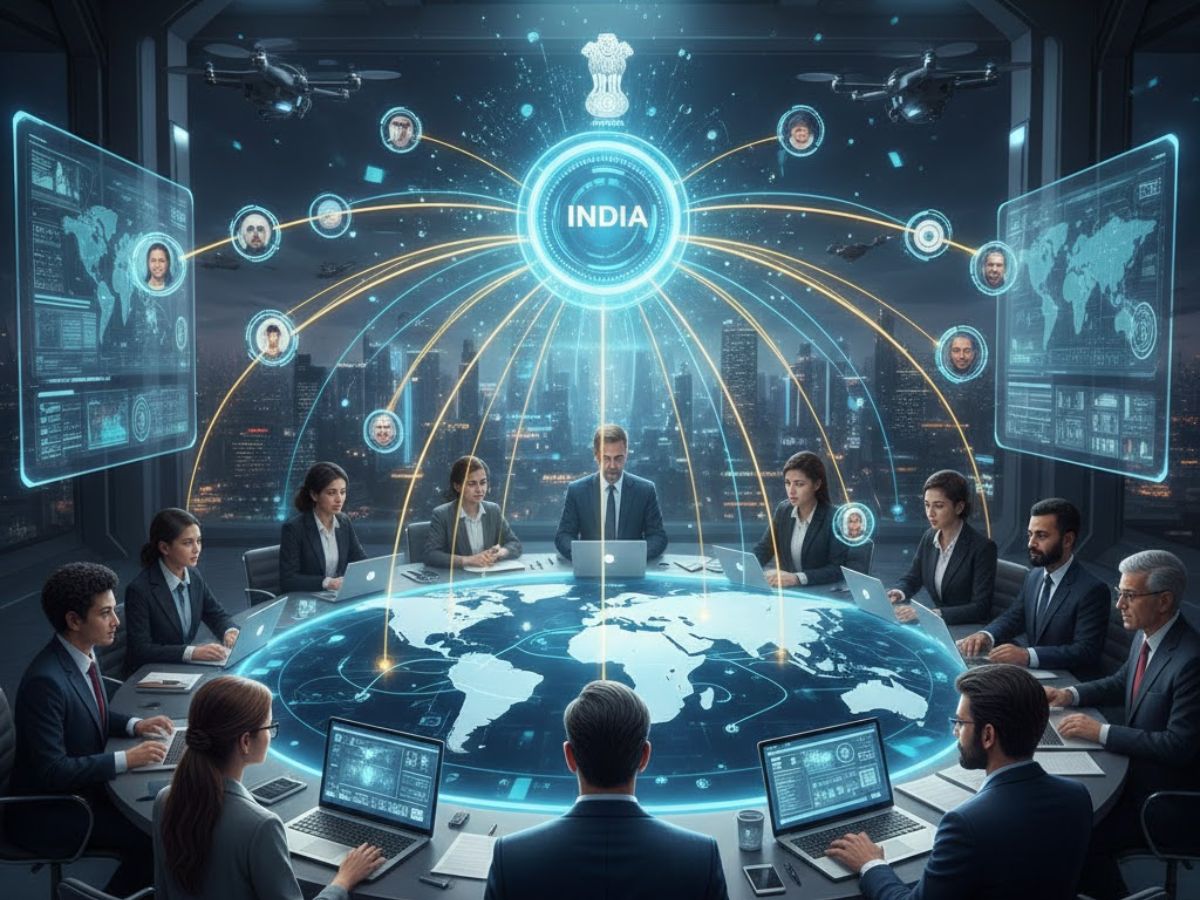
India has expanded intelligence-sharing arrangements, surveillance infrastructure, and geospatial cooperation with more than 20 countries since 2014, while simultaneously investing in advanced technologies including artificial intelligence, satellite systems, and digital surveillance platforms to strengthen its intelligence-gathering capacity across defence, intelligence, police, and paramilitary agencies.
The expansion marks a structural shift in India’s intelligence posture. Before 2014, India relied heavily on intelligence inputs from foreign partners, particularly for high-resolution satellite imagery, geospatial intelligence, and certain categories of technical surveillance. Limited indigenous satellite coverage, gaps in maritime surveillance infrastructure, and dependence on external geospatial data constrained India’s ability to independently generate comprehensive regional intelligence as the world saw during the 2008 Mumbai attack.
This began to change through a combination of international agreements and domestic investments in surveillance and intelligence infrastructure.
The most consequential external component came through foundational agreements with the United States. The Logistics Exchange Memorandum of Agreement, signed in 2016, enabled operational coordination and logistical support. The Communications Compatibility and Security Agreement, signed in 2018, allowed India to use secure encrypted communication systems compatible with US military platforms. The Basic Exchange and Cooperation Agreement, signed in 2020, granted India access to high-resolution geospatial intelligence, including satellite mapping data, nautical charts, and advanced navigational information. These agreements significantly enhanced India’s ability to monitor military activity and conduct precision surveillance.
India has also expanded intelligence cooperation with Israel, particularly in surveillance and reconnaissance systems. Indian forces operate Israeli-origin Heron and Searcher unmanned aerial vehicles for continuous aerial surveillance along sensitive land borders and maritime areas. In 2017, India approved procurement of additional Heron TP drones capable of operating at higher altitudes and longer ranges. Israeli radar systems, electronic monitoring platforms, and surveillance technologies have strengthened India’s ability to detect infiltration, monitor border activity, and conduct reconnaissance operations.
Official sources said intelligence coordination with France has expanded at multiple levels in the past one decade alongside broader defence ties. France maintains military facilities in the Indian Ocean Region (IOR) and shares maritime surveillance information with India. This includes data on ship movements, naval deployments, and maritime security threats. The cooperation strengthens India’s ability to monitor critical sea lanes and naval activity across the region.
India’s most significant structural shift has come through its maritime surveillance network across the Indian Ocean. India has installed and integrated coastal radar systems in countries including Mauritius, Seychelles, Sri Lanka, and Maldives. These radar stations transmit vessel tracking information to Indian monitoring centres, allowing Indian authorities to track commercial shipping and monitor naval movements across strategic sea lanes.
This network is coordinated through the Information Fusion Centre-Indian Ocean Region, established in 2018 near Delhi. The centre collects and analyses maritime traffic data from radar systems, satellite feeds, and partner countries. Foreign liaison officers stationed at the centre coordinate maritime intelligence exchange, allowing India to both receive and provide maritime situational awareness information.
India has also expanded intelligence coordination with Gulf countries including the United Arab Emirates and Saudi Arabia. Intelligence-sharing arrangements with these countries have facilitated extradition of criminal suspects and strengthened monitoring of terrorism and organised crime networks.
Intelligence cooperation with neighbouring countries including Bangladesh, except the recent blip that was witnessed, and Sri Lanka has contributed to counter-terror operations and regional security monitoring that have prevented potential terror attacks in both these countries.
Alongside international cooperation, India is investing in strengthening its domestic intelligence infrastructure through technology modernisation programs. These include expansion of satellite surveillance capabilities, deployment of unmanned aerial systems, integration of artificial intelligence tools for data analysis, and modernisation of intelligence platforms used by defence forces, intelligence agencies, police, and paramilitary organisations.
Artificial intelligence and data analytics systems are being integrated to process large volumes of surveillance data generated by satellites, drones, radar networks, and electronic monitoring systems. These technologies improve the speed and accuracy of intelligence analysis and enable faster identification of potential security threats.
Government investments also include modernisation of border surveillance systems, expansion of electronic intelligence capabilities, and strengthening of digital intelligence infrastructure across multiple security agencies. These efforts are aimed at improving coordination between military intelligence, technical intelligence agencies, and law enforcement bodies.
Security analysts say these combined investments in technology, surveillance infrastructure, and intelligence partnerships are expected to significantly enhance India’s ability to independently collect, analyse, and share actionable intelligence in the coming years, particularly within its primary region of strategic interest.
The expansion of intelligence partnerships and technological capabilities since 2014 has positioned India as a key provider of maritime and regional security intelligence in the Indian Ocean region, reflecting a shift toward greater self-reliance and expanded operational intelligence capacity.




