
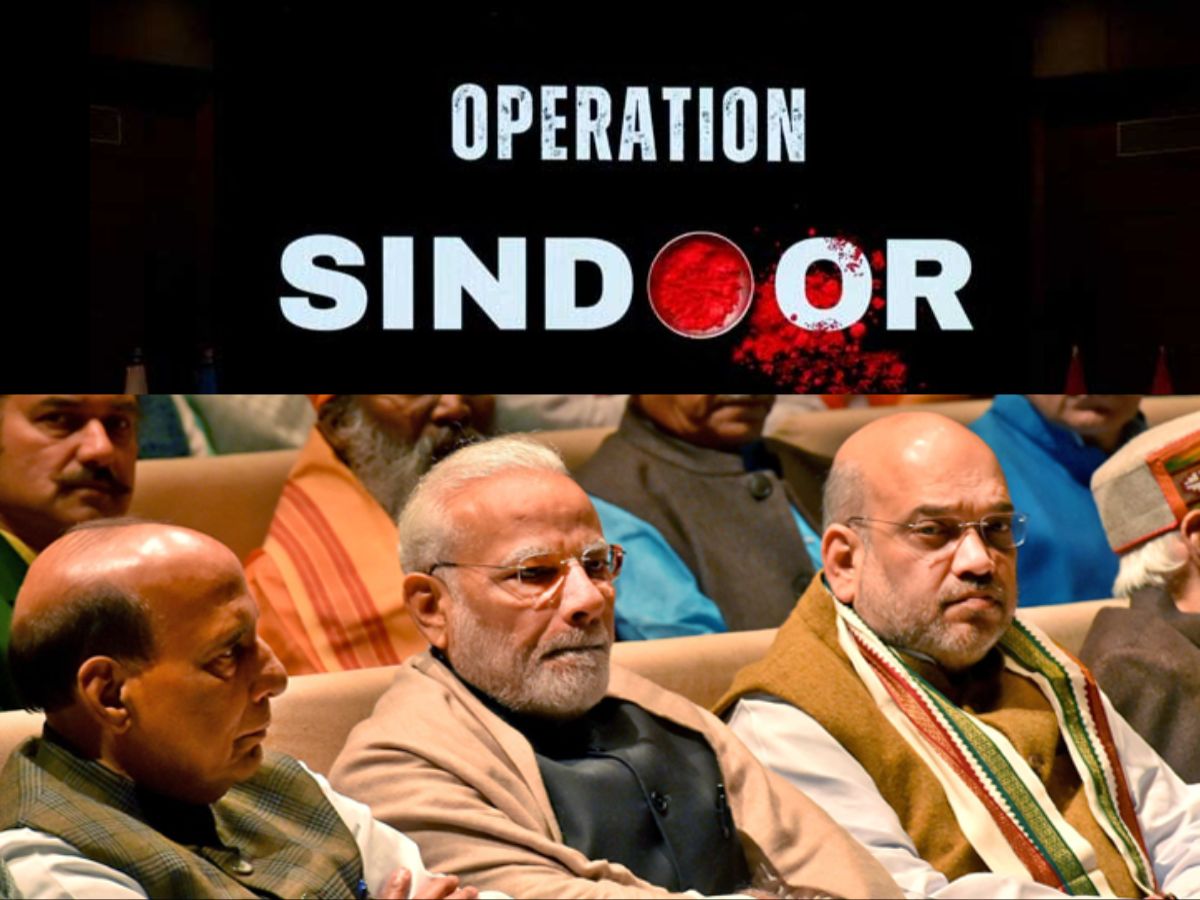
New Delhi: The Union government has begun a sweeping revamp of its information network, openly acknowledging that India’s crisis communications machinery failed to project a timely and coherent narrative after Operation Sindoor in May 2025, even though the military operation itself achieved its objectives. Officials say the reform effort has unfolded in multiple layers over the past few weeks, ranging from administrative restructuring of human resources to deployment of advanced technology platforms designed for real-time narrative awareness. The Sunday Guardian had in September 2025 revealed that crucial updates during the crisis were exchanged through informal WhatsApp groups rather than structured institutional channels. The report had underlined how Pakistan’s Inter-Services Public Relations directorate used the information vacuum to circulate unverified claims of civilian casualties, while Indian institutions remained largely silent for critical early hours. Rather than dismissing the criticism and the failure narrative, the government accepted that the problem was systemic and required permanent structural correction.
On the domestic front, the Ministry of Information and Broadcasting issued a directive in mid-November 2025 mandating that at least one designated Press Information Bureau official be posted in every ministry and department. A fresh work-allocation directive was also issued to formalise this requirement. The intent was to create an accountable single-chain system for drafting and releasing official communications and for coordinating with the PIB Fact-Check Unit. The senior-most PIB official in each ministry is now designated as the “Chief of Media and Communications”, reporting directly to the Secretary. The CMC’s responsibility includes advising on campaign strategy, conceptualising themes, drafting press releases, ensuring accuracy of content, organising press events and collaborating with inter-agency bodies such as the Central Bureau of Communication, Prasar Bharati and intelligence units. An official involved in the process said a series of measures have been taken with strong emphasis on ensuring a coherent and unified approach to communications, a requirement that was felt acutely by the government during Operation Sindoor.
The government has also abolished the earlier siloed outreach mechanism. Instead of the MEA, Defence Ministry and Home Ministry speaking separately during crises, a Unified Outreach model has been introduced. A permanent Crisis Communication Group has been created to bring together officers from the Army, the MEA and intelligence agencies into a single pod. During any security incident, the group now sits together in one room and releases one verified version of facts within 60 minutes. Officials say the move has ended informal leak culture by making information flows institutional and accountable. Sources said the Ministry of External Affairs has also been asked to address the global microphone deficit by approving dedicated International Media Liaison posts at more than 40 Indian embassies and high commissions. Previously, IIS officials were posted abroad as correspondents for the public broadcaster Prasar Bharati. The new initiative expands that concept and gives diplomats stationed in key missions the authority to brief local media in their own time zones, without waiting for clearance cycles from New Delhi. The change ensures that when outlets such as BBC seek answers during late-night hours in Europe, authorised personnel abroad respond immediately.
Parallel to these domestic and diplomatic measures, Indian Army has initiated its own doctrinal reforms. In October 2025, the Southern Command organised ASCEND 2025 in Pune, a seminar in which the importance of strategic communications as part of national power was discussed and deliberated upon. During the event, senior military officials stated that strategic communications had emerged as a core function of national security. Among the recommendations that emerged from this event was the need for an Unified National Strategic Communication Framework and deeper synergy between civilian and defence institutions. Official sources said that post May 2025, technology is now aggressively implemented under the revamp. The New Media Wing of the Ministry of Information and Broadcasting recently floated a formal Government e-Marketplace tender for the design, development, implementation and maintenance of an AI and Machine Learning powered Integrated Dashboard. According to the tender document, the platform will scan thousands of print, television, online and social media sources, generate contextual sentiment analysis reports, forecast emerging trends based on historical data, issue graded alerts and allow officials to generate downloadable dossiers. The system will be hosted on the NIC Cloud environment and must pass formal government security audits. As per the document, the selected vendor will operate and maintain it for an initial period of four years, with possible extension by one year. In addition to the dashboard, a separate AI and ML-based multilingual platform is planned to support translation and voice localisation. The objective is to detect false narratives before they go viral and to release verified proof simultaneously with operational claims.
The impact of this approach became visible in late 2025, when the Indian Army began publishing gun-camera footage alongside strike claims during subsequent minor skirmishes. Analysts say the synchronised publication of visual evidence effectively neutralised Pakistan’s ability to circulate fake images. As reported, the Indian Information Service cadre is also likely to see significant restructuring. Given the increasing number of departments and functions that need to be covered under a unified communications system, officials say that the intake of IIS officers is set to rise significantly amidst the cadre restructuring process. The government is also considering creation of a communications board entrusted with overseeing transfers, postings and work allocation of IIS and PIB officials. Cadre restructuring, as defined by officials, involves changing the number of posts, creating new ones, abolishing old ones, modifying roles and improving promotion avenues. Now, the CMCs are coordinating with the Central Bureau of Communication and Prasar Bharati for planning and executing publicity campaigns, with active collaboration with the PIB Fact-Check Unit to flag misinformation on media platforms. Taken together, the reforms amount to one of the clearest acknowledgements inside the Government of India that communication defeats can dilute military victories. From leadership posts in every ministry to expanded embassy outreach, AI-enabled narrative monitoring and professionalised staffing, the government has chosen to fix vulnerabilities rather than deny them.




