Interim agreement has been designed to protect Indian farmers and dairy sector while expanding export opportunities for industry, artisans and MSMEs in the US market, says minister Piyush Goyal.
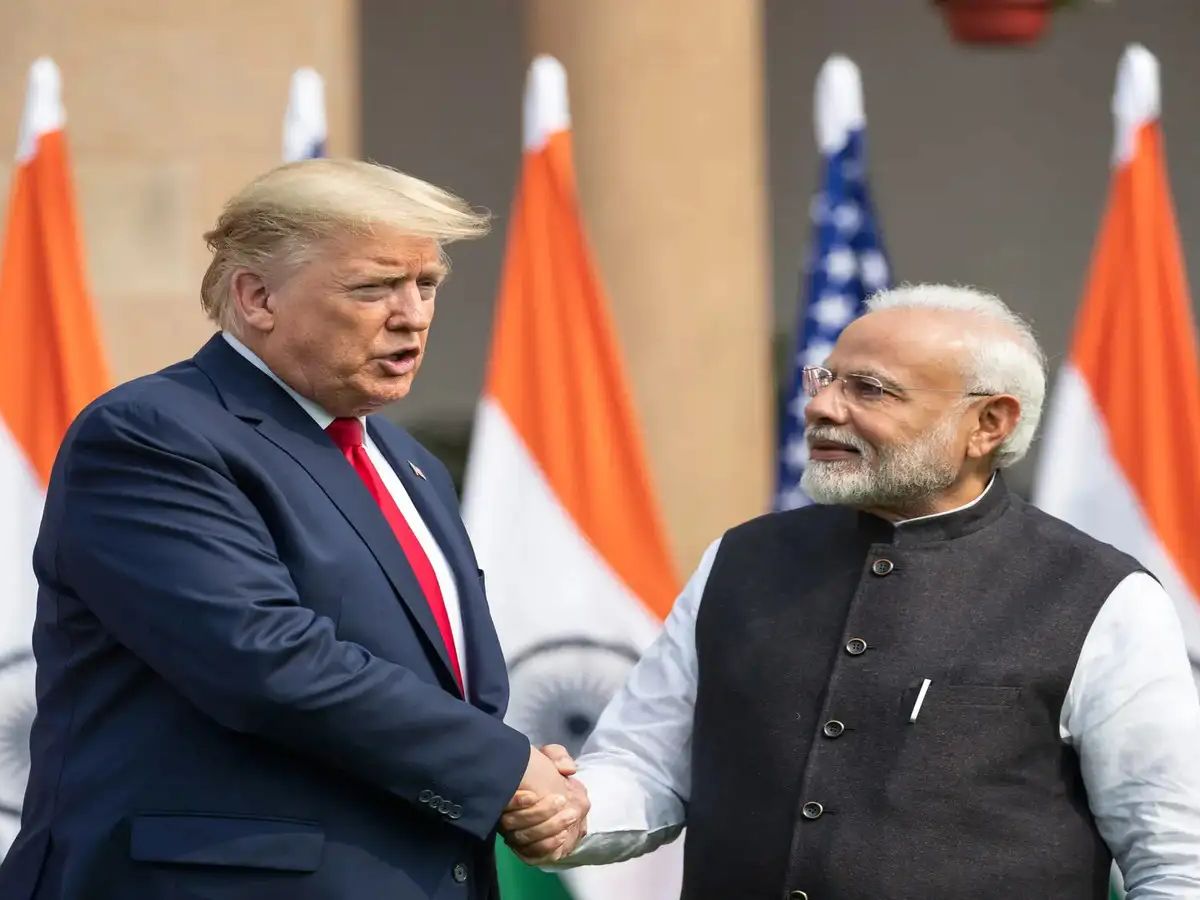
PM Modi & President Trump (Image: File)
The United States has formally recast its trade relationship with India by linking tariff relief and market access to New Delhi’s alignment with US national security objectives, energy sourcing decisions and long-term purchasing commitments, marking a decisive shift from conventional trade diplomacy to a conditional and enforcement-backed framework.
In a joint statement issued on Friday night/Saturday early morning (India time), the two countries announced a framework for an Interim Trade Agreement that will anchor negotiations towards a full Bilateral Trade Agreement (BTA). Hours later, US President Donald J. Trump signed an Executive Order rescinding a 25% punitive tariff imposed on Indian goods in 2025 after Washington determined that India was importing Russian oil.
The Executive Order makes explicit that the tariff rollback is contingent on India’s commitment to stop directly or indirectly importing oil from the Russian Federation. It authorises the US Commerce Department to monitor India’s energy imports and provides for a snapback mechanism under which the 25% duty can be reimposed if India resumes Russian oil purchases, effectively converting trade access into an enforcement tool for geopolitical compliance.
The White House said the decision reflects India’s alignment with US national security and foreign policy objectives, including a newly referenced ten-year defence cooperation framework, as well as India’s stated intent to purchase US $500 billion worth of US energy products, aircraft and aircraft parts, technology goods and other commodities over the next five years.
Under the Interim Agreement framework, the United States will apply a reciprocal tariff rate of 18% on a broad range of Indian exports, including textiles, apparel, leather footwear, chemicals and certain machinery. At the same time, Washington will offer conditional relief to high-value Indian sectors such as generic pharmaceuticals, gems and diamonds, aircraft parts and automotive components. Tariffs imposed under Section 232 national security investigations covering steel, aluminium, copper and aircraft parts are to be removed or eased, subject to specified conditions.
India, in return, has committed to eliminate or reduce tariffs on all US industrial goods and a wide range of agricultural products, including animal feed, soybean oil, fruits, nuts, wine and spirits. Beyond tariffs, the framework requires India to dismantle non-tariff barriers by addressing long-standing US concerns in medical devices, eliminating restrictive import licensing for Information and Communication Technology goods, and reviewing the acceptance of US or international testing and standards for imports within six months of the agreement’s entry into force.
Both sides also agreed to establish rules of origin designed to ensure benefits accrue predominantly to the two countries, a provision widely seen as aimed at limiting the role of third-country supply chains. The framework further commits Washington and New Delhi to closer coordination on export controls, investment screening and supply chain security to counter what the joint statement describes as the non-market policies of third parties.
The documents stop short of binding commitments on data governance or digital regulation but signal future negotiations on digital trade rules as part of the final Bilateral Trade Agreement. They also prioritise expanded trade in technology products such as graphics processing units and other hardware used in data centres, reinforcing the security-linked nature of the economic partnership.
Responding to the announcement, Commerce and Industry Minister Piyush Goyal said the interim trade agreement had been carefully designed to protect Indian farmers and the dairy sector while expanding export opportunities for Indian industry, artisans and MSMEs in the US market.
Addressing a press conference in New Delhi, Goyal said no sensitive agricultural or dairy items had been included in the deal. “We have not included any item where any Indian farmer will be hurt. All sensitive items have been kept out of the deal,” he said.
The minister said India has offered no tariff concessions on key farm and dairy products. “No genetically modified items will enter India, and no tariff relief has been given on meat, poultry, dairy, soybean, maize, rice, wheat, sugar, millets, oilseeds, ethanol and tobacco,” he said, adding that several fruits and pulses were also excluded.
At the same time, Goyal said the agreement delivers significant gains for Indian exporters by lowering or eliminating US tariffs on a wide range of products. He said several Indian exports will now enter the US market at zero duty, with tariffs reduced from levels as high as 50% to zero. These include gems and diamonds, pharmaceutical products and generic drugs, smartphones, aircraft parts, machinery parts, select auto components, platinum, clocks and watches, essential oils, home décor items such as chandeliers and lamp parts, and select chemical, paper, plastic and wood products.
Agricultural exports will also benefit, with zero reciprocal tariffs on products such as spices, tea, coffee, copra, coconuts and coconut oil, areca nut, cashew nuts and other nuts, as well as fruits and vegetables including mangoes, guavas, kiwis, papaya and mushrooms.
Goyal said Indian exporters would gain a competitive advantage as India faces lower tariffs than several neighbouring and competing countries. Citing feedback from the ground, he referred to a handicrafts artisan from Sambhal in Uttar Pradesh who welcomed the reduction in tariffs to 18% and said it would lead to new orders and business growth.
On the import side, the minister acknowledged that India has reduced or removed tariffs only on items that it does not produce domestically or does not produce in sufficient quantities. These include apples, distillers dried grains with solubles, wines and spirits subject to a minimum import price, select nuts, certain medicines, medical equipment, industrial inputs and ICT-related products. Some tariff reductions will take effect immediately, while others will be phased or quota-based.
Calling access to US technology a “big win”, Goyal said the United States has agreed to supply critical ICT products required for India’s growth and national security. Asked whether references in the joint statement to the non-market policies of third parties were aimed at China, he said, “Those who understand, they know.”
Taken together, the Executive Order and the Interim Trade Agreement framework mark a shift away from traditional diplomacy toward a transactional model in which India’s market access to the United States is explicitly tied to its alignment on energy, defence and broader geopolitical objectives. While India gains relief from punitive tariffs and preferential access in key export sectors, it does so under a regime of monitoring and conditionality that embeds US leverage into the relationship.
