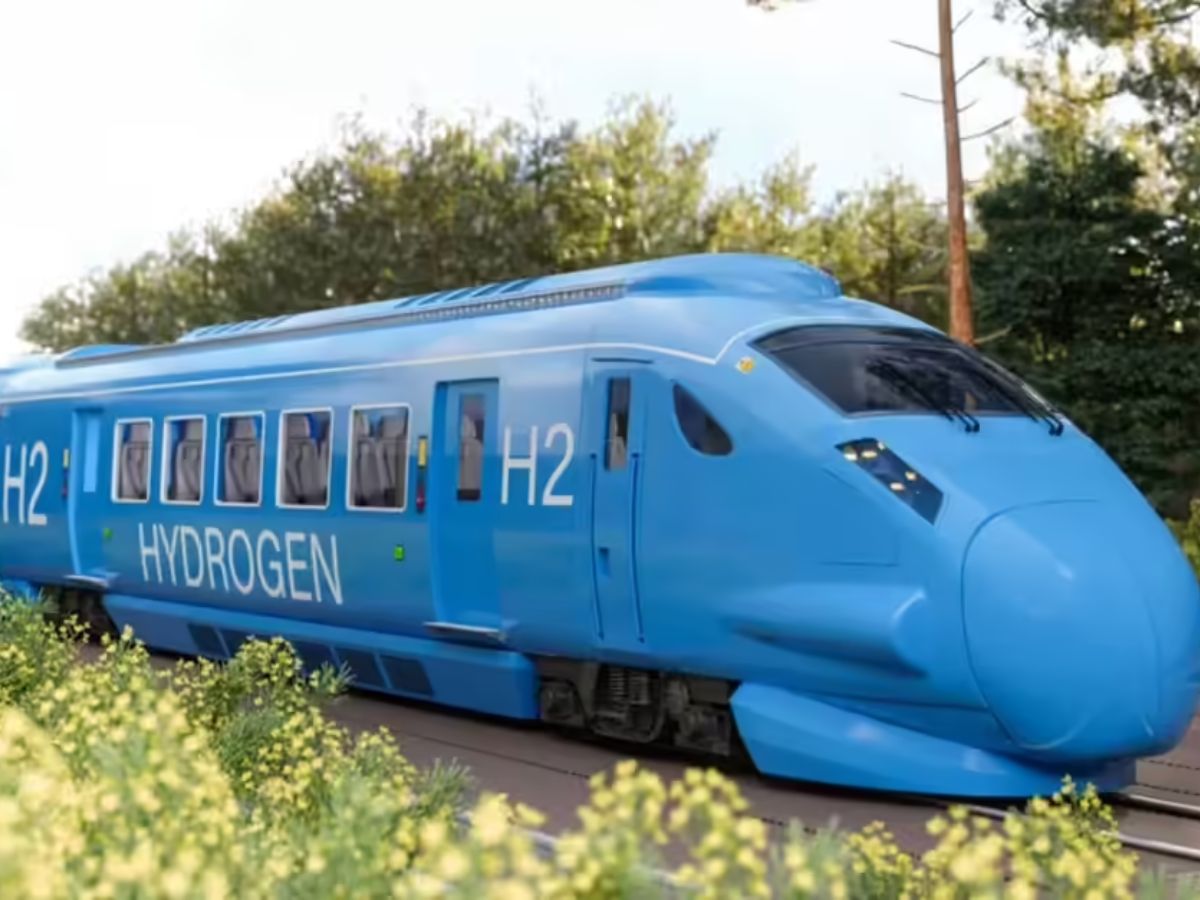
Indian Railways joins green tech league with first hydrogen train (Image: File)
New Delhi: Indian Railways has marked a major milestone in its journey towards clean and sustainable mobility by completing the manufacturing of its first hydrogen-powered train-set, which will be operated on a pilot basis. Executed in accordance with specifications laid down by the Research, Design and Standards Organization (RDSO), the project is aimed at showcasing the viability, safety and operational performance of hydrogen-powered train technology across the Indian railway network.
Sharing details in the Lok Sabha earlier last week, Union Minister for Railways, Information and Broadcasting, and Electronics and Information Technology, Ashwini Vaishnaw stated that the initiative underlines Indian Railways’ strong resolve to embrace alternative energy solutions and move decisively towards a cleaner, greener and more sustainable future for rail transportation in the country.
To facilitate the operation of the hydrogen-powered train, a dedicated hydrogen generation plant has been planned at Jind. At this facility, hydrogen is being produced through the electrolysis process, which is a crucial component of green hydrogen generation, thereby aligning the project closely with India’s broader clean energy and decarbonisation objectives.
Entirely designed and developed within the country, the hydrogen train-set highlights Indian Railways’ continued emphasis on the Atmanirbhar Bharat vision. Currently, it holds the distinction of being the world’s longest hydrogen-powered train-set, with a total of 10 coaches, and is also the most powerful hydrogen train operating on a broad gauge platform, delivering an overall power output of 2,400 kW.
The train-set consists of two Driving Power Cars (DPCs), each rated at 1,200 kW, along with eight passenger coaches. Among its key advantages is the fact that it produces zero carbon dioxide emissions, with water vapour being the only emission, representing a significant advancement in the adoption of next-generation fuel technology by Indian Railways.
Officials pointed out that the project involved comprehensive development work, beginning from the initial design stages to prototype manufacturing and the first-ever deployment of hydrogen traction technology within the Indian Railways system. Since both the hydrogen train-set and its associated infrastructure have been developed on a pilot basis, the government has clarified that making a direct cost comparison with established conventional traction systems would not be appropriate at this stage.
The hydrogen train project is expected to provide valuable operational and technical insights for Indian Railways, helping assess the long-term viability of hydrogen traction under Indian conditions. Experience from the pilot is likely to shape future expansion of hydrogen-powered trains, particularly on non-electrified routes, while building indigenous expertise in hydrogen technology. In the long run, successful adoption would reinforce Indian Railways’ role in promoting sustainable transport and support national goals of clean energy transition and emissions reduction.
