The challenge of capacity-building and capability-enhancement lies in the disparate priorities of multiple stakeholders in the Indo-Pacific. Initiatives that succeed in South Asia may not translate seamlessly to the Pacific islands or the African littorals.
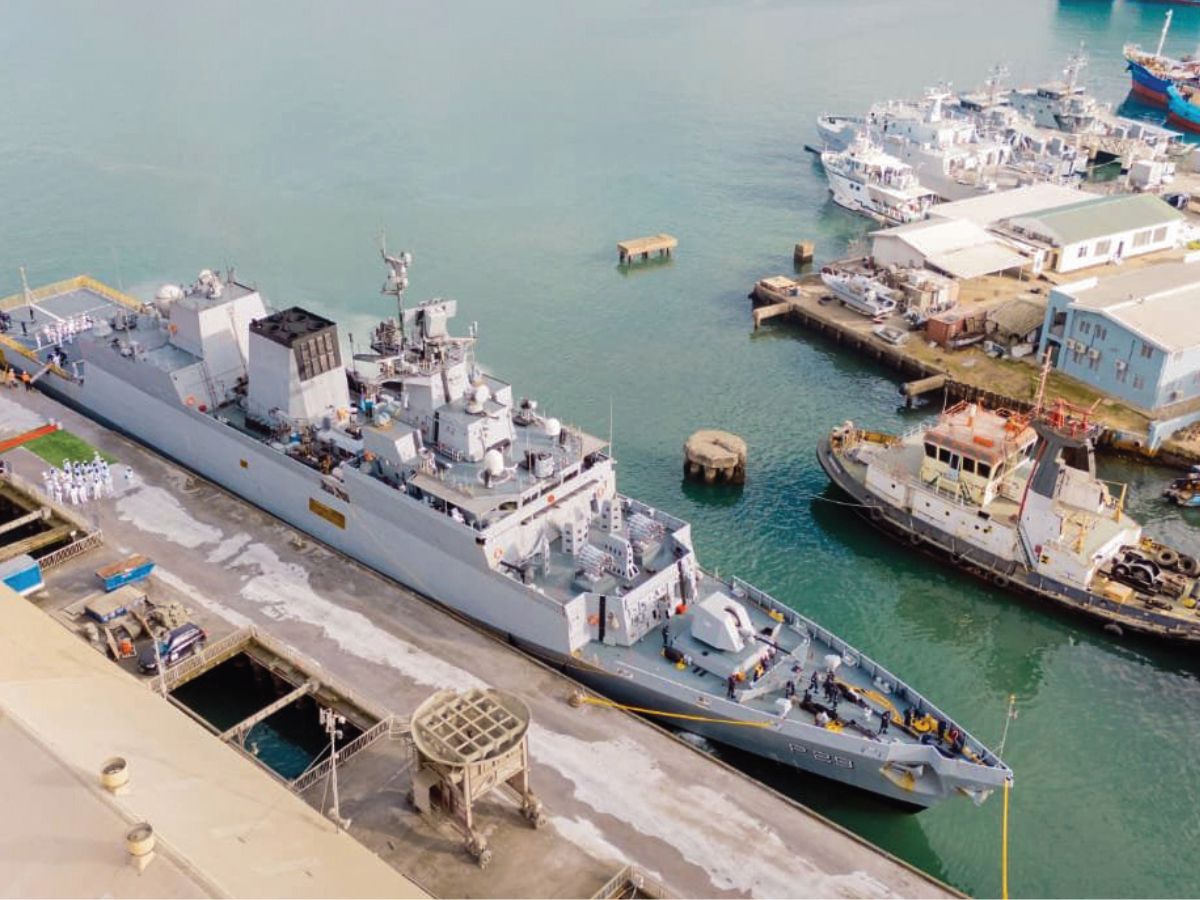
The Indo-Pacific Regional Dialogue 2025 represents the intellectual complement to India’s operational engagements. (Image: File)
New Delhi: As the Indo-Pacific Regional Dialogue 2025 convenes in New Delhi, it offers yet another opportunity to reflect on India’s evolving maritime role and responsibilities in an era of profound strategic transformation. The Indian Navy today stands widely recognised as the First Responder and the Preferred Security Partner in the Indian Ocean Region (IOR)—a reputation earned through trust, professionalism, and consistent engagement across the region. Yet, this Dialogue also reminds us that holistic maritime security extends well beyond the naval domain. It calls for the combined effort of governments, institutions, industry, and public stakeholders to create an enduring regional security architecture rooted in transparency and cooperation.
The Indo-Pacific has emerged as a strategic geography of consequence. Home to almost two-thirds of global trade and GDP, its seas are both the arteries of prosperity and the frontlines of vulnerability. The region’s security challenges—ranging from climate threats and illegal fishing to geopolitical competition and coercive practices—demand responses that are collective, not singular.
For India, the answer lies in the continuum of maritime policy that began with SAGAR—Security and Growth for All in the Region—and has matured into MAHASAGAR: Mutual and Holistic Advancement for Security and Growth Across Regions. This broad philosophy has found structural expression in the Indo-Pacific Oceans Initiative (IPOI), announced by Prime Minister Narendra Modi in 2019. The IPOI’s seven interconnected pillars—from marine ecology and connectivity to resource sharing and capability-building—illustrate the deeply-enmeshed and holistic nature of the maritime domain.
Each edition of the IPRD has explored one or more of these pillars in depth. The 2025 Dialogue will delve into the nuances of another pillar of the IPRD under its central theme of “Promoting Holistic Maritime Security and Growth Through Regional Capacity-Building and Capability-Enhancement”. This theme resonates with India’s firm conviction that regional security and economic growth are linked inextricably, and that building regional capacities and capabilities is key to peace and stability.
Yet, the challenge of capacity-building and capability-enhancement lies in the disparate priorities of multiple stakeholders in the Indo-Pacific. For instance, for the Small Island Developing States (SIDS), climate change and ocean health are on top of their priority because it is a matter of their survival. For others, tourism and services are critical and therefore, for them regional stability is paramount.
There are states in which the fishing industry is the main contributor to the GDP. For such states, countering illegal fishing and preserving marine ecology is a priority. For large economies like India, more than 90% of whose merchandise trade, including energy, flows through international shipping lanes, issues such as piracy and safety of shipping become important. Not every country faces the same challenges or possesses the same resources; initiatives that succeed in South Asia may not translate seamlessly to the Pacific islands or the African littorals.
Therefore, efforts towards building capacities and enhancing capabilities must be guided by “Four Cs”—communication, collaboration, customisation, and credibility. Clearly, it is important to promote meaningful dialogue among regional partners, which would naturally lead to collaboration on issues of convergence. It is also imperative that India’s capacity-building programmes across the Indo-Pacific must be customised to the unique requirements of partner nations. Hence, our approach must be adaptive, drawing from local knowledge and regional realities. Finally, whatever we do must be perceived as both impactful and credible.
In recent years, the Indian Navy’s operations to suppress piracy and counter other illicit maritime activities, as well as its demonstrated commitment to provide support to friendly nations in times of crisis—from disaster relief operations to evacuations and assistance missions across the IOR—have earned India recognition as a reliable partner. This recognition has been bolstered by several capacity-building and capability enhancement initiatives by the Indian Navy.
These include provisioning of platforms, hardware, and equipment, subscription to the Indian Navy’s training courses, deployment of mobile training teams, undertaking hydrographic surveys, assistance in maintenance and repair of naval ships and systems, collaboration in building Maritime Domain Awareness (MDA) and information-sharing through the IFC-IOR, etc. This collaborative engagement, however, is only part of the story. For India, security is not an instrument of influence but an extension of its civilisational ethos—Vasudhaiva Kutumbakam, the world as one family. It underscores an approach that privileges empowerment over dependency. It is this sense of partnership, not patronage, that shapes India’s maritime diplomacy.
Holistic maritime security must be understood as a shared ecosystem. It involves a symphony of actors—navies, coast guards, policy institutions, universities, think-tanks, NGOs, and private industry. The Indo-Pacific’s future will depend as much on policymakers who draft frameworks as on practitioners who implement them.
The IPOI calls for precisely this whole-of-region approach. It moves beyond traditional groupings and invites all stakeholders committed to a free, open, and inclusive Indo-Pacific to participate. Frameworks such as IORA (Indian Ocean Rim Association), IONS (Indian Ocean Naval Symposium), and IOC (Indian Ocean Commission) complement this approach, transforming dialogue into durable cooperation. These structures must produce interoperable outcomes on the water and meaningful coordination in times of need.
IPRD 2025 will therefore serve as a bridge between ideas and implementation. It seeks to draw insights from across disciplines to ensure that maritime growth and security reinforce one another rather than diverge. The Dialogue’s twin focus—capacity-building and capability-enhancement—embodies this ethos. Capacity speaks to material strength—ships, ports, and technology; capability speaks to human and institutional skill—the ability to use those capacities effectively, ethically, and inclusively.
The Indo-Pacific Regional Dialogue 2025 represents the intellectual complement to India’s operational engagements. By gathering maritime professionals, policymakers, scholars, and private-sector leaders, it transforms the concept of security into a shared civic project. The Dialogue’s deliberations, hopefully, will chart the region’s course for the immediate future, defining not only what kind of capacities we share but also how we build them responsibly. The broader task ahead is to expand that spirit of collaboration across all layers of governance—governmental, economic, academic, and societal. Security, after all, is not a zero-sum state; it is an evolving partnership that turns the ocean into a domain of shared stability and prosperity.
Admiral Karambir Singh is a former Chief of the Naval Staff with over four decades of distinguished service in the Indian Navy. He is currently the Chairman of the National Maritime Foundation, and is a widely acclaimed authority on maritime security issues.
