Indian officials say the Taliban leadership has shown a steady inclination to assert independence from Pakistan’s orbit. Kabul has moved to restrict the influence of Pakistan-backed and Pakistan-based terror groups.
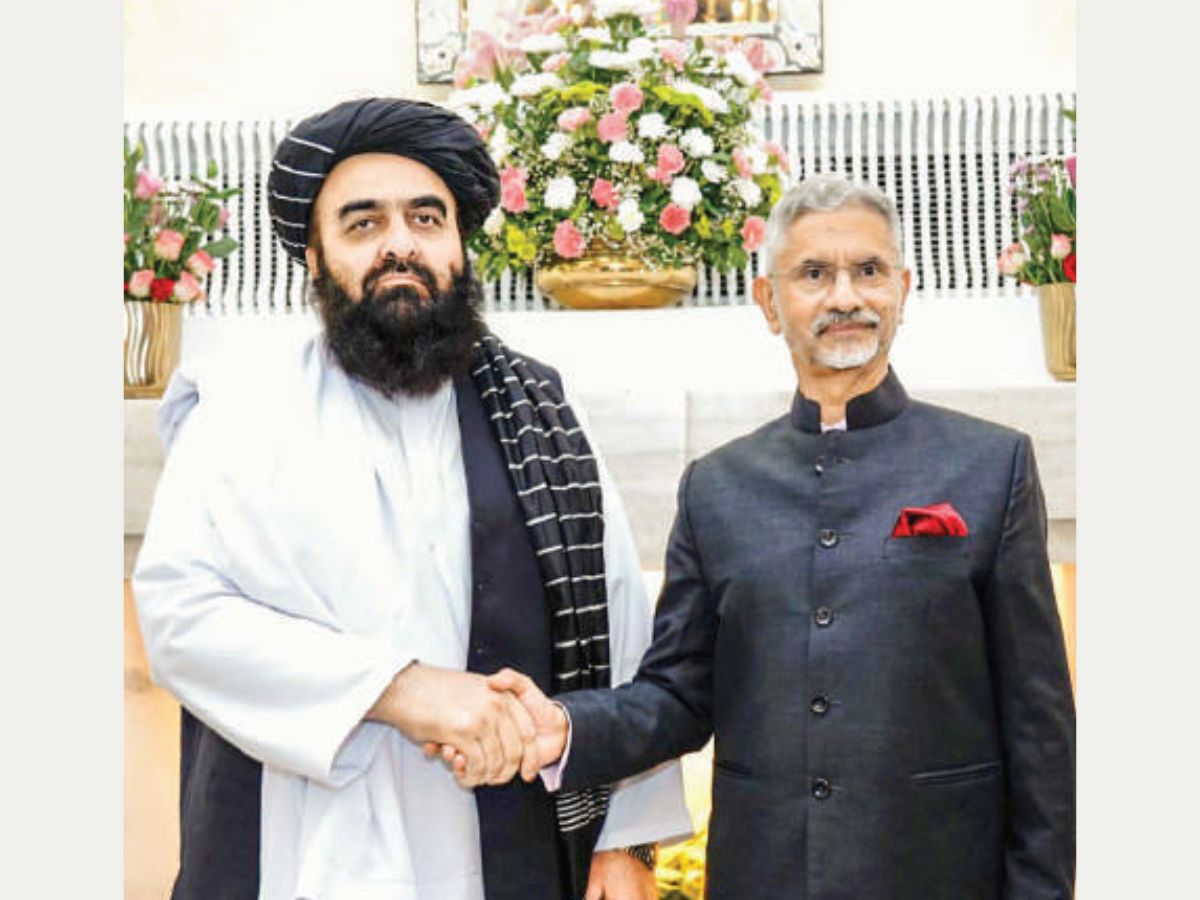
India’s decision to upgrade its technical mission in Kabul to a full-fledged embassy marks a new, pragmatic phase in its Afghanistan policy. (Image: File)
New Delhi: A day after India announced the upgrade of its technical mission in Kabul to a full-fledged embassy, signalling its first formal diplomatic re-engagement with Afghanistan’s Taliban administration since 2021, officials and regional observers said the move marked the beginning of a carefully calibrated new phase in India’s Afghanistan policy—one that blended pragmatism with strategic intent. The decision, conveyed following External Affairs Minister S. Jaishankar’s meeting with Acting Afghan Foreign Minister Amir Khan Muttaqi in New Delhi last week, effectively reopens the Indian embassy that had remained shut since the chaotic withdrawal of US-led forces three years ago. India had maintained only a small but resourceful and well-adapted “technical team” in Kabul since July 2022 to oversee humanitarian and trade assistance.
The embassy upgrade restores India’s full diplomatic footprint in Afghanistan and underscores its readiness to pursue a pragmatic, long-term engagement anchored in stability, development, and calibrated security cooperation. Officials confirmed that the Taliban government has provided categorical assurances of “complete security” for Indian personnel and assets and conveyed that it welcomes India’s developmental and political presence. A full-fledged working embassy in Kabul will add to India’s ability to take measured decisions with regard to its western neighbours and Central Asia.
According to Indian officials, the Taliban leadership, over the past three years, has shown a steady inclination to assert independence from Pakistan’s orbit both through words and actions. The government in Kabul has moved strongly to restrict the influence of Pakistan-backed and Pakistan-based terror groups such as the Islamic State Khorasan Province (ISKP), Lashkar-e-Taiba (LeT) and Jaish-e-Mohammed (JeM). Indian intelligence assessments say the ISI moved several training camps westward so those terror groups could be co-opted—alongside elements of ISKP—to target Afghan assets and exert pressure on Kabul. That repositioning, analysts argue, was aimed at creating operational depth from which Pakistan-based groups could harass or destabilise Afghan interests, rather than allow Afghanistan to consolidate ties with rivals such as India.
Afghan interlocutors are understood to have conveyed a willingness to deepen cooperation in the security and counterterrorism domain. Officials in New Delhi acknowledge that Kabul’s intelligence apparatus retains significant reach and situational awareness of terror networks operating out of Pakistan. According to those familiar with the ongoing exchanges, Indian agencies see value in maintaining discreet channels for information-sharing on threats such as Jaish, LeT and affiliated groups, though both sides are proceeding with caution and without formalising any structure at this stage.
In a development that drew particular notice within the security establishment, Muttaqi and members of his delegation visited the Vivekananda International Foundation (VIF) on Friday, holding extensive discussions with senior former officials and policy experts. The VIF, led by its Director Dr Arvind Gupta—a former Deputy National Security Adviser—is viewed as one of India’s principal strategic think-tanks, often serving as a meeting ground between policymakers and retired members of the intelligence and defence community. Among its members have been C.D. Sahay, former Secretary of the Research and Analysis Wing (R&AW), who was part of the Indian team that flew to Kandahar in December 1999 during the IC-814 hostage exchange. At that time, Muttaqi represented the Taliban side in those negotiations. This interaction in Delhi, a quarter century later and under drastically changed circumstances, is being seen as symbolically significant within security circles.
India’s immediate focus, however, remains on the civilian and developmental front. The new framework includes expanded trade facilitation, infrastructure rehabilitation, health and education partnerships, and a stronger humanitarian presence. Officials said future projects would prioritise direct engagement with Afghan citizens—vocational training, scholarships, skill-building centres, and micro-enterprise support. It is expected that a team of Afghanistan trade representatives will be coming to India in the coming days. India’s aid since 2022 has already covered large-scale food, vaccine, and medical supplies, and new proposals are under consideration for supporting women-led community ventures.
At the same time, officials hinted that as trust deepens and stability holds, discussions on limited defence and security cooperation could gradually be revived. Before August 2021, between 80 and 100 Afghan National Defence and Security Forces officers trained annually at the Indian Military Academy in Dehradun and the Officers Training Academy in Chennai.
India’s engagement also reflects broader regional undercurrents. Beijing, which has substantial economic stakes in Afghanistan’s mining and infrastructure sectors, is understood to have privately conveyed that it will not oppose closer Kabul-New Delhi coordination, provided it contributes to regional stability. Both India and China, notably, have expressed concern over reports suggesting a possible re-deployment of US troops at the Bagram air base, underscoring a shared interest in avoiding renewed military contestation in the region.
Sources said Pakistan—long viewing Afghanistan as its strategic hinterland—has reacted uneasily to India’s growing presence. Islamabad is expected to see India’s upgraded role as a direct challenge to its influence and may take steps aimed at fracturing the emerging India-Kabul understanding, including by enlisting third-party support or using proxy groups to undermine trust. Analysts say Pakistan’s security establishment still regards Afghanistan as part of its territorial sphere and may see destabilisation as the only tool to reclaim leverage.
Officials said India will, in the coming months, encourage Kabul to move towards more inclusive governance—particularly in the spheres of women’s education and participation in public life, which they said cannot be imposed from outside, but can be achieved through deeper engagement and understanding. While India has made it clear that the reopening of the embassy does not amount to formal recognition of the Taliban regime, it signals a new phase of calibrated realism. The embassy is expected to be staffed gradually, with both countries finalising security and operational protocols in the coming weeks.
