INS Nistar boosts India's naval power with advanced submarine rescue, enhancing security, reach, and diplomacy in the Indo-Pacific.
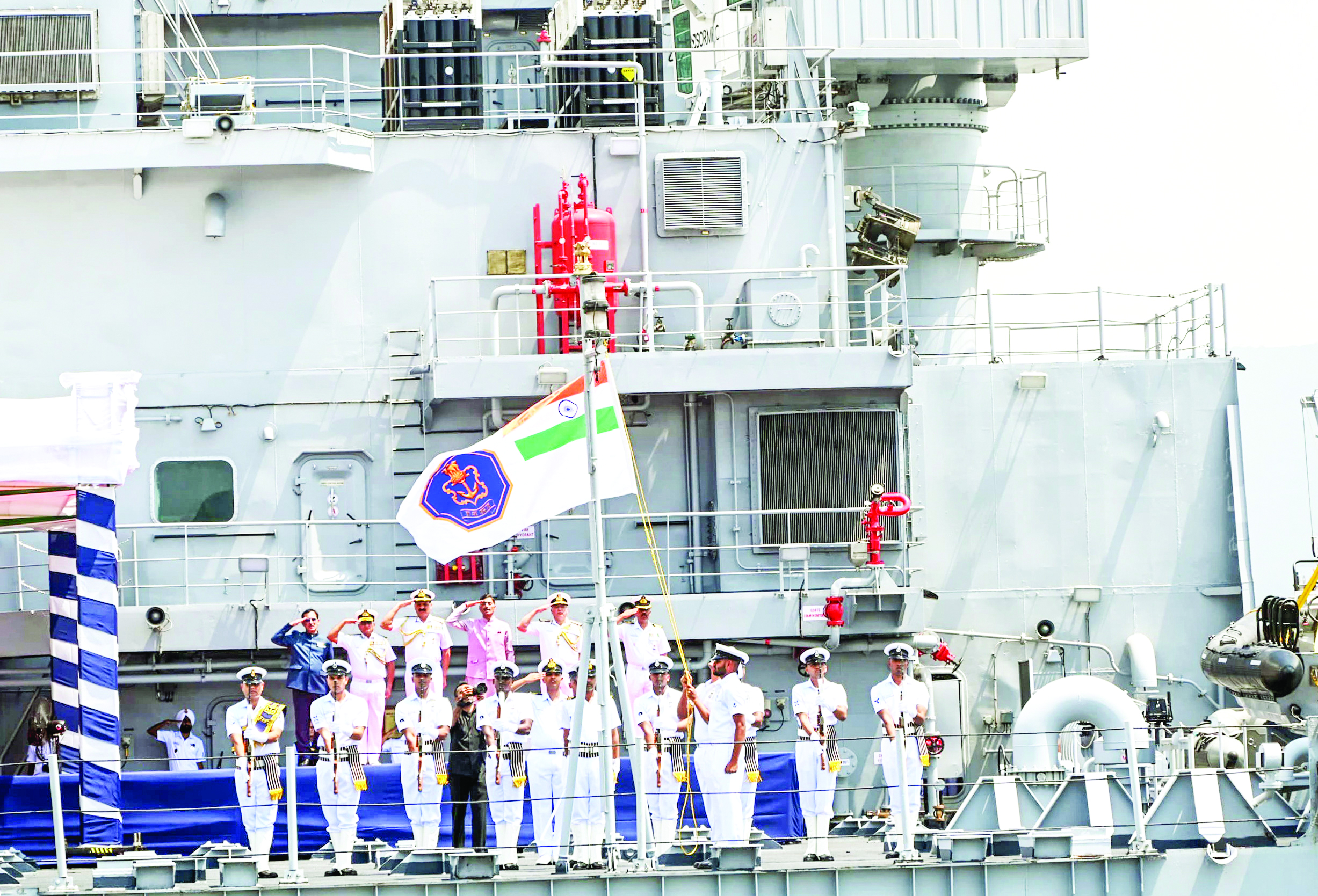
NEW DELHI: The commissioning of INS Nistar, India’s first indigenous Diving Support Vessel (DSV), on 18 July 2025 at Visakhapatnam is a strategic leap. More than a technological achievement, it significantly advances India’s naval reach, underwater capabilities, and influence in the Indo-Pacific. Built by Hindustan Shipyard Limited with over 80 per cent indigenous content and involvement from over 120 Micro, Small, and Medium Enterprises (MSMEs), the 10,000-tonne INS Nistar positions India among an elite group of nations possessing comprehensive submarine rescue capabilities. As underwater warfare increasingly defines regional power dynamics with China’s expansive submarine fleet operating extensively across Indo-Pacific chokepoints INS Nistar comes at a critical juncture.
INS Nistar significantly extends India’s maritime operational envelope. Equipped for deep-sea saturation diving operations down to 300 metres and conventional diving up to 75 metres via a Side Diving Stage, the ship serves as the mother platform for Deep Submergence Rescue Vehicles (DSRVs). This capability, previously limited to shore-based operations, now gains strategic mobility, enabling rapid deployment during submarine emergencies.
A standout feature is INS Nistar’s advanced Dynamic Positioning System (DPS). Unlike traditional anchorbased methods, DPS utilises satellite navigation, motion sensors, gyroscopes, and environmental inputs to maintain the vessel’s precise stationary position, regardless of currents or weather conditions. This is vital during rescue operations, where precise positioning over distressed submarines is essential. The DPS ensures that submarine rescue missions, saturation dives, and remotely operated vehicle (ROV) deployments proceed with utmost accuracy and safety, a capability crucial in life-or-death underwater scenarios.
Beyond rescue capabilities, INS Nistar enhances overall naval endurance. Its onboard medical facilities— including an operating theatre, eight-bed hospital, intensive care unit (ICU), and hyperbaric chambers—enable prolonged deployments of more than 60 days at sea. This enables the Indian Navy to sustain extended operational deployments in distant waters, which is essential for India’s expanding Blue-Water ambitions. The ship’s helicopter operations capability and a powerful 15-ton subsea crane further bolster fleet versatility, enabling effective humanitarian and disaster relief missions across the Indo-Pacific. With its home base at the Eastern Naval Command (ENC) headquarters in Visakhapatnam, INS Nistar can swiftly access strategic maritime chokepoints, such as the Straits of Malacca, Sunda, and Lombok, thereby ensuring a rapid response in emergencies or contingencies.
INS Nistar’s entry into service directly supports India’s broader maritime doctrine articulated under the SAGAR (Security and Growth for All in the Region) and the more recent MAHASAGAR (Mutual and Holistic Advancement for Security and Growth Across Regions) frameworks. These initiatives position India as a regional security provider and the Indo-Pacific’s preferred first responder. As maritime competition intensifies, particularly with China’s naval assertiveness, INS Nistar’s submarine rescue and underwater surveillance capabilities carry profound strategic significance. China currently operates approximately 60 submarines, including advanced ballistic missile submarines (SSBNs), nuclear attack submarines (SSNs), and dieselelectric submarines. While China’s submarine rescue capabilities primarily focus on its own fleet, India’s capacity to extend submarine rescue support offers an opportunity for strategic partnership-building with regional navies lacking such sophisticated assets.
The Indo-Pacific underwater domain increasingly resembles a contested strategic theatre, with an estimated 250 submarines projected to operate in Asian waters by 2030. With 40 countries operating submarines but only six possessing deep submergence rescue capabilities, INS Nistar creates opportunities for India to establish mutual assistance pacts with regional partners. This positions India as an indispensable security provider for nations such as Vietnam, Indonesia, Myanmar, Singapore, and Malaysia, which operate submarines but lack comprehensive rescue systems.
India’s demonstrated submarine rescue capability, exemplified during the 2021 Indonesian submarine tragedy, reinforces its credibility as a humanitarian partner capable of providing vital public goods in maritime security. Moreover, INS Nistar aligns with the Quad’s (India, Australia, Japan, US) strategic objectives, augmenting maritime surveillance initiatives such as the Indo-Pacific Partnership for Maritime Domain Awareness (IPMDA). While the Quad countries focus on satellite-based maritime tracking and anti-submarine operations, INS Nistar adds a crucial humanitarian and rescue dimension, reinforcing cooperative rather than confrontational approaches to maritime security.
INS Nistar’s commissioning underlines India’s strides in defence indigenisation under the “Aatmanirbhar Bharat” initiative. Constructed to exacting standards and classified by the Indian Register of Shipping, the vessel showcases the growing maturity of India’s naval shipbuilding capabilities. This reduces India’s dependency on foreign suppliers and enhances its strategic autonomy in critical defense technologies. Furthermore, this success demonstrates India’s industrial potential to regional and global partners, potentially paving the way for the export of indigenous submarine support technologies and expertise. Following the recent induction of platforms like INS Arnala (Anti-Submarine Warfare Shallow Water Craft), INS Nistar underscores India’s sustained commitment to indigenous naval construction.
INS Nistar’s heritage adds symbolic resonance to its strategic role. Named after an earlier vessel acquired from the Soviet Union in 1969 and commissioned in 1971, the new INS Nistar continues the legacy of its predecessor in distinguished submarine rescue and diving operations. The ship’s crest—combining an anchor symbolising maritime dominance and a dolphin representing mariner safety—aptly encapsulates its dual purpose as a strategic deterrent and beacon of humanitarian hope.
The vessel’s motto, “Surakshita Yatharthta Shauryam” (Deliverance with Precision and Bravery), highlights the Indian Navy’s commitment to precision, courage, and responsibility in underwater operations. The psychological effect on submarine crews, knowing they are backed by advanced rescue and medical capabilities, boosts morale and operational confidence, enabling more ambitious and longerrange submarine missions.
As the first of a planned two-vessel class (with its sister ship, INS Nipun, due by 2026), INS Nistar marks the beginning of India’s dedicated push towards comprehensive maritime rescue capabilities. It complements India’s wider naval modernisation vision outlined in the Maritime Capability Perspective Plan (MCPP), aiming for a 175-ship fleet by 2035. INS Nistar provides India with the strategic leverage to proactively address regional security dynamics, especially amid heightened submarine proliferation and maritime competition.
India’s recent bilateral maritime engagements—such as undersea surveillance agreements with Australia and maritime domain awareness collaborations via its Information Fusion Centre (IFC)—further underscore the vessel’s utility in fostering stronger maritime partnerships. Looking forward, INS Nistar’s advanced rescue, surveillance, and fleet-support capabilities will serve as a cornerstone of India’s maritime security architecture, significantly shaping regional naval dynamics and diplomatic interactions.
In a region increasingly defined by maritime power projection, INS Nistar stands as a clear statement of India’s intent to be a major, cooperative, and humanitarian maritime player, dedicated to fostering regional stability through advanced capability, strategic outreach, and responsible leadership in the Indo-Pacific. As underwater challenges grow in complexity, India’s INS Nistar emerges as an essential instrument not just of naval strength but also of diplomatic influence, regional stability, and humanitarian support, affirming India’s status as a formidable and responsible maritime power.
Ashish Singh is an award winning senior journalist with over 18 years of experience in defence and strategic affairs.
