A quiet, data-driven vetting by Prime Minister Narendra Modi led to the elevation of 45-year-old Nitin Nabin as BJP president, signalling a clear generational shift.
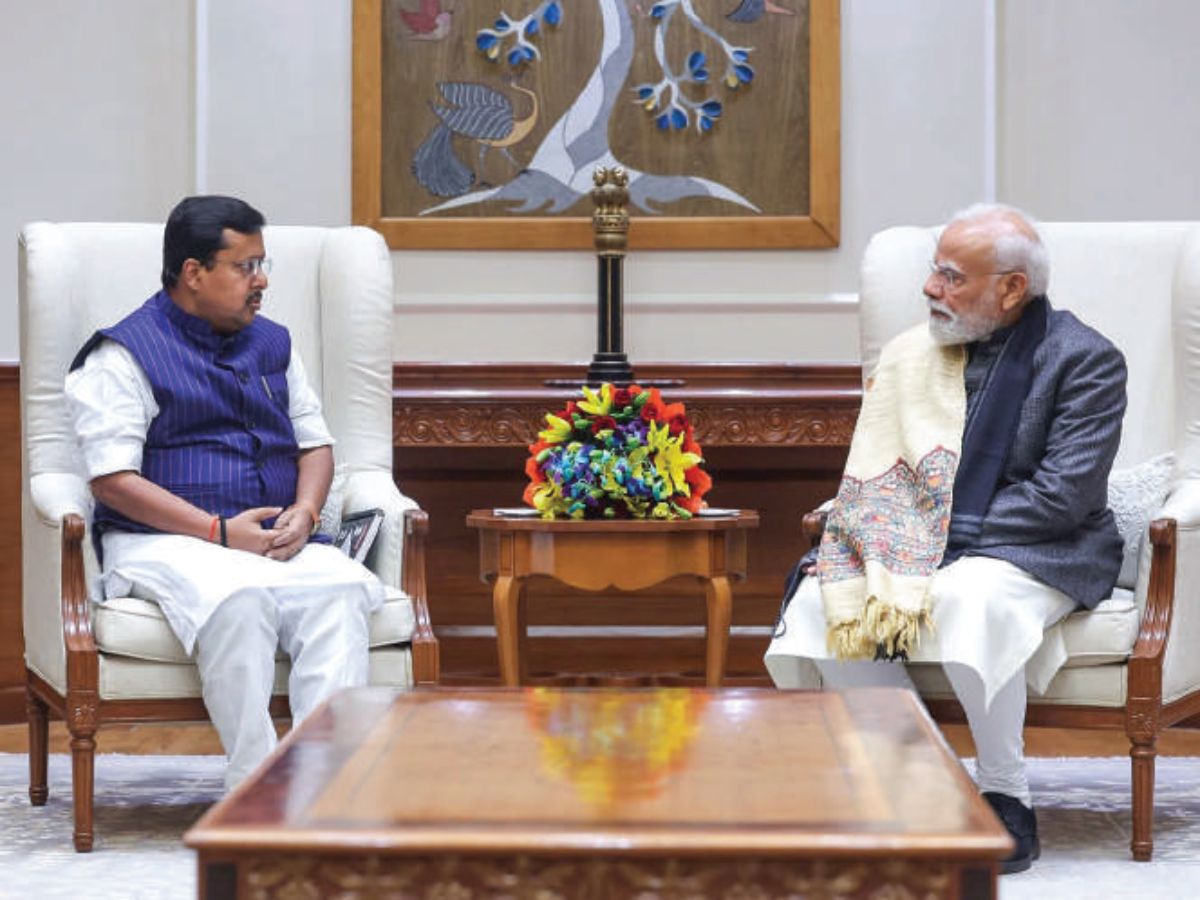
Prime Minister Narendra Modi meets BJP National Working President Nitin Nabin, to congratulate him on assuming his new role, in New Delhi on Friday. ANI
New Delhi: The selection of the Bharatiya Janata Party’s new president, 45-year-old Nitin Nabin, was the outcome of a tightly structured analytical exercise spread over three months, in which the leadership decided at the outset that the party would be headed by a younger leader, signalling a calibrated generational shift within the organisation.
The process began with the preparation of a long list of around 100 young leaders drawn from across the party. This was followed by the constitution of a dedicated internal research team whose sole mandate was to identify, observe and systematically evaluate potential leaders against a clearly defined organisational framework. Age was not treated as a standalone criterion but as part of a broader assessment of longterm leadership viability.
Over multiple stages, different arms of the party engaged with these leaders in various organisational forums to assess ideological clarity, administrative reasoning, organisational understanding and political judgement. These interactions were complemented by inputs gathered and analysed by the research team, ensuring that the evaluation remained continuous, layered and structured rather than episodic.
As the process advanced, the list was narrowed from 100 to 50 and eventually to a final shortlist of 10. At each stage, Nitin Nabin consistently occupied the top position. His ranking remained unchanged even as the criteria became more exacting, reflecting a cumulative assessment rather than a momentary preference.
In the final three months of the exercise, the shortlisted leaders were assigned specific tasks at staggered intervals, without being told that these were part of a larger process.
These assignments were designed to test not only decision-making ability but also strategic intent. The central objective was to determine whether a leader’s responses were shaped by personal or immediate political considerations, or aligned with the party’s larger, long-term goals. Several contenders were eliminated at this stage after their suggestions were assessed as self-serving or tactically expedient but potentially damaging to the organisation over time.
It is understood that during this phase, Nitin Nabin, unaware that he was being evaluated for the party’s top organisational position, made recommendations in routine organisational forums that repeatedly ran against his own immediate political interests. This included suggesting appointments of individuals politically opposed to him, decisions that carried the potential cost of diminishing his personal leverage. These interventions were assessed as being driven by organisational logic and long-term party interest rather than personal calculus, and emerged as a decisive marker in the evaluation process.
This pattern of decisionmaking emerged as a key differentiator in the final stages of evaluation.
The overall exercise reflected a classical Narendra Modi style of functioning, marked by an insistence on analytical rigour and institutional justification. Subjectivity was consciously minimised, while objectivity and system-driven evaluation formed the core of the decision-making process. Seniority, public visibility and prevailing media narratives were deliberately kept outside the central assessment matrix.
This internal mechanism continued quietly even as sections of the media speculated about senior leaders such as Dharmendra Pradhan, Bhupender Yadav, Vinod Tawde and Shivraj Singh Chouhan. In reality, they were not even in contention. Once the leadership committed to a youth-centric framework, these names did not materially figure in the final stages of deliberation.
It is understood that none of the leaders who were part of the initial shortlist, including Nitin Nabin, were aware that they were being evaluated for the party’s top organisational post. The process remained insulated from lobbying and expectation management, preserving its internal integrity.
Nabin himself became aware of the decision only around 3 p.m. on the day of the announcement, when he received a call from a top leader informing him that he had been entrusted with the role.
By the time the final shortlist was placed before the top leadership and the parliamentary board, the outcome had already been shaped by months of structured evaluation and elimination.
The episode also underlines the extent to which the party’s top leadership operates an active, institutionalised feedback mechanism that functions on a nearcontinuous basis. Senior decision-makers, supported by internal research and organisational inputs, remain engaged in real-time assessment of how leaders perform, decide and prioritise across forums, ensuring that leadership choices are grounded in sustained observation rather than episodic impressions.
