
For centuries, Indian civilization has celebrated the profound power of the feminine divine. We bow to Durga for her strength, Lakshmi for her prosperity, and Saraswati for her wisdom—and in doing so, we affirm that womanhood itself is the living embodiment of these qualities.
This reverence is not just ritual, but a civilizational ethos that reminds us of the value, dignity, and centrality of women in everyday life. Our cultural ethos teaches us that women are not simply half the population, but the architects of progress, the nurturers of human potential, and the guardians of intergenerational wisdom. This foundational understanding positions India uniquely to address one of our most pressing contemporary challenges: ensuring that the women who embody these divine principles receive the proactive, dignified healthcare they deserve.
The statistics lay bare both the gravity of the challenge and the scale of the opportunity before us. In India, a woman loses her life to cervical cancer every eight minutes, while breast cancer proves fatal for half of those diagnosed. Yet, behind these grim numbers lies an even starker truth—only 1.9% of women have ever been screened for cervical cancer, and a mere 0.9% for breast cancer. These figures point not only to the enormity of the threat but also to the vast potential for change if awareness can be expanded and community-driven efforts are integrated with structured healthcare systems. It is this recognition—that women’s health is inseparable from the nation’s strength—that forms the foundation of the Swasth Nari Sashakt Parivar Abhiyan.
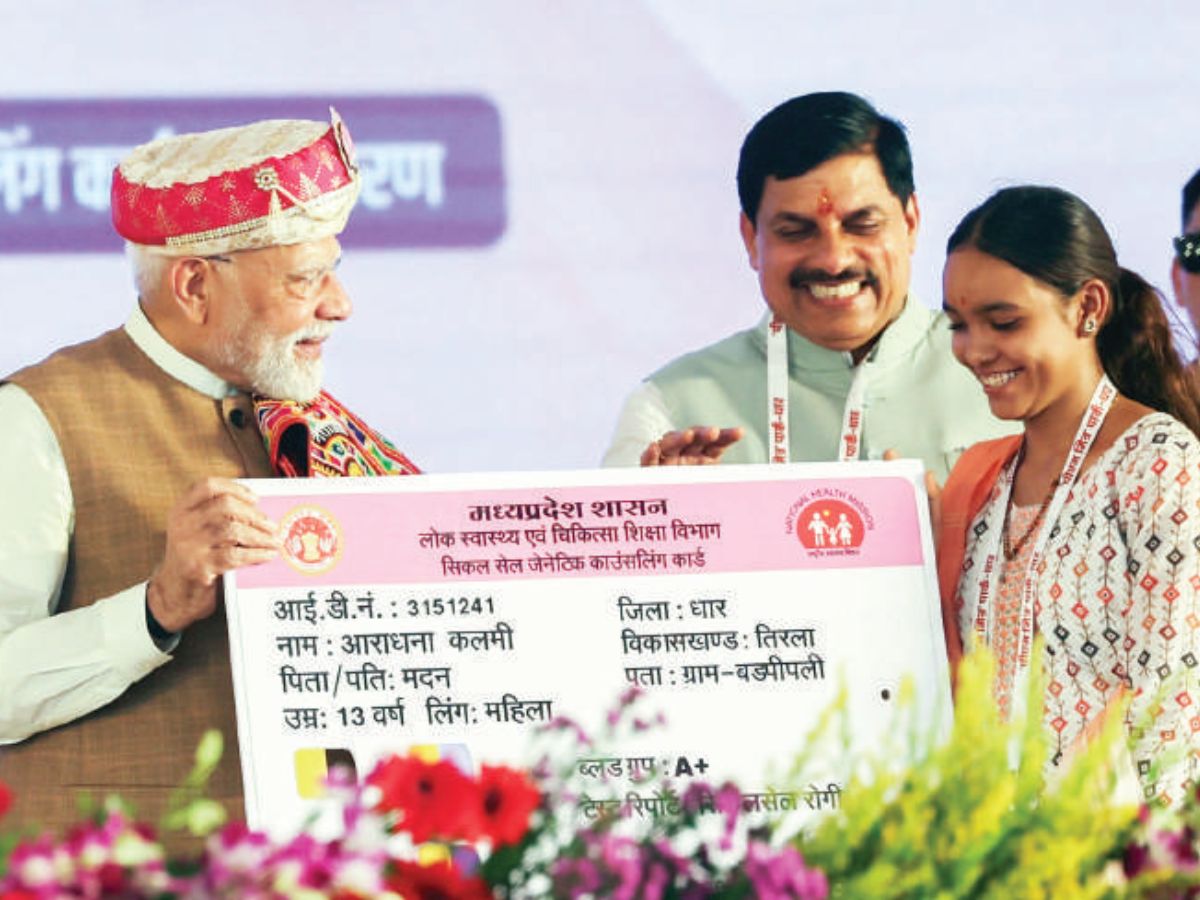
On September 17, 2025, Prime Minister Narendra Modi gave his vision its most ambitious expression by launching the Swasth Nari Sashakt Parivar Abhiyan from Dhar, Madhya Pradesh, on his 75th birthday. His address was more than a policy announcement—it was a philosophy of health equity that placed women at the very centre of national progress. He reminded the country that when a mother is healthy, the whole family remains healthy, and warned against the silent nature of diseases like anaemia, diabetes, tuberculosis, and cancer, urging women to attend the free health camps without hesitation. His appeal—“As a son, as a brother, I can at least ask this much from you”—reflected the personal commitment he has always shown toward strengthening Nari Shakti.
This commitment has defined his leadership: from giving 33% reservation to women in legislatures, to empowering women at the grassroots through Mission Shakti, to ensuring their health and safety through the Matru Vandana Yojana. Every reform carries the imprint of his belief that women are not just participants but the backbone of a Viksit Bharat. Modi Ji’s vision stands apart because it makes empowerment real, turning women into the true architects of India’s future.
Just hours after the Prime Minister, on his 75th birthday, reaffirmed his vision of empowering women and safeguarding their health, the Namo Shakti Seva Rath was flagged off in Haryana by Chief Minister Nayab Singh Saini. Inspired by the Prime Minister’s decade-long commitment to Nari Shakti, I conceived this initiative as a novel state-level model to translate his philosophy into concrete action. The initiative represents a decisive step toward dismantling the barriers that prevent women from accessing timely healthcare.
Each mobile health van has been designed as a complete healthcare ecosystem, offering breast cancer screening in its primary stage along with other essential health check-ups. The program aims to reach 75,000 women across Haryana in the coming months, systematically covering one village per day in every district to ensure equitable access. By integrating digital health records and linking positive cases directly to community health centres and tertiary facilities, the Namo Shakti Rath ensures that early detection translates into timely treatment. More than a medical intervention, it is a movement that reframes women’s health as a matter of dignity, accessibility, and empowerment.
For me, the Namo Shakti Seva Rath stands as both a fulfilment of the Prime Minister’s call and a personal commitment to making Haryana a leader in women’s health innovation.
The need for such an initiative becomes clearer when we confront the cultural dimension of women’s cancers, which represents perhaps the most formidable barrier to effective intervention. In India’s socio-cultural context, breast and cervical health exist within zones of profound silence, where anatomical modesty intersects with fatalistic beliefs to create environments where women suffer in isolation. The word “cancer” itself carries stigmatic weight, often whispered rather than spoken, surrounded by myths that associate the disease with moral failing or divine punishment. Breast examination remains taboo even within families, largely because women are culturally conditioned to prioritize others’ needs over their own health concerns. This stigmatised silence ensures that by the time women seek medical attention, early-stage treatable conditions have often progressed to advanced, life-threatening stages. The inaccessibility of screening compounds this challenge—requiring women to travel to distant facilities, often unaccompanied, for examinations that violate cultural norms of bodily privacy.
The Namo Shakti Seva Rath disrupts these barriers through innovative design and sensitive implementation. By bringing screening directly to village squares, community centres, and familiar local environments, the vans normalize health-seeking behaviour within women’s existing social contexts. The presence of female healthcare workers, trained in cultural sensitivity, creates safe spaces where women can discuss health concerns without fear of judgment or stigma.
The technology itself eliminates the discomfort associated with traditional breast examination, and provides immediate, private results. More importantly, the initiative reframes cancer screening from private shame to public empowerment, positioning early detection as responsible citizenship rather than personal weakness. The transformation extends beyond individual behaviour change to community-level norm shifting. When respected leaders like Chief Minister Nayab Singh Saini publicly endorse screening, when male family members encourage wives and daughters to participate, and when community volunteers celebrate early detection as life-saving wisdom, the cultural landscape begins to shift. The Namo Shakti Seva Rath’s presence in each community sends a powerful message: women’s health matters enough to warrant government attention, technological innovation, and resource allocation.
This validation helps dismantle the shame and secrecy that have historically surrounded women’s bodies, replacing fear with empowerment, silence with advocacy, and fatalism with proactive health management. The technological sophistication underlying the initiative ensures that cultural sensitivity does not compromise clinical excellence. The screening device, utilizing Dynamic Co-Planar Capacitive Sensing technology, offers diagnostic capabilities that rival traditional mammography while eliminating radiation exposure, discomfort, and privacy concerns. The device, developed and manufactured in India, represents the convergence of clinical effectiveness and cultural acceptability delivering reliable detection while respecting women’s comfort and dignity.
The battle against women’s cancers is not only a fight for health but also a test of our social priorities. When we bring screening and care into every village, when we replace hesitation with confidence and silence with awareness, we do more than save lives—we reshape the very fabric of society. The Swasth Nari, Sashakt Bharat Abhiyan and the Namo Shakti Seva Rath together mark the beginning of this change. They affirm that women’s health is not an afterthought but the cornerstone of national progress.
If India is to achieve its vision of Viksit Bharat by 2047, then every mother, sister, and daughter must have the right to live free from the fear of diseases that can be prevented or treated with timely care. That is the true measure of development—where the strength of a nation is reflected not only in its economic growth or technological prowess but in the dignity, security, and well-being of its women. By investing in their health today, we invest in the nation’s future.
Kartikeya Sharma is Independent Member of Parliament, Rajya Sabha.




