Sources within both the RJD and the Congress said that the negotiations over seat distribution turned sharply confrontational once the talks entered their final phase.
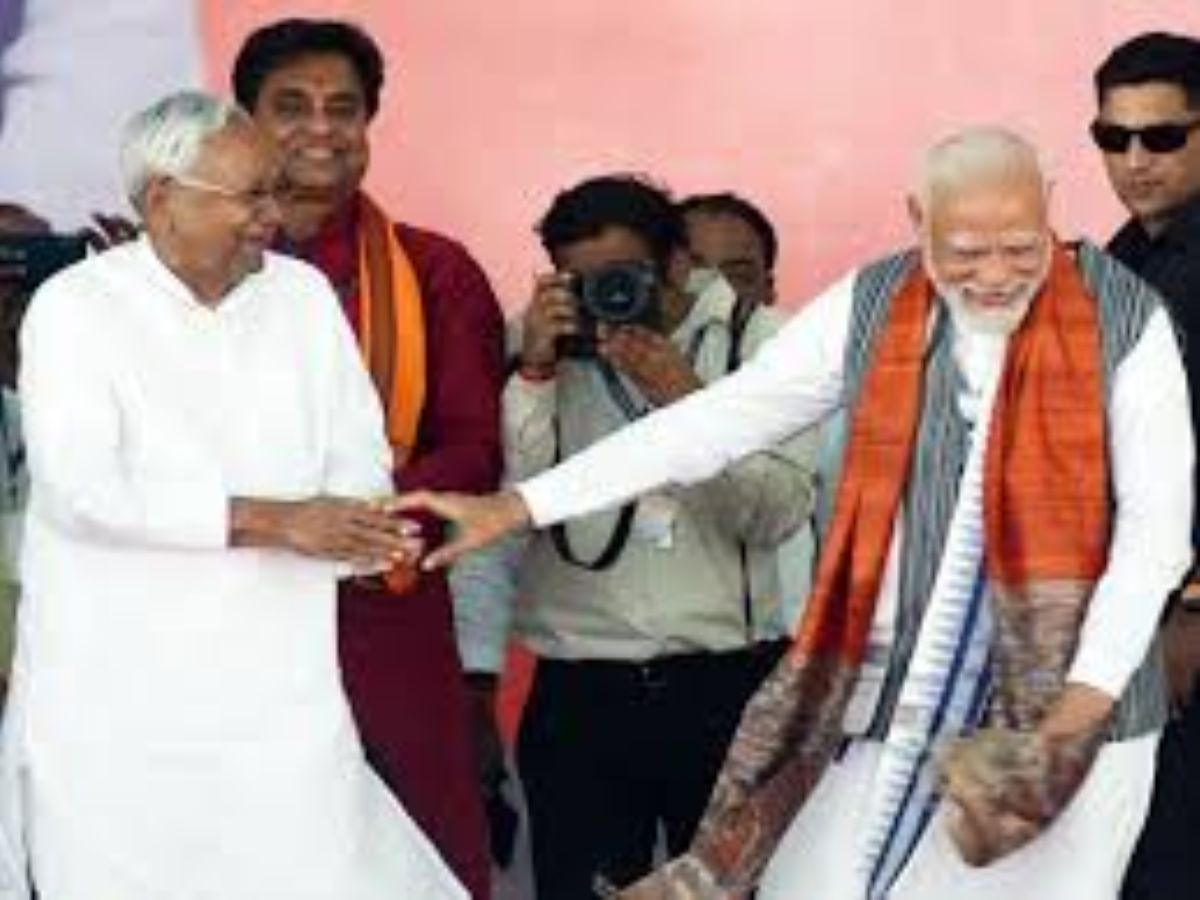
Political observers say the dynamics shifted less because the NDA has suddenly grown stronger and more because the Opposition has lost its coherence. (Image: DD News)
New Delhi: What was initially seen as the toughest electoral battle for the National Democratic Alliance (NDA) in Bihar in recent times has taken an unexpected turn. In the early stages of poll preparations, it was the Grand Alliance—led by the Rashtriya Janata Dal (RJD) and Congress—that appeared far more organised. Their seat-sharing talks had begun well before the NDA’s internal consultations, and reports through September had suggested that the Mahagathbandhan (the Grand Alliance) would be the first to finalise and announce its list of candidates.
The coordination visible during the “Vote Adhikar Yatra,” where leaders of both RJD and Congress shared stage after stage and attacked the BJP-led NDA with a unified pitch, had given the impression that the Opposition had rediscovered its rhythm.
However, that early advantage was squandered in a matter of weeks. Sources within both the RJD and the Congress told The Sunday Guardian that the negotiations over seat distribution turned sharply confrontational once the talks entered their final phase. Despite multiple rounds of discussions between Patna and Delhi, and repeated interventions from senior leaders including Rahul Gandhi and Mallikarjun Kharge, the alliance failed to arrive at a common ground.
According to insiders, the response received by the Congress from the ground during the Jan Adhikar Yatra had emboldened the party to push for a greater share of seats. But Krishna Allavaru, appointed Bihar in-charge in February 2025, maintained a hard line on candidate selection and insisted on prioritising organisational rebuilding over short-term accommodation. His no-nonsense approach and clean image, while appreciated by the central leadership for its clarity, apparently strained relations with the RJD, which saw it as unnecessary assertiveness from a smaller partner.
“The intention was never to pick a fight,” said a senior Congress functionary. “But there was also a strong view that the Congress could no longer afford to play second fiddle—not after the kind of crowd response we witnessed during our yatra.”
Allavaru’s trust factor with Rahul Gandhi ensured that he could take decisions on his own and not succumb to RJD’s leadership. Yet, part of the problem, insiders admit, lay in Rahul Gandhi’s own approach to election management. His preference for not micromanaging state-level affairs—including the nuts and bolts of seat distribution—was visible in Bihar as well. While it reinforced his image of allowing state units autonomy, it also created a vacuum where no final arbiter could break the RJD-Congress stalemate.
“Everyone waited for someone else to blink,” said another source. The RJD, meanwhile, refused to shed its “big brother” posture. The party’s leadership insisted on dictating both seat share and selection logic, leaving Congress negotiators constantly second-guessing the ground reality.
The result was a campaign so disoriented that till the last day of filing nominations, several Congress hopefuls were unsure whether their party had even secured the seat, and if yes, who among them would be the candidate. District leaders describe scenes of confusion and last-minute reversals—symbolic of how the RJD’s overbearing approach hollowed out whatever coordination the alliance had built earlier.
The RJD remained firm on contesting no fewer than 135-140 seats, arguing that it remained the principal opposition force in Bihar. The Congress was told it would have to settle for under 50. That became the breaking point. In the absence of a final formula, both sides began announcing their lists unilaterally. By 17 October—the final day for nominations in the first phase—the Congress had managed to release only one list of 48 names, while the RJD had put out two lists comprising a total of 46 candidates.
The lack of coordination created a situation where Mahagathbandhan partners ended up fielding rival candidates in at least 11 constituencies, including Vaishali, Tarapur, Bachhwara, Gaura Bauram, Lalganj, Kahalgaon, Rajapakar, Rosera, Bihar Sharif, Warasalinganj and Bisfi.
THE PRASHANT KISHOR FACTOR
At the same time, the Jan Suraaj movement led by Prashant Kishor has added another layer that is likely to benefit the NDA in Bihar’s shifting political landscape. Kishor’s decision to stay out of the contest personally—after months of statewide mobilisation and promises of “clean politics”—has triggered unease even within his own ranks. Opposition voices have alleged that his withdrawal was the result of “management” by the BJP, a claim Kishor has dismissed as baseless. Yet his refusal to contest has created a visible sense of doubt about how serious he truly is about dislodging the NDA from power. Many within Jan Suraaj’s volunteer network admit privately that the announcement demotivated and demoralised supporters. For a political formation that had projected itself as a moral counterpoint to the entrenched parties, the retreat has undercut its credibility.
Political observers note that by staying out of the race, Kishor may have avoided a personal defeat—but in the process, he also blunted the momentum of the very constituency that could have chipped away at the NDA’s vote base along with a resurgent Congress.
FLAWED TICKET DISTRIBUTION
Several Congress insiders admit that despite Allavaru’s best efforts to enforce discipline, local factions loyal to the old guard—many of whom maintain informal ties with RJD leaders—managed to secure tickets for weak candidates in their respective pockets.
“Some names that went through were less about winnability and more about proximity,” one leader said, pointing to the persistence of what the high command privately calls the “compromised Congress leadership” in Bihar.
One glaring example, party insiders note, is the nomination of Subodh Mandal from the Phulparas Assembly seat—a decision that has caused deep resentment within Congress ranks. Mandal, who has been successively projected for every possible internal position—MLC candidate, district president, AICC member, OBC department head, and now Assembly candidate—has, as one local worker put it, “turned the Congress’ ‘one man, many posts’ idea into an art form.”
Ironically, he is not even a resident of Phulparas but hails from the Harlakhi Assembly constituency—and despite contesting multiple times, he has lost every election he has fought so far. A district leader remarked bitterly, “The Congress’ ‘one person, one post’ principle has been torn apart. This is not one man’s mistake—it’s the collective failure of the district Congress committee.” Another added with dry humour, “We can already congratulate Subodh Mandal for being among the candidates who will lose by the highest margin, and wish him luck for the next MLC polls or perhaps even the 2029 Lok Sabha race from Jhanjharpur.”
This fragmentation and flawed ticket distribution have blunted the Opposition’s momentum and allowed the NDA to regain quietly the psychological edge it had lost earlier in the year.
COHESIVE NDA
The BJP and JDU, under Nitish Kumar, have maintained a cohesive front, finalising seat-sharing without much friction. Their campaign narrative has capitalised on the image of unity and stability, especially when juxtaposed with the Grand Alliance’s messy negotiations.
Political observers say the dynamics shifted less because the NDA has suddenly grown stronger and more because the Opposition has lost its coherence. “The NDA’s core hasn’t expanded dramatically,” a Patna-based analyst noted. “But when the other side starts tripping over its own feet, you don’t have to run faster—you just keep walking straight.”
In effect, by allowing internal competition, disorganised nominations, and overlapping candidacies, the RJD seems to have smoothened the NDA’s path. What was supposed to be an alliance of coordination has turned into a patchwork of competing egos and insecurities.
For the Congress, the fallout of this election could extend beyond the 2025 polls. Party sources say there is growing consensus in Delhi that, regardless of the outcome, the Bihar unit may need to chart its own path post-election—even if that means distancing itself from the RJD. Allavaru’s mandate, as one senior aide put it, was never just to fight one election but to “build a self-respecting Congress in Bihar”.
