As polls near, Nitish Kumar faces isolation, fading trust, and political peril.
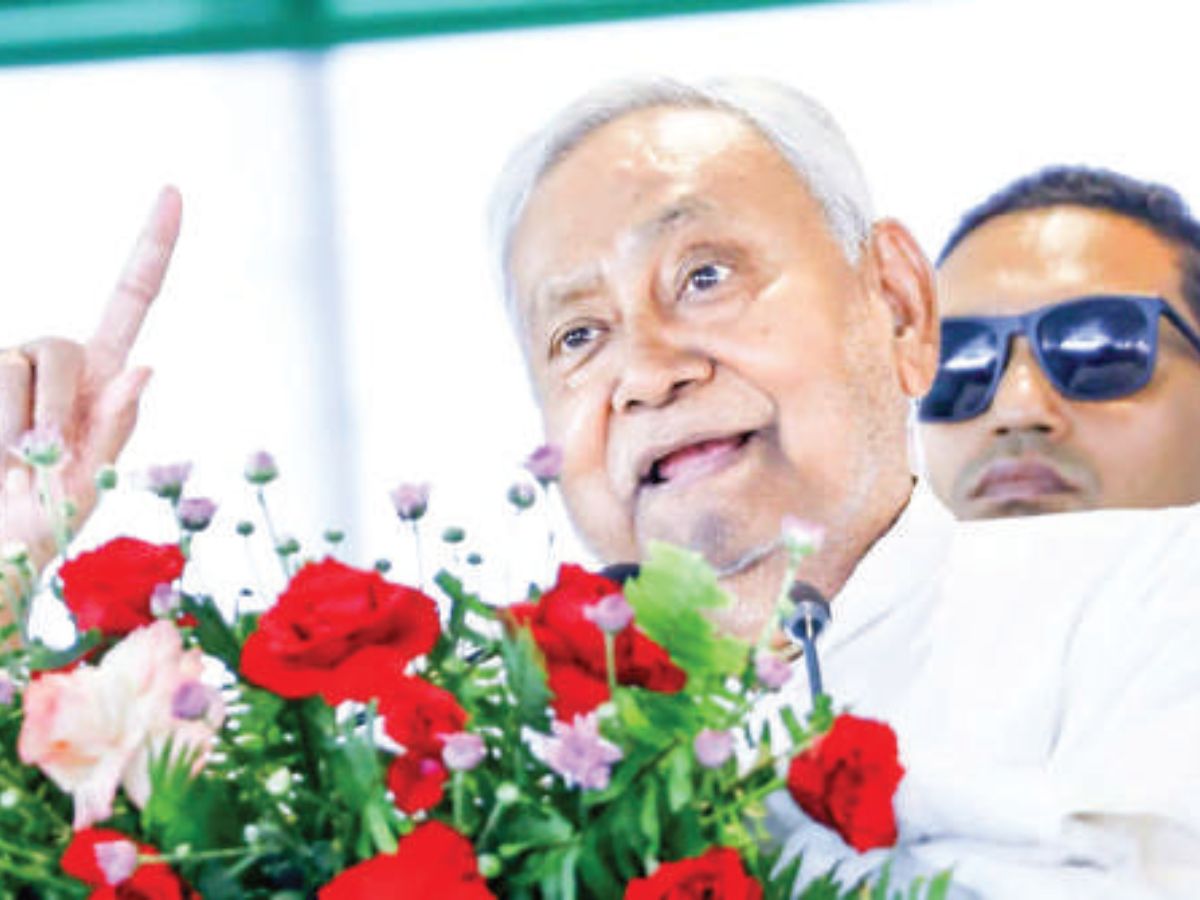
Among the Extremely Backward Classes (EBCs), Nitish gave four tickets to Vaishyas and two to the Mallah community, aiming to reinforce a non-Yadav OBC alliance to weaken the RJD’s core support. (Image: File)
New Delhi: Bihar Chief Minister and JD(U) national president Nitish Kumar has long been regarded—along with the late Sushil Modi of the BJP—as one of the few clean politicians in Bihar’s often murky political landscape. Yet, for all his reputation for probity, Nitish never built a trusted inner circle. He allowed people to come close, but the moment he sensed they might overshadow him, he pushed them away. It became a revolving door—Nitish at the centre, everyone else orbiting around him, never for long. Today, many call him their leader, but few seem truly invested in his fate.
Political observers and long-time associates told The Sunday Guardian that at this final stretch of his political career, Nitish stands surrounded by opportunists—leaders waiting for him to falter, many of whom have already drawn up plans for life after 14 November, when the Assembly election results will be declared. Those who have worked with him admit that his current predicament is largely self-created—born of insecurity, poor judgment of people, and his inability to retain those capable of offering him honest counsel. That vacuum has allowed figures of questionable character to gather around him.
Despite murmurs about his health and diminishing influence, Nitish Kumar’s political instincts remain intact, as the candidates list released by him shows. The Janata Dal (United), through a first list of 57 candidates released on Wednesday and a second list of 44 candidates announced on Thursday, has now finalised its complete slate of 101 nominees for the 2025 Bihar Assembly elections. Together, the lists lay bare his survival strategy—consolidate the core and balance the rest.
The caste arithmetic visible in the first list reflects Nitish’s effort to secure his traditional Kurmi–Kushwaha vote base, which accounts for roughly 15 percent of Bihar’s population and has been central to his repeated comebacks as Chief Minister. Of the 57 candidates in the first list, 23 belong to these two communities. With Chirag Paswan’s growing political clout and the BJP asserting itself as an equal partner in the NDA, Nitish appears intent on fortifying his original social foundation at any cost.
To balance the equation, he allotted 13 tickets to Rajput, Bhumihar, and Brahmin candidates—an outreach to upper castes he had once kept at a distance. The first list also included three strongmen, reflecting Nitish’s readiness to prioritise winnability over image.
To counter Chirag Paswan’s influence among Dalits—whom Nitish’s inner circle still considers “unforgivable” for what he did to the party in 2020 polls—the JD(U) fielded 12 Dalit candidates, including five from the Ravidas community, three from Musahars, and only one from the Paswan community. Dalits together comprise nearly 20 percent of Bihar’s electorate.
Among the Extremely Backward Classes (EBCs), Nitish gave four tickets to Vaishyas and two to the Mallah community, aiming to reinforce a non-Yadav OBC alliance to weaken the RJD’s core support. The list also had three Yadav candidates, a calculated move to challenge Lalu Prasad Yadav’s hold in pockets like Madhepura and Maharajganj.
Nitish also sent a clear message of defiance by fielding JD(U) candidates in constituencies that were originally claimed by Chirag Paswan even as he showed deference to the BJP by surrendering his own seat, Tarapur, to Deputy Chief Minister Samrat Choudhary.
The second list, released on Thursday, expands this strategy into new social terrain. It includes four Muslim candidates, significantly fewer than the eleven that it did in the 2020 Assembly election. The BJP, notably, has not fielded any Muslim candidate this time. The JD(U)’s Muslim nominees are Jama Khan from Chainpur, Saba Zafar from Amaur, Manzar Alam from Jokihat, and Shagufta Azim from Araria. Except for Chainpur, the other three constituencies are in the Seemanchal region, home to a large share of Bihar’s 17 percent Muslim population.
Beyond these names, the second list continues the party’s focus on representation across categories—37 candidates from Backward Classes, 22 from the Extremely Backward Classes, 22 from the General Category, 15 from Scheduled Castes, and one from Scheduled Tribes across both lists combined. The overall slate includes 13 women, five sitting ministers, and three strongmen.
For Nitish, this election carries consequences far greater than the outcome of a single contest. He is acutely aware that unlike 2020, when he was made Chief Minister despite the JD(U) winning far fewer seats than the BJP, the situation this time will not be repeated. The state and national leadership of the BJP have made it clear—informally but firmly—that the post will go to the larger partner. Reinforcing this, Union Home Minister Amit Shah said on 16 October that while the NDA was contesting the polls under Nitish Kumar’s leadership, the decision on the next Chief Minister would be taken collectively after the elections.
Nitish’s only chance to retain the Chief Minister’s chair is to ensure that the JD(U) wins at least as many seats as the BJP, if not more. That arithmetic is not only about survival within the NDA but also about leverage: if the numbers allow, Nitish would once again hold the option of crossing over to the Grand Alliance as he has done multiple times in the past, positioning himself as kingmaker rather than passenger.
A leader who once outmanoeuvred allies more than opponents now risks being outflanked by both. If he loses this election, it won’t just be the Chief Minister’s chair that slips away—it could also mark the beginning of the end for the party that he built.
