
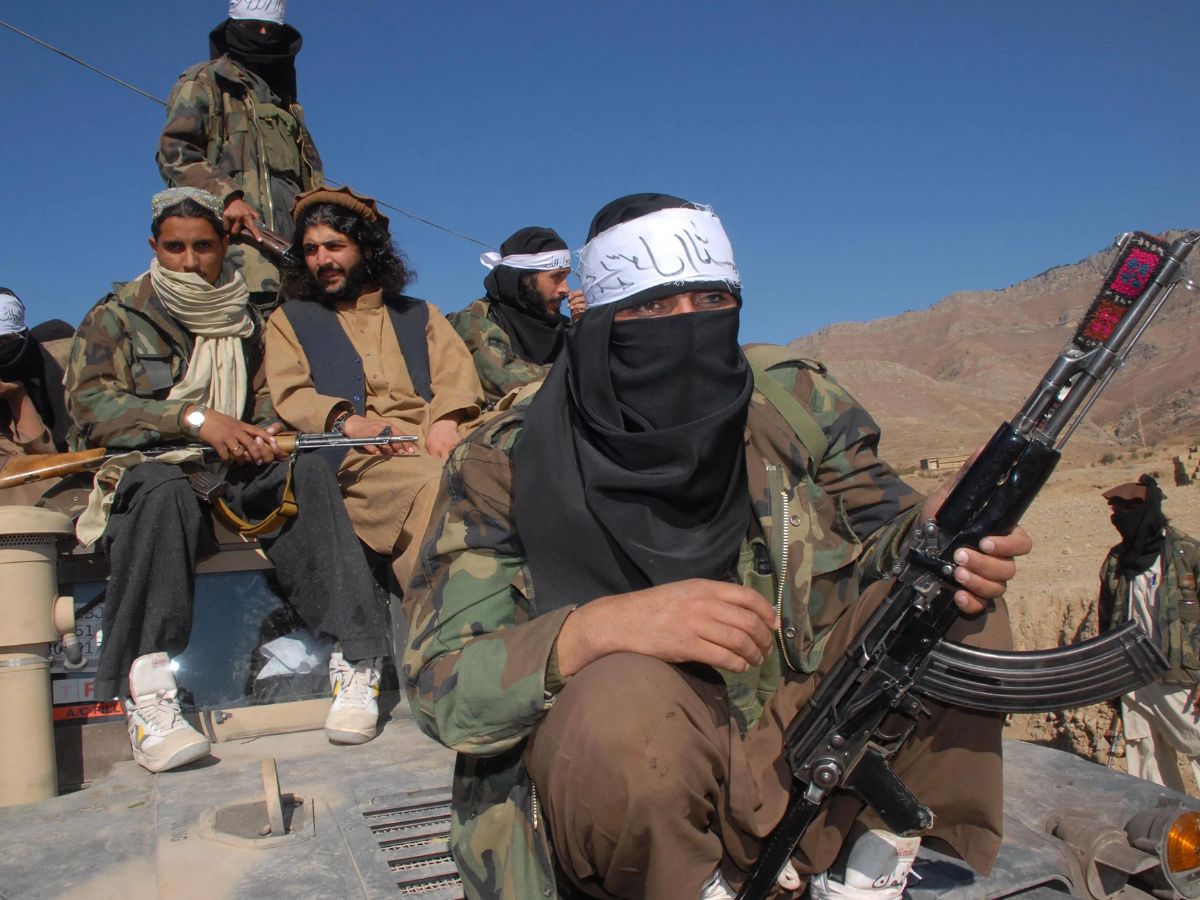
New Delhi: In an exclusive interaction with The Sunday Guardian, following a press conference by the Pakistan military spokesperson in Islamabad earlier last week, Mohammad Khorasani, spokesperson of Tehreek-e-Taliban Pakistan (TTP), responded to the Pakistan military’s allegations targeting India. Mohammad Khorasani, who uses “Khorasani” as a nom de guerre, rejected claims of Afghan or foreign backing to TTP and stated that the group’s leadership and operational structure were based entirely within Pakistan. The TTP leader also denied deliberate targeting of civilians or Chinese-linked projects in Pakistan, something which Pakistan has repeatedly claimed. Edited excerpts.
Q: Pakistan’s military has claimed that evidence from recent Tehreek-e-Taliban Pakistan (TTP) attacks indicates planning, financing, and direction from Afghanistan, and it has also alleged roles for India and Afghanistan. Do you categorically deny that the TTP leadership, training facilities, or logistics networks operate from Afghan territory? If so, where is your actual command-and-control centre based?
A: From the senior leadership and official spokespeople of Tehreek-e-Taliban Pakistan down to the grassroots members, there is extensive video, audio, and written material on record stating clearly that we are conducting our defensive jihad on our own soil, with the support of our honourable nation. This is precisely why dozens of operations take place daily across Pakistan. Likewise, every year thousands of oppressive operations are carried out by the enemy (Pakistan military) on Pakistani territory, during which ISPR itself reports the killing and arrest of our fighters, from ordinary members to senior leaders. This demonstrates that the entire operational structure of Tehreek-e-Taliban Pakistan is established across Pakistan. Our system includes provincial leaders (governors), district commanders, unit commanders, and thousands of fighters engaged in direct combat with the enemy. Therefore, claims that Afghanistan, India, or any other country is supporting Tehreek-e-Taliban Pakistan are entirely contrary to facts and are aimed solely at shaping a public narrative, an effort in which the enemy is visibly failing.
Q: The Director General of ISPR has claimed that TTP receives external facilitation, including financial resources and arms networks. What are your organisation’s current sources of funding and weapons? Do you receive any direct or indirect assistance from foreign states or non-state actors?
A: As stated earlier, our jihad continues with the cooperation, support, and backing of our own honourable people. At present, in the form and manner in which we are operating, there is no external support involved. As for weapons and military resources, everything is available in Pakistan’s black market. This is common knowledge, with involvement ranging from police officials to senior military officers and major politicians. There is no need to present arguments for something that is widely known.
Q: Pakistani military authorities allege that TTP deliberately targets civilians and public infrastructure. What is TTP’s official policy regarding civilian casualties?
A: We consider the protection of the lives, property, honour, and dignity of the Pakistani people to be our religious obligation. Intentionally harming civilians, or acting recklessly in operations, is out of the question. Tehreek-e-Taliban Pakistan has clearly defined military targets, namely military institutions and their identifiable personnel. This policy is known to every member of the organisation, and violations result in punishment. By the grace of God, for many years now the level of civilian harm in our operations has been zero. Had civilian considerations not mattered to us, the scale of our operations would have been many times greater.
Q: According to the claims by DG ISPR, the recent violence is being carried out with the aim to damage China-backed projects and intimidate foreign investment in Pakistan. Do you consider Chinese citizens or China-linked infrastructure to be legitimate targets?
A: Tehreek-e-Taliban Pakistan sees itself as a representative of the oppressed, powerless, and subjugated people of Pakistan. Among its ideological objectives, the protection of the resources of oppressed nations holds central importance, and the movement regards itself as the custodian of Pakistan’s natural resources. Accordingly, anyone engaging in dealings or agreements with the occupying clique ruling Pakistan should take Tehreek-e-Taliban Pakistan into account. However, the movement’s military targets remain the so-called security institutions occupying Pakistan and their clearly identifiable collaborators.
Q: TTP describes its struggle as one for justice and the establishment of an Islamic system. In areas where you previously had, or currently have, influence, what practical systems existed for taxation, dispute resolution, and accountability? What disciplinary action was taken against abuses within your ranks?
A: To prevent oppression and ensure justice for the people, the movement has established a three-tier judicial system: trial court, appellate court, and supreme review. Every oppressed individual is allowed to defend their rights. If a fighter is proven guilty of a crime, Islamic legal punishment is enforced. For example, some time ago in Wana, Waziristan, a murderer was executed in retribution. Videos of this and other cases have been released through Tehreek-e-Taliban Pakistan’s Umar Media. In addition, to safeguard civilians and strengthen institutional stability, the movement has established other bodies, such as the enforcement group and an accountability commission.
Q: Although you describe yourselves as an independent organisation, in the past your leadership has announced allegiance to the leader of the Afghan Taliban. What is the nature of this relationship now: ideological, operational, or merely historical?
A: There is no doubt that Tehreek-e-Taliban Pakistan is an independent revolutionary movement operating within Pakistan against oppression and coercion. Allegiance to the Islamic Emirate of Afghanistan is a separate matter and does not undermine the movement’s independence. As for the nature of the relationship, it is ideological, practical, and historical, and this is no secret. During the foreign invasion of Afghanistan, fighters of Tehreek-e-Taliban Pakistan made significant sacrifices alongside the Islamic Emirate, which cannot be denied. However, the Islamic Emirate of Afghanistan is now a state and a government with its own foreign policy, which it has articulated clearly through its spokesperson Zabihullah Mujahid and Foreign Minister Amir Khan Muttaqi.
Q: Despite increased Pakistan military presence, attacks have intensified in the tribal regions. From which social or geographical segments are you currently recruiting, and what core grievance is driving this recruitment?
A: The continued enforcement of an English legal system instead of an Islamic one, state oppression, and the denial of rights to various peoples and groups have eroded public trust in Pakistan’s system. As a result, young people are joining the movement in large numbers as an alternative, seeking liberation from oppression and aiming to steer the country towards what they believe is its true path.
Q: In practical terms, what does “success” or “victory” mean for TTP? Is it territorial control, a change in the system of governance, or a prolonged armed struggle?
A: Success is a relative concept that can be interpreted in various ways depending on time and circumstances. Since success unfolds in gradual stages, all three of the aspects you mentioned can be included within it.
Q: Does TTP see itself as a Pakistan-focused armed movement, or as part of a broader global jihadist project? And if attacks occur outside Pakistan in your name, would you endorse them?
A: Tehreek-e-Taliban Pakistan has no external agenda. Claiming the actions of others as one’s own is neither religiously nor rationally valid. Therefore, the question of endorsement does not arise.




