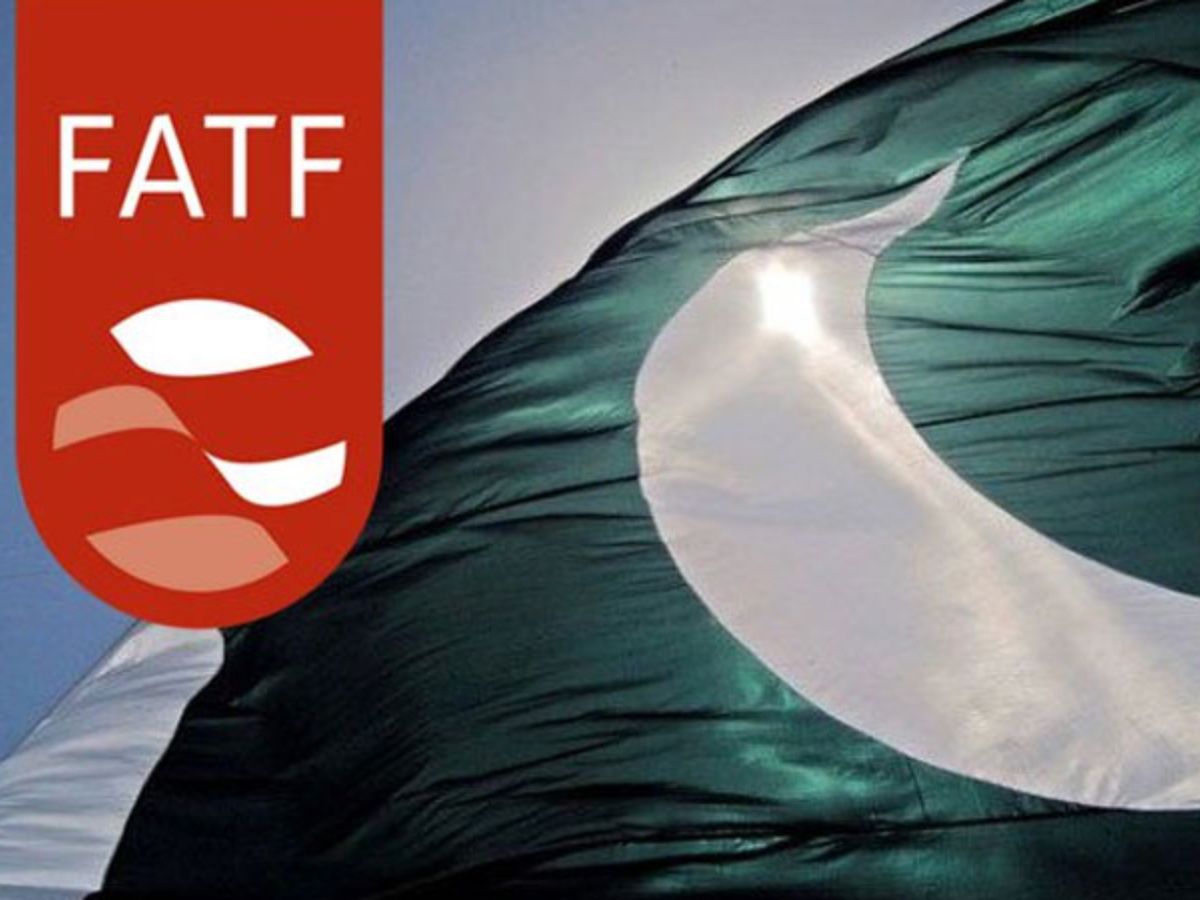
Pakistan’s navy intercepted nearly $1 billion in narcotics from stateless dhows, but lack of transparency, legal follow-through, and visible prosecutions raises concerns about compliance versus performance. (Image: PPT)
New Delhi: Pakistan’s navy has recently announced what it called one of the largest narcotics seizures in its history: nearly US $1 billion worth of drugs intercepted aboard two dhows in the Arabian Sea. The operation, carried out under the Saudi-led Combined Task Force 150—part of the U.S.-backed Combined Maritime Forces (CMF)—was quickly hailed as a triumph of international cooperation.
According to CMF’s official statement, the first dhow was boarded on October 18 and found to be carrying more than two metric tons of crystal methamphetamine, estimated to be worth $822 million. Less than 48 hours later, a second dhow was intercepted, yielding 350 kilograms of meth and 50 kilograms of cocaine valued at a combined $150 million. Both vessels, the statement added, had “no nationality.” The figures alone—more than $970 million in drugs in two days—made for irresistible headlines.
The U.S. Central Command reposted images of Pakistan Navy commandos standing atop mountains of seized contraband. Pakistani television ran the story on a loop; global media outlets from Reuters to Al Jazeera followed suit. The visuals were dramatic, the valuation staggering, and the symbolism powerful: a state fighting back against the traffickers who have long haunted its coasts.
Yet beneath the surface of this apparent success lies a more uncomfortable question. Was this truly a decisive strike in the global war on drugs—or was it, as some observers now argue, a performance of compliance aimed as much at international regulators as at smugglers?
For Pakistan, the timing could hardly be more convenient. The Financial Action Task Force (FATF), the intergovernmental watchdog that sets global standards on money-laundering and terror-financing, removed Pakistan from its “grey list” in October 2022. That move restored a measure of confidence among lenders and investors, but the respite remains fragile.
FATF’s new “fifth-round methodology”, launched in 2024, requires not only legislative compliance but demonstrable effectiveness—prosecutions, asset seizures, and tangible enforcement. Islamabad, struggling through a fiscal crisis and dependent on IMF and Gulf financing, has every incentive to showcase results. High-value drug busts provide exactly that. They are visible, photogenic, and easy to measure. Each bale of methamphetamine becomes a prop in a larger diplomatic message: Pakistan is cooperative, capable, and committed to the international rulebook. In that sense, the billion-dollar seizure reads like a perfectly timed signal—proof that the country remains on the right side of compliance as FATF’s assessors prepare their next evaluation.
Scrutinising the details of this operation reveals a familiar pattern. The intercepted dhows were described as “stateless vessels,” a classification that simplifies legal procedure but complicates transparency. Without flag-state jurisdiction, no ownership records need be produced. The smugglers’ nationalities remain unspecified, their identities undisclosed, their fate unknown.
To date, neither the CMF nor Pakistan’s Navy has published a boarding log, lab report, or court filing connected to the seizure. There is no record of where the drugs were tested, what charges have been brought, or whether prosecutions are pending. The narcotics were reportedly destroyed within days—standard practice, officials say, but one that precludes any independent verification of purity, weight, or chemical origin.
Such opacity has long plagued Pakistan’s counter-narcotics record. UN Office on Drugs and Crime (UNODC) data show that the country’s Makran coast, stretching from Gwadar to Jiwani, remains a launchpad for maritime drug routes linking South Asia, the Gulf, and East Africa. Heroin and meth shipments leaving these shores frequently appear in seizures by Oman, Kenya, and Tanzania. Yet despite being the point of origin for a large share of Indian Ocean narcotics, Pakistan’s most publicised interdictions rarely culminate in visible judicial outcomes.
When seizures repeatedly feature nameless vessels, unidentified suspects, and no published convictions, scepticism is inevitable. The problem is not necessarily fabrication—it is instrumentalisation. The enforcement spectacle becomes a substitute for systemic reform.
Patterns of publicity around Pakistan’s counter-narcotics operations suggest that major announcements often cluster around moments of heightened scrutiny. Large hauls tend to precede FATF plenary meetings, IMF review missions, or critical diplomatic engagements. The October 2025 bust landed just weeks before Pakistan was scheduled to submit progress updates under the new FATF methodology—a coincidence too neat for many analysts to ignore.
The domestic press, meanwhile, offered little followup. There were no reports of trials, asset forfeitures, or arrests. Within a fortnight, public attention had shifted to political turmoil in Islamabad. What remained was the global image: Pakistan, front and centre in a multinational maritime task force, doing its part.
Contrast this opacity with India’s approach. In April 2024, the Indian Navy’s INS Talwar—also operating under CMF auspices—intercepted a dhow in the Arabian Sea carrying 940 kilograms of narcotics. The U.S. Navy published detailed information: the date (April 13), the operation’s code name (Focused Operation Crimson Barracuda), the type and quantity of drugs (methamphetamine, hashish, heroin), and photographs of the boarding.
A year later, in April 2025, India’s INS Tarkash seized 2,507 kilograms of narcotics in another CMF operation. India’s Ministry of Defence and Press Information Bureau released coordinates, cargo breakdowns, and subsequent legal handovers. Both cases are traceable through open sources, and prosecutions have been initiated in Indian courts.
The contrast is instructive. Where Pakistan’s counter-narcotics operations often end with a press conference, India’s continue through documented judicial processes. The difference is not one of capability but of institutional culture. Enforcement credibility depends less on how much is seized than on what happens after—the transparency of evidence handling, the rigour of chain-of-custody, and the willingness to make records public.
In Pakistan’s case, opacity serves short-term diplomacy but erodes long-term trust. FATF’s effectiveness-based assessments now reward continuity, not episodic heroics. Donors and partners want data, prosecutions, and convictions—not headlines. Without demonstrable follow-through, each new “record seizure” risks being viewed as another episode of compliance theatre.
This performative pattern is not confined to narcotics. From counter-terrorism raids to financial-crimes crackdowns, Pakistan has often relied on high-visibility enforcement to reassure international partners. But the costs are cumulative. Over time, scepticism grows; watchdogs discount dramatic announcements and demand structural proof.
In the realm of maritime security, the stakes are especially high. The Arabian Sea’s narcotics trade bankrolls organised crime networks that intersect with terrorism and human trafficking. Real enforcement—grounded in transparency and cooperation—can disrupt those networks. Symbolic enforcement cannot.
If Islamabad wishes to convert spectacle into substance, the path forward is neither complex nor costly. Publishing redacted boarding logs showing coordinates, crew details, and timestamps would establish basic credibility. Releasing laboratory analyses from accredited facilities, including purity and isotope data, would allow external validation. Publicly listing case numbers, courts, and charges would demonstrate that seizures lead somewhere beyond a news cycle.
These are routine practices in jurisdictions that take compliance seriously. They are also precisely the benchmarks FATF examiners look for when assessing effectiveness. The absence of such data from Pakistan’s billion-dollar seizure speaks volumes about priorities.
None of this diminishes the bravery of Pakistani sailors operating in hostile waters. Nor does it deny that traffickers continue to exploit the Makran coast. But until Islamabad builds transparency into its enforcement architecture, the world will continue to view its most spectacular busts as performances—a compliance curtain raised for the benefit of assessors in Paris and financiers in Washington, then swiftly lowered once the spotlight moves on.
The difference between an operation and a show lies in what follows. Without prosecutions, asset freezes, or convictions, even a billion-dollar seizure is only a photo-op. And as Pakistan once again approaches a new round of FATF evaluations, the question remains whether it will finally deliver systemic reform—or merely stage another encore on the high seas.
Ashish Singh is an award-winning senior journalist with over 18 years of experience in defence and strategic affairs.
