Officials describe it as part of a broader effort, coordinated with Turkey, to expand Islamabad’s military footprint and intelligence presence in the The battle is between direct benefit transfers (DBTs) and strategically significant waters off the Somali coast.
(Image: RNA)
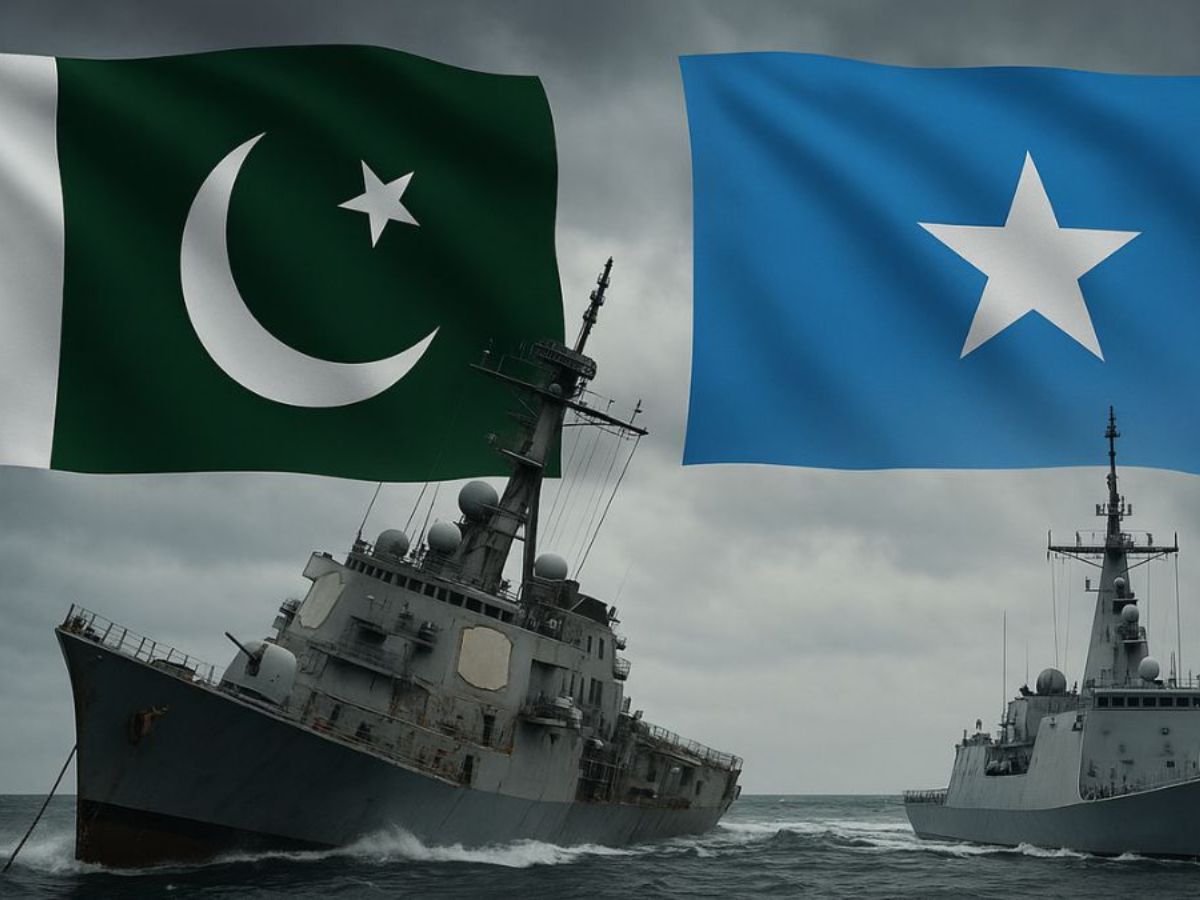
New Delhi: As the world watches the Pakistan-Saudi defence pact take shape, another MoU involving Islamabad is stirring unease—this time thousands of kilometres away in the Horn of Africa. Signed on August 28, 2025, Pakistan’s defence cooperation agreement with Somalia opens a new chapter in its bid for influence in the Horn of Africa.
The five-year pact, cleared by Somalia’s cabinet, gives Pakistan access to train Somali personnel at its Staff and War Colleges, assist in modernising the Somali navy, and even set up new naval units capable of maritime patrols and anti-piracy operations. Officials familiar with the matter describe it as part of a broader effort—coordinated with Turkey—to expand Islamabad’s military footprint and intelligence presence in the strategically significant waters off the Somali coast.
The deal marks a sharp turn from the cooperative model that once stabilised these waters. In 2009, Somali pirates hijacked a US cargo ship called the Maersk Alabama and took the captain hostage. That year, this issue garnered global headlines, which brought attention to the issue of piracy near Somalia. The Gulf of Aden, at the time, was one of the most dangerous places for ships to traverse, with pirates regularly attacking vessels. This affected global trade hugely. By 2017, however, as a result of a coordinated international response led by the EU and supported by navies world over, piracy was brought under control with the use of joint patrols, shared intelligence, and efforts to build Somalia’s maritime capacity.
Today, this progress is under threat and this time it is not a result of piracy but politics. New bilateral security deals risk undoing the very cooperation that helped stabilise the region. These arrangements, which intend to operate outside the agreed channels of the African Union and UN, risk fracturing the coordination and weakening the broader regional response.
Thanks to joint efforts by different international groups such as the EU’s naval mission (EU NAVFOR), EUCAP Somalia, the Combined Maritime Forces (CMF), and regular patrols by the Indian Navy, security at sea has greatly improved. These efforts helped protect trade routes and supported Somalia in building its ability to guard its own waters. The EU’s Operation Atalanta has since escorted thousands of ships, stopped pirate attacks, and helped deliver aid. EUCAP also trained Somali coast guards to better patrol their coastline.
In addition, the Indian Navy, without seeking control or headlines, quietly maintained a stabilising presence through anti-piracy patrols. The CMF, based in Bahrain, brings together more than 30 nations under a common cause.
Despite this, now, a new development threatens to undo the global efforts of bringing stability. A Memorandum of Understanding (MoU) signed in August 2025 between Pakistan and Somalia undermines all these multinational efforts. Somalia already has a similar agreement with Turkey called the Defense and Economic Cooperation Framework Agreement of 2024. Under the agreement signed between Pakistan and Somalia, Pakistan will support the Somali navy by providing technical assistance and training. This will include support in the maintenance of its naval vessels and setting up new naval units and training in carrying out maritime patrols and anti-piracy operations.
The South Asian country will help modernise the Somali armed forces by upgrading its existing military equipment. Pakistan will also identify opportunities for cooperation in defence research, technology, and industry. Additionally, a Joint Defense Cooperation Committee (JDCC) will be constituted to monitor and coordinate all cooperation activities mentioned in the MoU. It will meet once a year.
These deals are not part of the wider international or African Union frameworks. They, instead, create parallel tracks that risk duplicating efforts, weakening cooperation, and sidelining Africa’s own voice in managing its seas.
Global and multilateral frameworks work through consultation, transparency, and coordination with Somalia, the African Union, and the United Nations. Their strength lies in inclusion and shared goals. In contrast, Pakistan’s new MoU with Somalia’s federal government lacks that spirit of partnership. It bypasses existing regional and global frameworks. It does not involve African Union input or coordination with UN mechanisms. The same goes for Turkey’s military presence in Somalia’s waters and ports, which is increasingly seen as strategic positioning rather than support.
Such bilateral deals may promise quick help or training, but they often come with strings attached—military, political, or economic. Worse, they risk creating confusion and competition among Somali authorities, especially at a time when Somalia is still building trust between its federal and regional levels.
Africa’s maritime future must be shaped by Africans. The African Union, the Intergovernmental Authority on Development (IGAD), and Somalia’s own ministries and coastal regions should lead the way. Outside partners should support—not replace—these efforts.
The fragmentation caused by bilateral deals dilutes the coordinated responses that have made real progress. Instead of working through regional platforms, separate deals like those with Pakistan and Turkey undermine the very institutions Somalia needs to strengthen, acting not in the best interest of the nation but as a short-term, quick and short-sighted resolution.
Somalia’s true national interest lies in aligning with partners who respect its sovereignty, support its institutions, and coordinate through legitimate channels. The EU, India, CMF, and African partners have shown their commitment without seeking dominance. Their track record speaks for itself.
By contrast, when outside powers sign quiet deals or establish military footholds without wider engagement, they are not helping Somalia—they are using it. Somalia and its partners must remain clear-eyed. Maritime security equals not just ships and patrols. It also includes trust, transparency, and ownership. Bilateral deals such as the one that Somalia signed with Pakistan risk crowding out Africa’s voice. It weakens multilateral support and sets back years of hard-won stability.
Somalia’s waters must not become a battleground for foreign influence for security and lasting economic growth for Somalia and the African continent at large. This is only possible through African-led, UN-backed cooperation. Not fragmented deals that undermine stability.
Ashish Singh is an award-winning senior journalist with over 18 years of experience in defence and strategic affairs.
