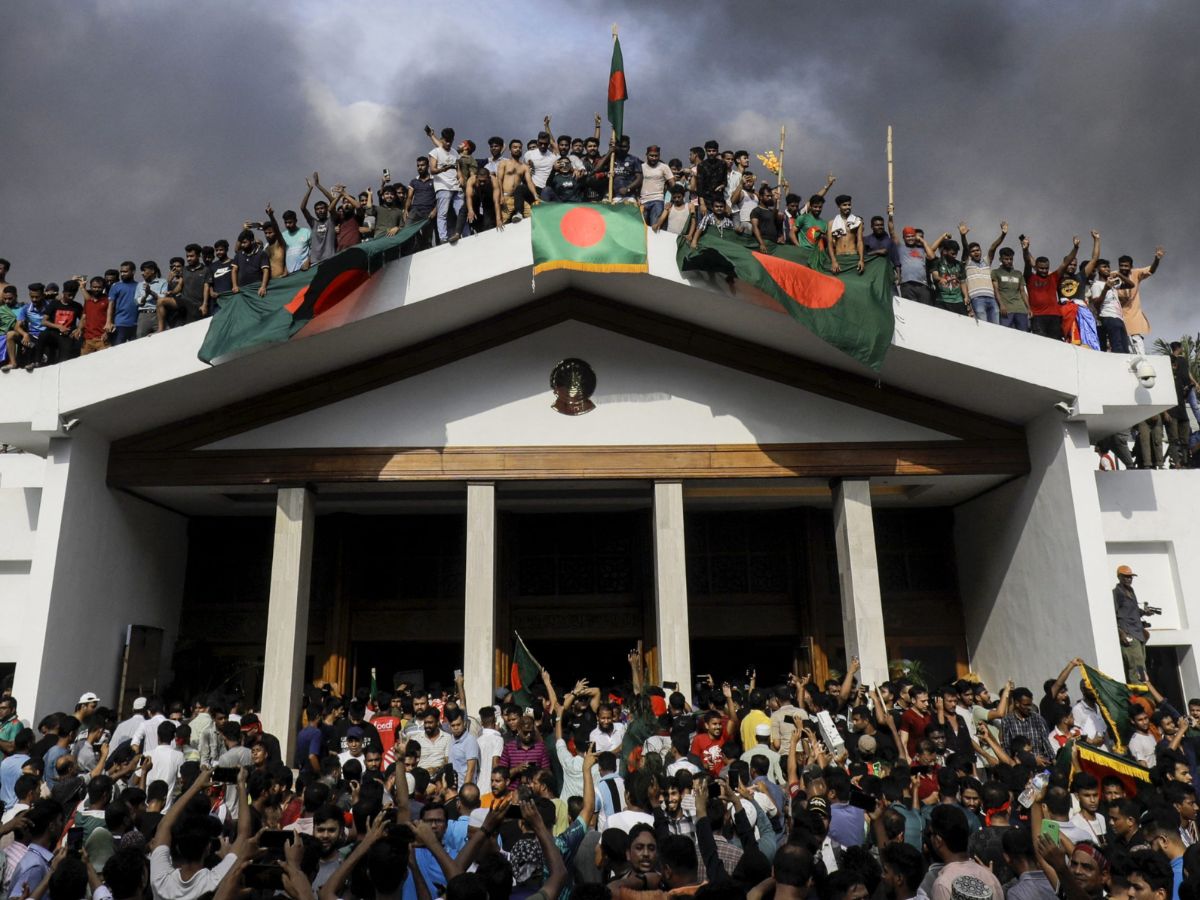
Return of BNP-Jamaat may normalise anti-minority violence in Bangladesh (Image: X)
The seeds of communal violence against minorities in Bangladesh were sown long before the era of independent politics. In the Bangladesh Liberation War of 1971, the fundamentalist forces of Jamaat-e-Islami, along with local collaborators, joined hands with the Pakistan Army to take on the liberation movement. Vigilante groups like Al-Badr and Al-Shams participated in the mass slaughter of civilians, especially the Bengali Hindus, whom they perceived to be the “enemies” of Pakistan and Islam. Entire villages were massacred and women and girls were raped in systematic campaigns of terror. Jamaat-linked forces were implicated in notorious atrocities such as the Char Bhadrasan massacre, where dozens of unarmed Hindu villagers were killed and hundreds of homes burned, and the Jathibhanga massacre, which saw thousands of Bengali Hindus murdered in a few hours during concentrated attacks.
After independence, the new state took steps to hold collaborators accountable through the Bangladesh Collaborators (Special Tribunals) Order, 1972, and many were arrested and tried. Yet political change in the 1970s allowed Jamaat to re-enter politics. The extremist party that opposed the country’s birth and supported genocide began to embed itself within mainstream political networks. Over decades this laid the ideological groundwork for communal targeting that would recur when Jamaat allied with powerful partners. Their historical role in atrocities provided a blueprint for targeting minorities in later periods, which showcased continuity of ideology and tactics.
In 2001, when the Bangladesh Nationalist Party (BNP) returned to power through an alliance with the Jamaat-e-Islami, political intolerance and communal animosity gained pace nationwide. The 2001 Bangladesh post-election violence saw targeted attacks on minorities, especially Hindus. It was widely reported by human rights organisations and media back then. Supporters of the BNP-Jamaat alliance engaged in killings, rape, looting, torture, and destruction of homes and places of worship. These attacks were coordinated acts aimed at terrorising communities perceived as opponents of the ruling coalition. Independent investigations and judicial commissions confirmed that thousands of minority families faced violence, displacement, and death. A Supreme Court judicial probe found over 26,000 leaders and supporters of BNP-Jamaat, including ministers and lawmakers, involved in murder, rape, and intimidation of minorities. Hindus fled rural heartlands, temples were vandalised, and communities were stripped of economic and social stability.
The pre-election period itself was marred by open attempts to suppress minority voters and opposition supporters through violence, intimidation, and coercion. BNP-Jamaat cadres attacked homes, issued death threats, blocked access to polling stations, and used religion-based fatwas to intimidate vulnerable groups. The period between 2001 and 2006 was most devastating, not only in terms of the lack of protection and accountability of the state machinery in making provisions but also in the attitude of the police in remaining indifferent even when mobs attacked temples, schools, businesses, and homes of minority groups. A culture of impunity developed as perpetrators were rarely prosecuted and victims were discouraged from seeking justice.
This neglect extended beyond street violence. Parliamentarians and cabinet members from the ruling alliance were implicated in organising and facilitating attacks, showing that persecution had structural support at the highest levels. The political protection of extremist cadres created continuous harassment of minorities. Scholars and activists noted that instead of weakening extremist networks, the BNP-Jamaat partnership gave tacit legitimacy to radical groups and emboldened them to act against non-Muslim citizens with impunity. Historical memory of this period remains vivid among Bangladesh’s minorities. Families who lost relatives were displaced or witnessed rape and looting, leaving wounds that have never healed. Their sense of abandonment by the state created deep mistrust whenever BNP-Jamaat raises its profile in national politics.
As opposed to mainstream political parties, in which political philosophies change through time, Jamaat-e-Islami’s political philosophy has been opposed to secular nationalism and has considered minorities as inferior citizens from the beginning. It was involved in the genocide of minorities in Bangladesh in 1971 and, after that, began supporting extremism and discriminatory politics throughout its history. The Jamaat leaders still denied involvement in war crimes during and after the liberation war with the aim of seeking political rehabilitation. This further worsened mistrust and hampered reconciliation. Until as recently as 2025, there was debate in Bangladesh about whether Jamaat should be banned owing to its involvement in genocide and human rights violations. The Jamaat rejected this as a political gimmick and avoided dealing with its legacy of violence. Through its student wing, the Islami Chhatra Shibir, and allied groups, Jamaat mobilises militants who historically targeted minorities and secular activists. When allied with BNP, these networks operate openly, spreading exclusionary narratives and intimidating vulnerable communities. This continuity from wartime collaboration to peace-time politics makes Jamaat’s return particularly alarming.
RETURN WOULD MEAN CONTINUED ATROCITIES
Bangladesh’s political history shows a grim correlation: when BNP and Jamaat-e-Islami rise to power together or even fuel unrest from opposition, minorities face heightened risk of violence and exclusion. The tactics used in 2001-2006—violence during elections, systematic intimidation, economic marginalisation, and political discrimination—are not accidental outbursts but parts of a broader strategy to maintain power by weakening dissenting voices. Minority leaders warn that a resurgence of BNP-Jamaat influence would lead to fear and institutional neglect. Their concern is not hypothetical. It is rooted in repeated experiences where state institutions failed to protect vulnerable communities while enabling persecution. This cycle undermines social cohesion, undermining foundations of a pluralist society.
Bangladesh’s secular Constitution guarantees equal rights as well as protection to all citizens regardless of religion or ethnicity. Yet the lived experience of minorities under extremist-aligned regimes shows how far political reality can diverge from constitutional ideals. If BNP and Jamaat regain power without accountability and reform, atrocities of the past are likely to continue. The historical record from Jamaat-linked atrocities in 1971 to mass violence against minorities during the BNP-Jamaat government of 2001-2006 paints a clear and sobering picture. These are not isolated incidents. They are part of a pattern where political alliances founded on exclusionary ideologies have led to systemic oppression of minorities.
Minorities in Bangladesh deserve security, dignity, as well as equal citizenship. Protecting these rights requires confronting the violent legacies of political forces which historically abused power for sectarian ends. A return to power by BNP and Jamaat-e-Islami without accountability and reform would risk reviving cycles of terror, displacement, as well as discrimination. The future of Bangladesh’s pluralist identity depends on learning from its darkest chapters while ensuring that those who once enabled massacres and communal targeting can never again threaten the lives and rights of its most vulnerable citizens.
Ashish Singh is an award-winning senior journalist with over 18 years of experience in defence and strategic affairs
