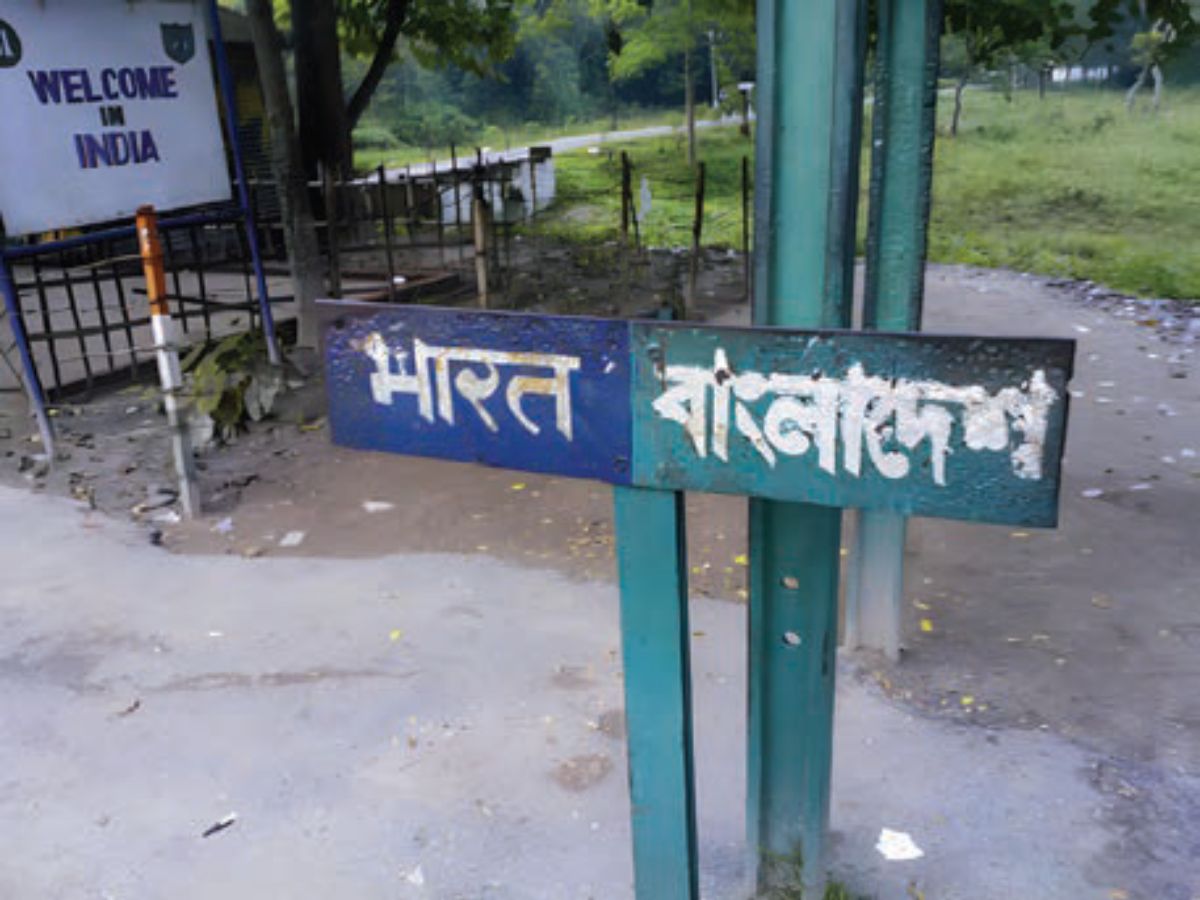
Indo Bangla border
Since the rollout of the Election Commission’s Special Intensive Revision (SIR) in West Bengal on November 4, border posts like Hakimpur in North 24 Parganas district have witnessed a marked increase in Bangladeshi nationals returning home, with district authorities and the Border Security Force noting that more than 1,600 Bangladeshi migrants had crossed back in just days. Many of these individuals had lived in India for over a decade, enrolling in voter lists and welfare schemes by leveraging documents allegedly facilitated by political figures affiliated with the ruling Trinamool Congress (TMC).
This sudden reverse-migration by thousands of Bangladeshi citizens living illegally in West Bengal back to their homeland, visibly unfolding at border check posts, has raised alarm bells among political parties, especially the TMC, which faces potential disruptions to its electoral stronghold in border constituencies.
Border districts such as North 24 Parganas, Murshidabad, and Malda—areas with substantial migrant populations—have historically delivered narrow electoral margins for the TMC. Political scientists and ground reports emphasise that these districts had seen voter enrolment surges, disproportionately reflecting communities of Bangladeshi origin.
The phenomenon is concentrated in districts adjacent to Bangladesh, where the disappearance of these migrants, mostly Muslims—many of whom reportedly registered as voters with help from local TMC leaders—may tip the scales in tightly contested Assembly seats in next year’s state elections. Muslims constitute nearly 30% of Bengal’s electorate—around 2.25 crore voters—with concentrations in over 100 Assembly constituencies and outright majorities in at least 74.
Analysts say that this bloc, combined with undocumented migrants who manage to secure voting credentials, has created a formidable political force. Deletions based on SIR are expected to affect Muslim-dominated districts such as Murshidabad and Malda, potentially jeopardizing TMC’s narrow victories in dozens of seats. While the TMC challenged this move in the Supreme Court, the BJP welcomed it as a step towards cleaner rolls.
BSF sources told The Sunday Guardian that voluntary returns by Bangladeshi nationals nearly trebled this year, as tens of thousands sensed imminent scrutiny and potential disenfranchisement due to SIR’s document verification drive. They added that the number of undocumented Bangladeshi migrants trying to return home through unfenced stretches in North 24 Parganas and Malda districts has seen a “significant increase” compared to the last two years.
A senior official said the spike is unprecedented in recent times. “Earlier, such incidents barely reached double digits. Now, the number is consistently reaching triple digits every day,” he said. While some reports have suggested that nearly 500 individuals are crossing daily, he clarified that the actual figure is “a little lower, but substantial—100, 150 or more. You can tell it’s in triple digits.”
The sudden rise in returning Bangladeshi migrants has placed considerable pressure on the BSF and the state police.
The official noted that only individuals without proper documentation attempt to enter or leave the country through illegal means. “Many arrived years ago seeking livelihood, overstayed, and now fear being detected during SIR or during police verification drives,” he said.
This growing influx, he added, has created major logistical and operational challenges for all agencies involved. “No agency can keep thousands of people in custody for long periods. After verification, if they have no criminal record, coordinating with the BGB and enabling their return is the only practical approach.”
According to political scientist Aveek Sen, “Muslims of Bengal support the TMC because they see their interests protected under its rule. For those of Bangladeshi origin, vulnerability compels loyalty, as TMC shields them from deportation.”
Political commentator Subhomoy Maitra told The Sunday Guardian: “The vulnerability of migrants has created persistent loyalty to the TMC, whose administration is seen as a buffer against deportation and legal proceedings. This migrant influx, at times orchestrated ahead of elections, has long enabled the TMC to consolidate muscle power and mobilize votes through a network of incentives and protection. That may now come under threat.”
With the sudden reversal of this trend, driven by intensified document scrutiny and border surveillance under SIR, political calculations in these constituencies are being rapidly upended. The likely removal of names from voter rolls—many of which were added using documents issued or facilitated by local leaders—may significantly erode TMC’s vote base and jeopardize their chances in several assembly seats.
The TMC, led by Mamata Banerjee herself, has long contested accusations of facilitating forged paperwork and shielding illegal entrants from Bangladesh. A recent controversy, sparked by public remarks from a local party leader offering assistance to Bangladeshi migrants in voter enrolment, drew fierce criticism from the BJP, which demanded immediate investigation and promised to escalate the issue to the Election Commission.
Ratna Biswas, a TMC leader from North 24 Parganas district and a former panchayat pradhan, assured assistance from the ruling party to Bangladeshi migrants in getting their names included in the voters’ lists during a celebration for the birthday of TMC Lok Sabha MP Kakoli Ghosh Dastidar in Habra.
BJP leaders accuse the TMC government of blurring the lines between genuine citizens and illegal migrants, using forged documents issued through schemes such as Duare Sarkar.
Late last month, the West Bengal unit of the BJP had accused the Trinamool Congress government of issuing “fake citizenship” documents in the state’s border districts by issuing delayed birth certificates.
The party claimed that these certificates are being used to create “fake voters” ahead of SIR. BJP state president Samik Bhattacharya shared on social media an official document detailing delayed birth registrations in Uttar Dinajpur, a district bordering Bangladesh.
With the 2026 Assembly elections approaching, Bengal finds itself at the crossroads. Demographic realities, migration pressures, and identity politics have made the state one of India’s most contested political battlegrounds.
As historian Amiya Basu observes: “If these trends continue, Bengal may not see partition on maps, but it risks a partition of minds and societies.”
COOCH BEHAR:
Mekliganj, Mathabhanga, Cooch Behar Uttar, Cooch Behar Dakshin, Sitalkuchi, Sitai, Dinhata, Tufanganj.
JALPAIGURI:
Jalpaiguri, Maynaguri, Dhupguri, Rajganj.
UTTAR DINAJPUR:
Chopra, Goalpokhar, Chakulia, Karandighi, Hemtabad, Kaliaganj, Raiganj, Islampur.
DAKSHIN DINAJPUR:
Kushmandi, Kumarganj, Balurghat, Tapan, Gangarampur, Harirampur.
MALDA:
Manikchak, Mothabari, Sujapur, Baisnabnagar, Malatipur, Ratua, English Bazar, Maldaha (SC).
MURSHIDABAD:
Farakka, Samserganj, Suti, Jangipur, Raghunathganj, Sagardighi, Lalgola, Bhagabangola, Raninagar, Murshidabad, Hariharpara, Domkal, Jalangi, Beldanga, Jalangi.
NADIA:
Karimpur, Tehatta, Palashipara, Kaliganj, Nakashipara, Chapra, Krishnanagar Dakshin, Krishnaganj, Ranaghat Uttar Purba, Ranaghat Dakshin, Santipur.
NORTH 24 PARGANAS:
Baduria, Basirhat Dakshin, Basirhat Uttar, Hingalganj, Bangaon Uttar, Bangaon Dakshin, Gaighata, Swarupnagar, Minakhan, Haroa.
SOUTH 24 PARGANAS:
Gosaba, Basanti, Kultali, Patharpratima, Kakdwip, Sagar, Kulpi, Mandirbazar, Jaynagar, Canning Paschim, Canning Purba, Magrahat Purba.
