
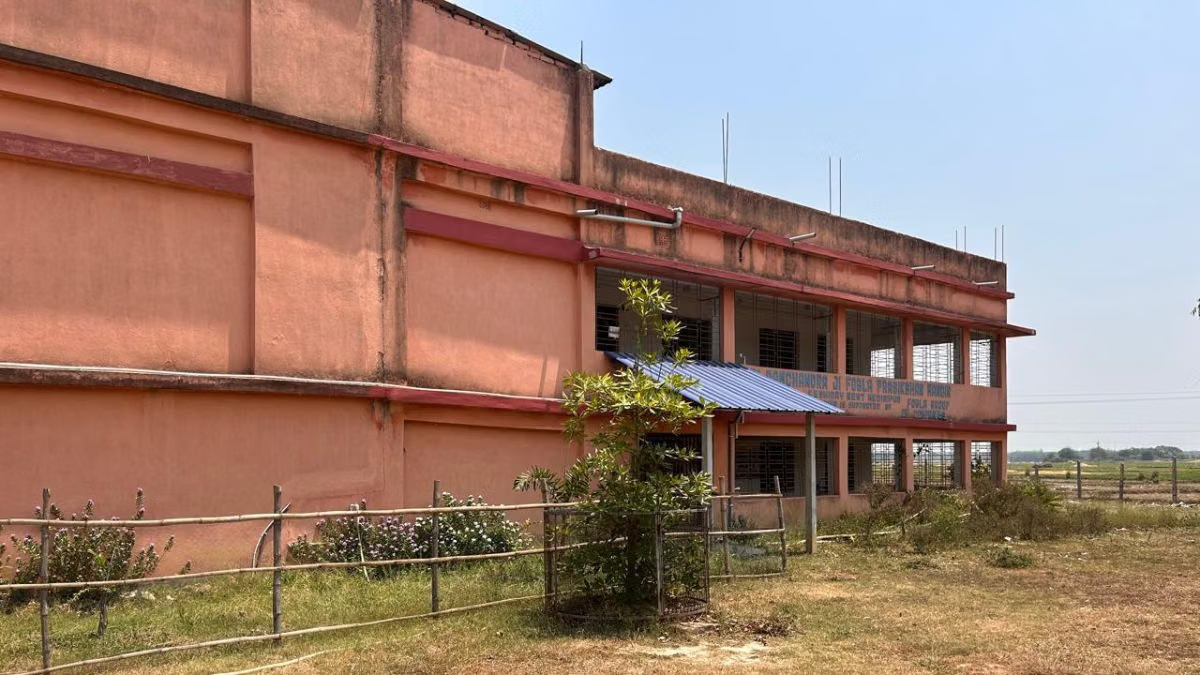
West Bengal Chief Minister Suvendu Adhikari has set a target of establishing at least 1,000 schools run by Vidya Bharati, the education wing of the Rashtriya Swayamsevak Sangh (RSS), across the state within a year—a move that signals a deepening organisational push by the Sangh Parivar in Bengal, months after the Bharatiya Janata Party ended the Trinamool Congress’s 15-year rule in the state. Adhikari made the announcement while addressing an event at the Ramakrishna Mission Institute of Culture in Kolkata to mark the 74th anniversary of Vidya Bharati, organised by the Vivekananda Vidya Bikash Parishad. He said the new schools should come up in every district, municipality and panchayat of the state, with Corporate Social Responsibility funds proposed as a source of financing for the expansion.
Addressing school administrators on the question of Vande Mataram compliance, Adhikari recalled instances where institutions had only partially complied with the directive to sing the National Song in full. “Then they budged, but only partially,” he said, describing what he had observed at some schools. He added that students had stood up during the anthem “but did not move their lips,” and said he had since told school authorities that “lips must move as well.” The Chief Minister also warned of consequences for noncompliance, saying plainly, “government aid would stop.” Vidya Bharati currently operates 313 schools in West Bengal, a footprint that would need to more than triple to meet Adhikari’s stated target. Nationally, the organisation is among the largest of the RSS’s affiliated bodies, running over 12,000 schools—commonly referred to as Vidya Mandirs—along with more than 10,000 Bal Sanskar Kendras, informal centres that offer young children early lessons in what the organisation describes as cultural and moral education. The schools combine mainstream academic instruction with a curriculum built around nationalistic and values-based themes, a model Vidya Bharati has followed since its found ing nearly seven and a half decades ago.
Adhikari’s push comes as part of what he cast as a broader overhaul of Bengal’s education system. He accused the previous Trinamool Congress government of having, in his words, been “polluting” the state’s educational institutions over its tenure, and called on Vidya Bharati to take up the task of what he termed “nationalistic learning.” Invoking Bharatiya Jana Sangh founder Syama Prasad Mookerjee’s slogan of “ek desh, ek bidhan, ek nishan, ek pradhan”—one nation, one constitution, one flag, one leader—the Chief Minister said that the same principle of unification ought to extend to the state’s education department. Notably, Adhikari specifically urged Vidya Bharati to expand its presence in Murshidabad and South 24 Parganas, both Muslim-majority districts, alleging that “more anti-national activities take place” there. Political observer Biswanath Chakraborty said: “The Chief Minister did not elaborate on the basis for the claim in his public remarks, but the explicit singling out of these two districts for intensified RSS-linked schooling will definitely add a communally sensitive dimension to what is otherwise being projected by the state government as a routine education-policy initiative.”
Suvendu Adhikari also flagged what he described as “an anomaly” in the administration of minority education, saying the government would not continue with an arrangement under which the Higher Education department oversees all universities except Aliah University, which falls under the state’s minority affairs department. Recounting a recent episode, Adhikari said: “I felicitated the board toppers,” referring to a state event honouring top performers in board examinations, including Muslim, Jain and Buddhist students. He said that despite this, “the minority affairs department sent me a separate file with the names of 27 Muslim students,” and questioned why a separate list had been compiled when the felicitation had already included students from multiple communities. Adhikari’s remarks tied the Vidya Bharati expansion to two other planks of his stated education agenda: a push for a single, unified school system in place of what he suggested was a fragmented arrangement involving separate administrative setups for madrasas and Aliah University, and strict enforcement of Vande Mataram compliance, with the explicit threat of withdrawing government aid from institutions that do not comply in full. Taken together, senior government officials indicated that the measures are meant to be read as a package rather than standalone announcements—an attempt to fold curriculum, symbolism and institutional oversight into a single narrative of national integration.
The Vidya Bharati announcement follows reports that the RSS has separately launched a month-long youth outreach campaign across Bengal, aiming to open around 10,000 new shakhas—the organisation’s grassroots congregational units—in the state. The campaign is expected to run until Vijaya Dashami and is intended to strengthen the RSS’s presence at the grassroots and draw in younger recruits, including members of Generation Z, through block-level youth conferences focused on themes of nationalism, patriotism and social service. RSS functionaries have described the youth as central to the organisation’s future, and the timing of the campaign follows recent remarks by RSS chief Mohan Bhagwat on the role of the younger generation in shaping the country’s future. Organisers say the blocklevel conferences are designed to be low-key and conversational in format, aimed less at formal recruitment drives of the kind associated with the RSS in earlier decades and more at building sustained, informal engagement with young people who may not otherwise encounter the organisation.
Observers note that while the RSS has periodically run similar recruitment and outreach drives across the country, the scale of the current campaign—spanning both the shakha network and the Vidya Bharati school system simultaneously—is unusually large, particularly in a state where the Sangh Parivar has historically had a comparatively limited organisational base relative to its presence in northern and western India. Political commentator Suman Chattopadhyay told The Sunday Guardian: “Bengal has long been considered a difficult terrain for RSS expansion, given the state’s distinct political culture and decades of Left and Trinamool dominance that left relatively little space for the organisation’s grassroots units to take root at scale. Now, the times are changing.” Taken together, the twin initiatives—the shakha expansion drive targeting roughly 10,000 new units and the proposed 1,000-school target for Vidya Bharati—reflect an attempt by the RSS and its affiliates to convert the BJP’s recent electoral gains in West Bengal into a durable, long-term organisational and ideological foothold in the state, reaching beyond electoral politics into education and grassroots social life. Political analysts tracking the Sangh Parivar’s expansion elsewhere note that such simultaneous pushes on schooling and grassroots congregation typically unfold over years rather than months, making the one year timeline for the school target especially ambitious.


