
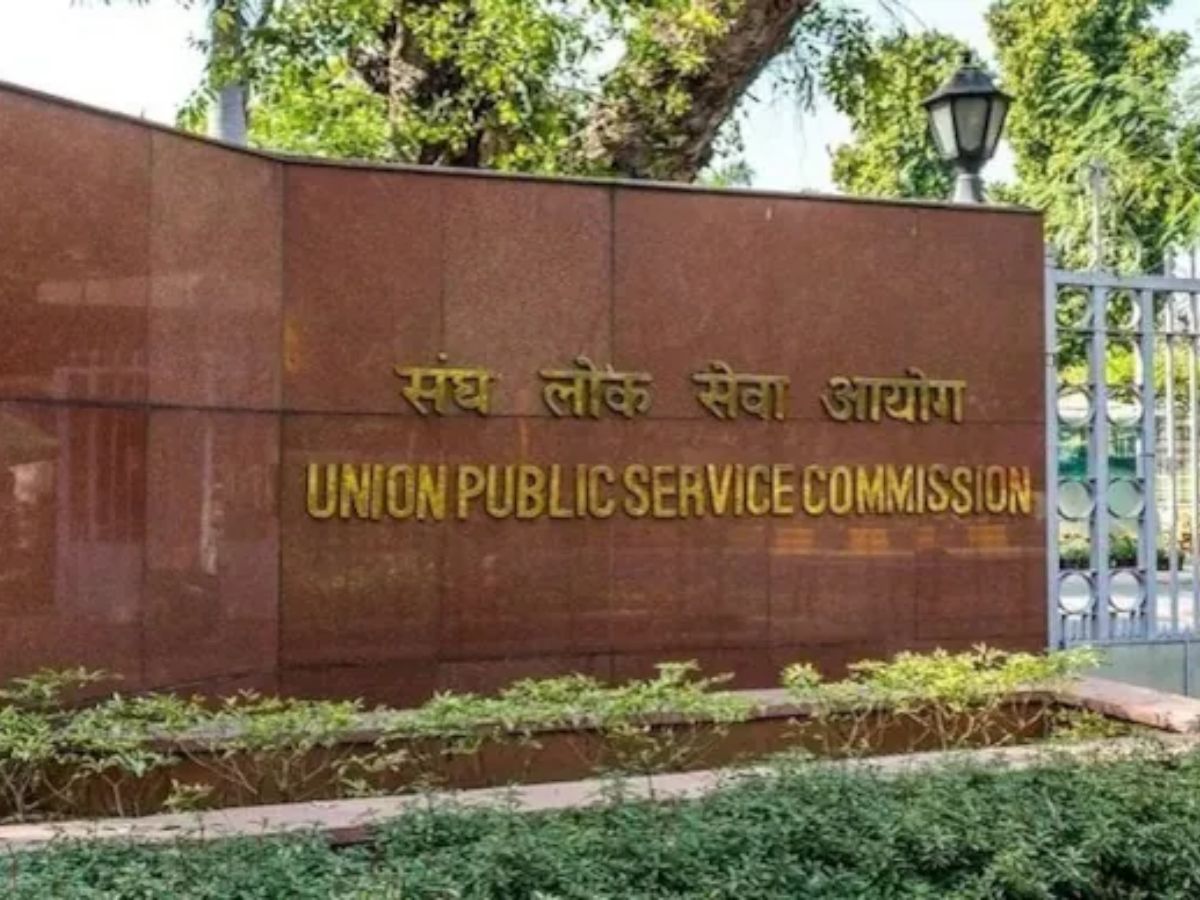
The Union government has notified a new cadre allocation policy for the Indian Administrative Service, Indian Police Service, and Indian Forest Service, changing how officers will be allotted to state cadres from the Civil Services Examination 2026 onwards. The new rules do not apply to the Indian Foreign Service, which does not have a state cadre and remains a single Central service. IFS officers will continue to be handled separately by the Ministry of External Affairs, and their selection, training, and postings are unaffected by this order.
The revised policy, issued by the Department of Personnel and Training last week, moves away from a system where cadre allotment was decided largely by all-India rank. Under the new framework, candidates are grouped into blocs of 25 ranks, and cadre vacancies are also spread across these blocs. This means a candidate’s position within a 25-rank bloc can be as important as their overall rank.
Home state posting, known as insider cadre, will continue to get priority, but only if the candidate has clearly opted for it. If more candidates from a state seek insider posting than there are vacancies available in a particular bloc, only the highest-ranked candidate within that bloc will get the home cadre. Others will lose the insider opportunity for that bloc and will be considered later as outsiders, even if they have a high national rank. For example, if there is only one insider vacancy for Bihar in the bloc of 1 to 25, and two Bihar candidates are ranked 7 and 19, only the candidate ranked 7 will get Bihar. The candidate ranked 19 will be treated as an outsider and may be allotted another state later, depending on rotation and vacancies. Under the earlier system, the higher-ranked candidate would almost certainly have received the home cadre.
Under the new system, getting a home state cadre is expected to become more difficult, as insider postings are now limited by rank blocs and fixed vacancy cycles rather than overall merit alone. After insider vacancies are filled, remaining posts are allotted to candidates from other states according to a fixed rotation of cadre groups.
All state and joint cadres are divided into four alphabetical groups. Group I consists of Andhra Pradesh, Assam-Meghalaya, Bihar, Chhattisgarh, and Gujarat. Group II consists of Haryana, Himachal Pradesh, Jharkhand, Karnataka, and Kerala. Group III consists of Madhya Pradesh, Maharashtra, Manipur-Tripura, Nagaland, and Odisha. Group IV consists of Punjab, Rajasthan, Sikkim, Tamil Nadu, Telangana, Uttar Pradesh, Uttarakhand, and West Bengal. These groups rotate every year so that no set of states permanently remains at the top or bottom of the allocation order.
The policy also sets out detailed rules for reserved category candidates. SC, ST, OBC, and EWS candidates are placed in the same-rank blocs as others, but category-wise vacancies are fixed for each bloc. A reserved category candidate selected on open merit continues to be treated as a reserved category candidate for cadre allocation. Candidates with benchmark disabilities are given priority within their category at every stage. If an insider vacancy cannot be filled under these rules, it is converted into an outsider vacancy and is not carried forward to the next year.
Officials say the revised system is intended to ensure long-term balance between states, reduce discretion in cadre allotment, and minimise litigation. The new rules replace the earlier system, under which candidates were considered strictly one by one in rank order and outcomes were more directly linked to merit. The policy will apply from the 2026 batch onwards for IAS, IPS, and IFoS officers, while the Indian Foreign Service remains completely outside the cadre allocation framework.




