The SC’s order-sheet did not contain her name either as a lawyer or as a petitioner.
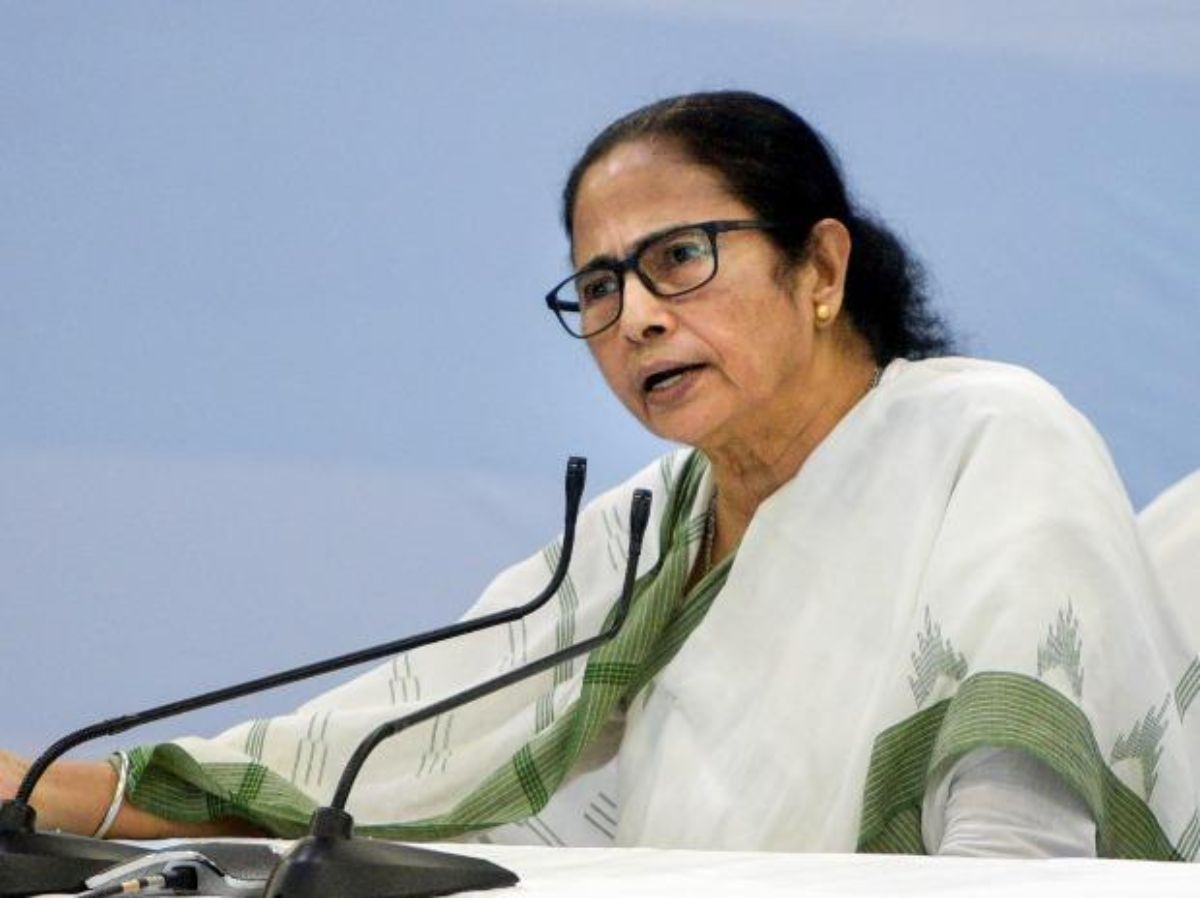
Mamata Banerjee (Image: X)
West Bengal Chief Minister Mamata Banerjee made a dramatic personal appearance on Wednesday before a Supreme Court Division Bench led by Chief Justice of India Surya Kant, alongside Justices Joymalya Bagchi and Vipul Pancholi, challenging the Election Commission’s Special Intensive Revision (SIR) of electoral rolls. The Trinamool Congress (TMC) hailed the event as a historic stand for democracy, while critics, including the BJP, dismissed it as a meticulously staged political spectacle ahead of the 2026 Assembly polls. Trinamool insiders told The Sunday Guardian about the frenetic behind-the-scenes activity and the hours of preparation that preceded the appearance.
Dressed in a white sari with a black shawl, the West Bengal Chief Minister waited for over two-and-a-half hours at the back row of the Chief Justice’s court. Banerjee sought and received permission to argue her case personally, turning the courtroom into a high-profile stage. “Sir, allow me, sir,” she interjected during proceedings, pleading for five minutes that stretched to 15. She began her arguments by telling the Supreme Court that the people of West Bengal were not getting justice anywhere.
“Justice is crying behind closed doors! I personally wrote six letters but never got a reply from the Election Commission,” she told the bench.
Quoting Rabindranath Tagore and labelling the Election Commission a “WhatsApp Commission,” she accused the poll body of “bulldozing Bengali people” through hasty revisions.
Banerjee urged the court to halt voter deletions and conduct the 2026 elections using existing rolls from 2005, claiming 63 lakh citizens faced disenfranchisement over minor discrepancies like clerical errors or linguistic issues. She told the bench that she fought not for her party but for ordinary voters. She highlighted over 100 Booth Level Officers (BLOs) dying from harassment and questioned why West Bengal was singled out when states like Assam also faced polls.
CJI Surya Kant, acknowledging her senior counsel Shyam Divan as “excellent,” allowed her intervention but clarified that minor issues like Aadhaar mismatches could not justify deletions. “Every problem has a solution, and we must ensure that no innocent person is left out,” the CJI remarked on the SIR process. The bench issued notices to the EC and West Bengal’s Chief Electoral Officer, listing the matter for February 9 alongside a related EC petition on official hostilities.
Heavy security blanketed the Supreme Court, with Banerjee arriving from nephew Abhishek Banerjee’s residence, accompanied by TMC leaders like Kalyan Banerjee and Sukhendu Shekhar Roy and her personal lawyer Debanjan Mandal of the law firm Fox & Mandal law firm. Inside the packed courtroom, her impassioned plea drew media frenzy, amplifying TMC’s narrative of a beleaguered state under Central agencies.
Post-hearing, TMC went full throttle, posting on X: “BIG WIN for Hon’ble Chief Minister Mamata Banerjee in the Hon’ble Supreme Court. After her plea, the Hon’ble Supreme Court issued notice to the EC in the SIR matter, and directed EC officials to act with sensitivity. The Court also made it clear that Micro Observers may not be required.” Party workers across the state echoed the sentiment, with billboards and social media floods portraying Banerjee as a “people’s lawyer” shielding voters from “BJP’s poll rigging.”
Rallies in Howrah and Burdwan districts chanted “Jai Bangla,” framing the appearance as a bulwark against alleged infiltrator purges disguised as purification of voter rolls.
The BJP, however, branded the episode a “flop drama” and “choreographed performance” for TV cameras. Union Minister and West Bengal BJP chief Sukanta Majumdar said: “She delivered a completely political speech. It was all drama to attract cameras. The Mamata Banerjee show completely flopped.” He accused her of hypocrisy, noting TMC’s past demands for voter list purification now flipped against SIR. Majumdar highlighted the court’s sober redirection to her lawyer, calling her “WhatsApp Commission” jibe inappropriate. “She returned empty-handed,” Majumdar quipped, pointing to no interim relief granted. BJP leaders alleged the move shielded illegal voters, with Bhattacharya stating: “People are weary of her governance; this diverts from failures.”
State BJP president Samik Bhattacharya added: “Banerjee senses defeat in 2026 polls, so this hue and cry. She interrupted the CJI, shouted without facts—thinks SC is her party office!” BJP IT cell memes proliferated with captions like “Courtroom nautanki fails.”
But West Bengal media reports painted Banerjee’s stint as a masterclass in optics: from the black shawl to emotional appeals, all timed for peak viewership. Analysts noted it galvanized TMC cadre. Yet, the SC’s measured response—no stay on SIR—underscored limited legal gains.
The SC’s order-sheet did not contain her name either as a lawyer or as a petitioner. It also did not record her submission before the court. BJP IT chief and West Bengal co-minder Amit Malviya said: “The Supreme Court has refused to take the West Bengal Chief Minister’s submissions on record. Her political theatrics have been dismissed with the contempt they deserve. This should have embarrassed her beyond measure but nothing seems to shame Mamata Banerjee. She has been rebuffed in the court of law. Next, she will face the verdict of the people’s court.”
Lawyer and BJP leader Kaustav Bagchi pointed out: “Two very serious irregularities marked Mamata Banerjee’s in-person appearance before the Hon’ble Supreme Court: First, appearance as a party-in-person is not a matter of choice or spectacle. Under Order IV of the Supreme Court Rules, a litigant can argue in person only after filing a formal application, undergoing scrutiny by the Registrar, and satisfying the Court that she is unable to engage an Advocate failing which the Court may even appoint counsel or amicus.”
“It is a regulated exception, not a political privilege.”
“The rule certainly doesn’t envisage a petitioner-in-person supplementing their engaged counsel!”
“Second, her vehicle being permitted entry into the Supreme Court precincts raises a basic question of equality before procedure. The Court functions on uniform access norms and there is no rule that allows special logistical indulgence for political personalities.”
“One cannot posture as a champion of the common citizen while simultaneously bending institutional rules for personal optics. The Supreme Court is not a stage for political theatre. It is a constitutional court and its processes are sacred, not cheap props for point-scoring.”
