Apparently, ‘Banglar Digital Joddha’ is the brainchild ofChief Minister Mamata Banerjee’s nephew, Abhishek.
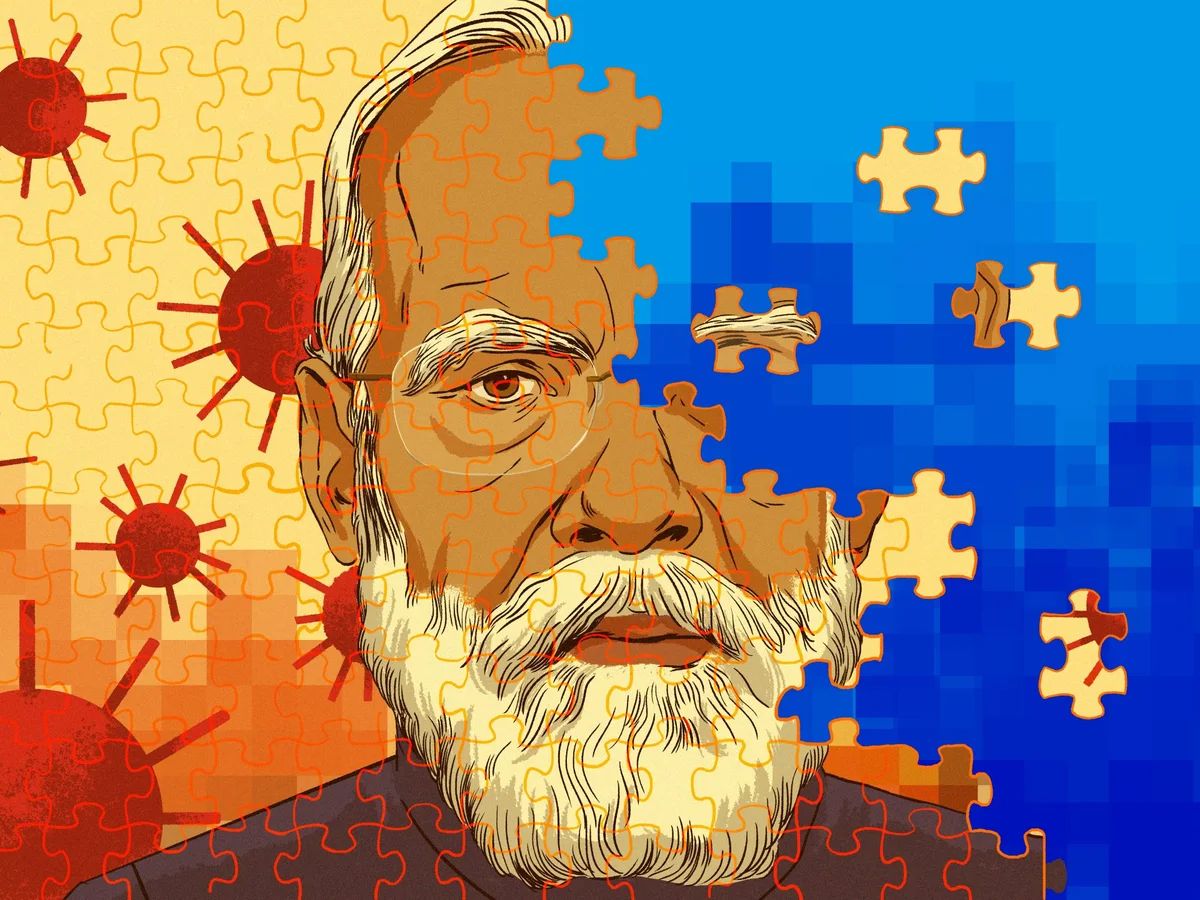
Assembling the core team apparently began in early 2025 after a series of closed-door meetings in Abhishek Banerjee’s Camac Street office. (Image: Rest of World)
Kolkata: The Trinamool Congress’ youth wing is abuzz with a new digital campaign initiative called “Ami Banglar Digital Joddha” (I am Bengal’s Digital Warrior), apparently conceived by party leader Abhishek Banerjee as a counter-strike to what he calls the Bharatiya Janata Party’s “propaganda machinery” operating through its IT cell. The initiative, according to party insiders and observers, marks a sharp escalation in Bengal’s ongoing cyber-political warfare.
Over the past three months, hundreds of volunteers—college students, social media enthusiasts, regional influencers, and booth-level workers—have been mobilized across districts under the banner of “Digital Joddha”. The objective: take the battle to the digital trenches.
“Social media is no longer just a platform; it’s the battlefield of perception,” said Suranjan Bhattacharya, a Trinamool state committee member overseeing parts of the campaign. “Whenever the BJP spreads misinformation, we can’t remain silent spectators. ‘Digital Joddha’ is the people’s response to organized defamation.”
According to insiders from I-PAC, the political consultancy firm of the TMC, the campaign structure resembles a modern political war room—layered, responsive, and data-driven. Each district apparently has a “digital captain” in charge of 50-100 volunteers tasked with curating hyperlocal narratives and tracking BJP messaging. These teams report daily activity—trending hashtags, viral claims, video rebuttals—to a central command in Kolkata coordinated by youth and IT cell leaders loyal to Abhishek.
“Abhishek is grooming a new-age political machinery that looks beyond rallies and cutouts,” said a Kolkata-based political communications expert, who requested anonymity. “He’s focusing on influence networks—Telegram groups, Instagram reels, and short Bengali videos that can shift perception faster than traditional news cycles.”
Trinamool insiders admit that the move is inspired partly by frustration. “The BJP’s IT cell built an empire of amplification,” a senior TMC youth leader conceded. “Our Chief Minister’s achievements were being buried under coordinated misinformation. Now, we’re matching them step by step.”
THE TEMPLE OF TROLLS?
Critics, however, see it differently. The BJP’s Bengal leadership has dubbed the “Digital Joddha” initiative a “cyber army of trolls”, accusing the TMC of replicating the same tactics it once condemned.
“This is classic hypocrisy,” said Sanku Deb Panda, BJP’s state spokesperson. “They have realized that fake news and emotional propaganda work—and that’s what they’re now investing in. The victims of TMC’s digital bullying will be ordinary citizens.”
But inside the Trinamool ecosystem, the phrase “troll army” has already been reclaimed as a badge of pride. “If fighting lies makes us trolls, then we wear that label with pride,” quipped a volunteer from Howrah district. “For every fake narrative about Bengal, we’ll post ten truth-based stories.”
Political observers note that Abhishek Banerjee’s style of campaign-building is markedly different from that of his aunt, Chief Minister Mamata Banerjee, who still leans on traditional mass mobilization. Abhishek, now the national general secretary of the TMC, has visibly pushed for organizational data, influencer partnerships, and targeted messaging as favoured by I-PAC.
“Abhishek understands the generational shift in politics,” commented Dr Rachana De, a political sociologist at Jadavpur University. “He’s building a culture of digital loyalty among the youth. The ‘Digital Joddha’ initiative isn’t just about tweets—it’s about identity creation.”
Assembling the core team apparently began in early 2025 after a series of closed-door meetings in Abhishek Banerjee’s Camac Street office. Abhishek is said to have handpicked a few young digital strategists who previously worked in marketing and design firms to structure the backbone of the campaign.
“Every political battle in 2026 will be fought on three screens—the mobile, the TV, and the laptop,” Abhishek apparently told his media cell during an internal briefing, according to a source present. “If we don’t dominate those screens, someone else’s narrative will dominate Bengal.”
For all its energy, “Ami Banglar Digital Joddha” also raises ethical questions about online political discourse. Bengal’s social media space is already hyperpolarized, and the entry of another organized campaign could further poison the well of civic debate.
“It’s a weaponization of patriotism,” observed Partha Chattopadhyay, a media commentator known for his critiques of digital populism. “When every party builds armies instead of communities, truth becomes collateral damage.”
However, TMC officials insist that the initiative will operate within the boundaries of decency and legality. “We have strict internal codes,” said Aritra Laha, one of the coordinators. “No fake content, no personal abuse. We only amplify facts and counter fake news. Our volunteers undergo workshops on ethical communication.”
He shared that orientation sessions are being held across districts, teaching volunteers how to fact-check sources, prepare infographics, and report online misinformation. The party claims this is as much a literacy drive as a political tactic.
The next Assembly elections in West Bengal, due in 2026, are already shaping up to be a referendum not just on governance but also on narrative control. The BJP’s Bengal IT operation has grown tremendously since 2019, boasting thousands of WhatsApp groups and regional meme factories that can push coordinated content to millions of users within hours.
The “Digital Joddha” push, observers predict, may finally create parity in digital influence. “In 2021, the BJP had the meme advantage; the TMC had the emotion advantage,” said Sayan Bera, a digital strategist based in Kolkata. “Now, the Trinamool is learning to weaponize emotion digitally. This time, they’re not reactive—they’re proactive.”
Several TMC volunteers confirm that the campaign emphasises regional authenticity. Many of their posts use colloquial Bengali, neighbourhood references, and stories of local development that resonate personally with citizens. A recent viral post contrasting Mamata’s rural schemes with BJP’s “Delhi-centric elitism” apparently reached over two million views within days.
Even opposition observers concede that the emotional appeal is working. “The BJP’s content often feels imported,” admitted Sumon Ganguly, a political analyst aligned with the Congress. “Abhishek’s content ecosystem is deeply local—that’s where it hits harder.”
Amid the noise, “Ami Banglar Digital Joddha” also plays on cultural pride. The campaign’s official graphics feature the map of Bengal wrapped with the national flag, alongside slogans about Bengali identity and self-reliance. Party design teams have rolled out hundreds of short videos highlighting Bengal’s achievements under “Didi’s rule,” contrasting them with what they call “the BJP’s cultural invasion.”
For the ruling party, this reinvention of nationalism through regional pride seems strategic. “Abhishek’s digital nationalism is hyperlocal—it’s about defending Bengal’s dignity online,” said Dr Biswajit Das, professor of mass communications at Calcutta University. “It’s an emotional shield dressed as digital activism.”
Whether this shield escalates Bengal’s online hostility or fosters informed citizenship remains unclear. But what is evident is that the state’s political discourse has permanently migrated to pixels.
As one young “Digital Joddha” from Bardhaman put it with unflinching confidence: “Before, they used to call us keyboard warriors. Now, we call ourselves frontline defenders of Bengal’s story.”
In Bengal’s ever-theatrical politics, every warrior—digital or otherwise—knows there’s glory to be found in the battle of narratives.
